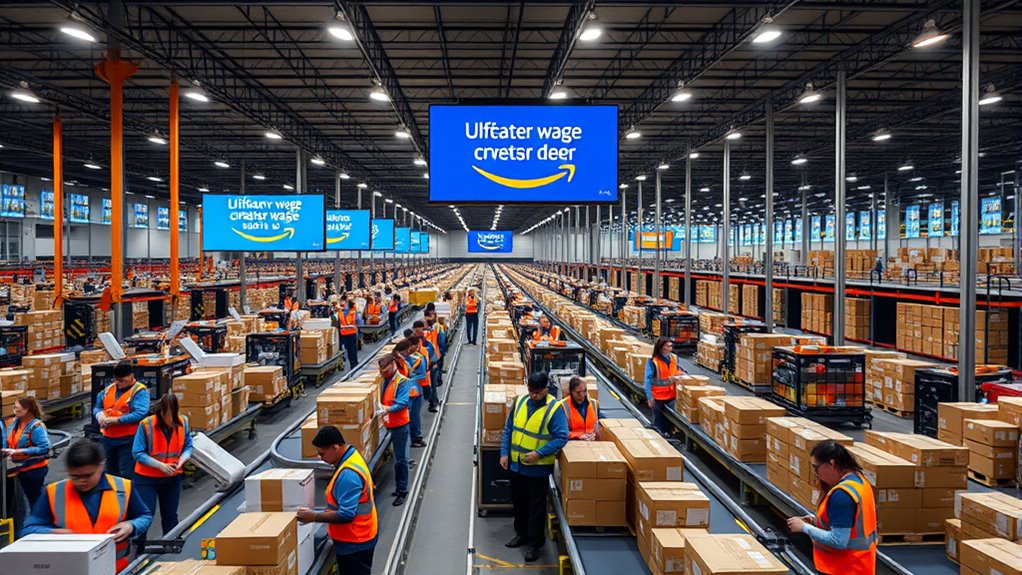

Amazon is making a significant investment to raise wages and improve benefits for its employees nationwide. They’re boosting pay to over $23 an hour on average, with full-timers seeing about $1,600 more annually. Healthcare costs are falling, with weekly contributions dropping to just $5 and co-pays cut dramatically. These changes address labor pressures and aim to keep workers happier and more secure. To learn more about Amazon’s strategies, keep exploring the details behind these initiatives.
Key Takeaways
- Amazon invests $1 billion to increase wages for U.S. fulfillment and transportation workers, with average pay exceeding $23 per hour.
- Hourly wages increase by $1.10 to $1.90 based on tenure, boosting annual earnings by approximately $1,600 for full-time employees.
- The company’s wage strategy responds to labor market pressures and recent union-led strikes to attract and retain skilled workers.
- These investments aim to improve worker financial stability, satisfaction, and long-term retention amid competitive industry challenges.
- Wages are part of broader benefits enhancements, including healthcare cost reductions and safety improvements, supporting overall employee well-being.

Amazon is investing $1 billion to raise wages and improve healthcare benefits for its U.S. fulfillment and transportation workers. This significant commitment aims to increase average pay to over $23 per hour, directly boosting workers’ earning potential. For those with more tenure, hourly wages will see increases between $1.10 and $1.90, rewarding experience and loyalty. Full-time employees, in particular, will benefit from an average annual pay increase of about $1,600, helping them improve their financial stability. This initiative responds to workforce pressures, labor unrest, and the need to attract and retain skilled employees in a highly competitive industry. You’ll notice that these wage enhancements are designed to make Amazon jobs more appealing, especially amid ongoing labor disputes and union activity. Additionally, this move reflects the growing importance of employee satisfaction and retention in the current labor market.
Amazon invests $1 billion to boost wages and healthcare, enhancing stability and appeal for U.S. fulfillment and transportation workers.
Alongside wage hikes, Amazon is taking steps to reduce healthcare costs, making health coverage more affordable for employees. Starting next year, the weekly cost for basic health plans will drop to just $5, and co-pays for primary care, mental health services, and most non-specialist visits will also be lowered to $5. Overall, weekly contributions for basic plans will shrink by 34%, and co-pays will plunge by 87%. These improvements aim to ease financial burdens, especially for lower-tier employees, ensuring they can access essential healthcare services without excessive out-of-pocket expenses. Reducing healthcare costs not only improves your quality of life but also encourages long-term employment, as employees feel supported in their health needs. This investment is part of Amazon’s broader strategy to improve employee satisfaction and retention.
With a global workforce of approximately 1.5 million employees, these wage and benefit improvements primarily target Amazon’s U.S. fulfillment and transportation segments. The impact is felt across multiple facilities nationwide, helping to stabilize the workforce and address labor pressures. The company’s investments also serve as a strategic move to improve its reputation and maintain a competitive edge in the labor market. You might have noticed recent strikes at seven Amazon facilities organized by the Teamsters union, demanding better wages and conditions. Amazon’s wage strategy appears to be a response to this unrest, aiming to satisfy worker demands and foster better labor relations.
Alongside financial improvements, Amazon has committed to ergonomic and safety enhancements, following a settlement with OSHA. Hazardous conditions causing musculoskeletal disorders prompted the company to implement ergonomic policies across its facilities, emphasizing employee health and safety. These measures support not only your well-being but also long-term productivity and retention. By investing heavily in wages, healthcare, and safety, Amazon is positioning itself to meet industry challenges, reduce turnover, and improve its overall corporate reputation. This holistic approach demonstrates a clear focus on valuing and supporting its workforce while steering through the competitive landscape.

The Health Plan Turnaround: A C-Suite Action Guide to Regain Control, Cut Waste, and Lead with Fiduciary Precision
As an affiliate, we earn on qualifying purchases.
As an affiliate, we earn on qualifying purchases.
Frequently Asked Questions
How Will Wage Increases Impact Amazon’s Overall Profit Margins?
Your profit margins will feel some pressure from wage increases, as operating expenses rise. However, Amazon’s investment in higher wages, better benefits, and upskilling aims to boost employee retention, productivity, and morale. These improvements can offset costs over time, helping margins recover. While there’s short-term compression, your long-term gains in workforce stability, efficiency, and market positioning support sustained profitability and competitive advantage.
Will Wage Hikes Be Uniform Across All Amazon Locations?
Wage hikes won’t hit every Amazon location like a well-choreographed dance. You’ll notice regional differences in timing and scale, influenced by local labor markets and operational needs. While most employees see significant increases, some facilities may experience slight variations. Think of it as a symphony with different instruments playing in harmony—adjustments are made to fit each setting, ensuring the company’s overall rhythm stays strong.
How Does Amazon Plan to Fund These Wage Increases Long-Term?
You can see Amazon plans to fund these wage increases long-term by leveraging productivity gains from automation, which helps balance rising labor costs. They allocate part of their operating capital, including a $2.2 billion wage hike in early 2025, to support wage and benefit improvements. By combining these investments with upskilling programs, Amazon aims to reduce turnover, improve efficiency, and sustain competitive wages without compromising financial stability over time.
Are There Plans to Expand Employee Benefits Alongside Wage Raises?
Yes, Amazon plans to expand employee benefits alongside wage raises, balancing financial growth with well-being. While wages increase, you’ll gain access to enhanced healthcare plans, including virtual care and chronic condition support, plus parental leave and family resources. This dual approach helps you feel more secure and supported, making your work experience more fulfilling. With these improvements, Amazon shows its commitment to your long-term happiness and financial stability.
Will Wage Improvements Affect Amazon’s Pricing and Product Costs?
Wage improvements will likely influence Amazon’s pricing and product costs. You might see some product prices rise as the company tries to offset higher labor expenses, especially in fulfillment and transportation. However, Amazon could also choose to absorb some costs to stay competitive. Enhanced wages might boost employee productivity and retention, which could help control long-term costs. Ultimately, market pressures and consumer responses will shape how much prices are affected.

Planners With Purpose A5 Medical Visit Logbook – Compact Spiral Bound Medical Planner & Health Journal for Chronic Illness, Doctor Appointments, Symptom Tracking, Medications & Medical History Organizer Notebook Pocket Folder
All-in-One Medical Journal: Our A5 medical planner keeps all your vital health information in one organized place, from…
As an affiliate, we earn on qualifying purchases.
As an affiliate, we earn on qualifying purchases.
Conclusion
By investing in higher wages, Amazon is showing that it values its employees and understands the importance of fair compensation. As the saying goes, “You get what you pay for,” and this move could lead to better productivity and loyalty. When companies prioritize their workers, everyone benefits—customers, employees, and the business itself. Keep an eye on how this bold step shapes Amazon’s future and sets a precedent for others to follow.

Small Business: Understanding Employee Benefits: Life and Health Insurance (Navigating Small Business Success: Comprehensive Guides)
As an affiliate, we earn on qualifying purchases.
As an affiliate, we earn on qualifying purchases.

How To buy Health Insurance at Low Cost : Simplify Your Search for Low-Cost Health Insurance
As an affiliate, we earn on qualifying purchases.
As an affiliate, we earn on qualifying purchases.