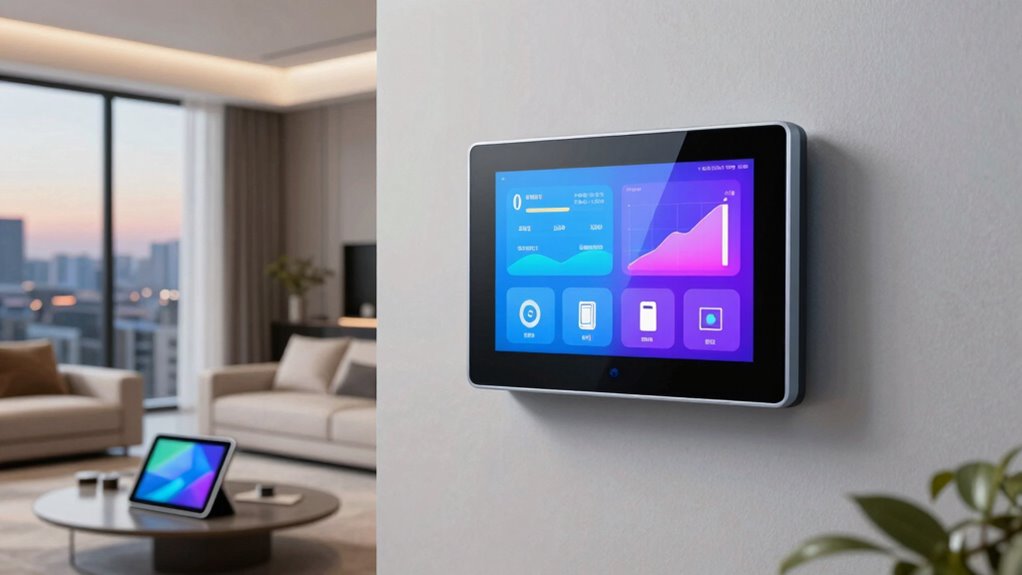

Are you searching for a smart home energy monitor that can give you real-time insights into your electricity consumption? The Emporia Vue 3 stands out as the best overall pick, thanks to its comprehensive measurement, user-friendly app, and affordability. For those seeking advanced features, the Meross Smart Home Energy Monitor offers solar surplus detection and Home Assistant support, but it comes at a higher price. Many options in this category face tradeoffs between accuracy, ease of use, and compatibility, making it vital to choose based on your specific needs. Keep reading for a detailed comparison to help you make an informed decision.

Get business pricing on tech for your team
- Business-only prices and quantity discounts
- Tax-exempt purchasing
- Multiple users, one account, clear invoices
Key Takeaways
- The top-performing monitors balance accurate circuit-level sensing with intuitive app interfaces.
- Compatibility with smart home platforms like Tuya, Smart Life, or Home Assistant varies and impacts ease of integration.
- Many models offer no-cloud options or local control, addressing privacy concerns but sometimes sacrificing remote access.
- Price ranges reflect features: more circuits, solar support, or advanced analytics typically come at a premium.
- Installation complexity varies; some monitors are DIY-friendly, while others may require professional wiring.
| SEM-Meter Smart Home Energy Monitor with 16 50A Circuit-Level Sensors |  | Best for Detailed Circuit-Level Monitoring and Privacy | Sensors: 16 x 50A clamp-on circuit-level sensors | Voltage Support: Single-phase up to 240VAC; split-phase 120/240VAC; three-phase up to 415Y/240VAC | Connectivity: 2.4GHz WiFi | VIEW ON AMAZON | See Our Full Breakdown |
| Square D WISEREMPV Energy Monitor System |  | Best for Smart Device Integration and Basic Monitoring | Color: White | Compatibility: Amazon Alexa, Google Home, Phillips Hue, TP-Link, WeMo | Features: Real-time energy tracking, customizable alerts, mobile app control | VIEW ON AMAZON | See Our Full Breakdown |
| Emporia Vue 3 Home Energy Monitor |  | Best for Safety and Multi-System Support | Certification: UL Listed, CE Listed | Installation: Circuit panel with clamp-on sensors | Supported Systems: Single phase, split phase, 3-phase with additional sensor | VIEW ON AMAZON | See Our Full Breakdown |
| Emporia Vue 3 Home Energy Monitor (Multiple Sensors) |  | Best for Appliance-Level Monitoring and Automation | Certification: UL Listed, CE Listed | Sensor Count: 16 branch (50A) sensors | Accuracy: ±2% | VIEW ON AMAZON | See Our Full Breakdown |
| Meross Smart Home Energy Monitor EM16 (18-Circuit, Real-Time Power & Cost Tracking) |  | Best for Local Data Storage and Home Assistant Integration | Manufacturer: meross | Model: EM16 | Part Number: EM16 | VIEW ON AMAZON | See Our Full Breakdown |
| Smart Home Energy Monitor 2×80A, Dual-Channel WiFi Energy Meter with App Control, Compatible with Tuya/Smart Life |  | Best for Dual-High Power Circuit Monitoring | Channels: 2 | Max Current per Channel: 80A | Power Source: Corded Electric | VIEW ON AMAZON | See Our Full Breakdown |
| WiFi Home Energy Monitor with 2x 120A CTs and Power Tracking |  | Best for Solar and Energy Management Integration | Connectivity: 2.4 GHz WiFi | CT Clamps: 2 x 120A split-core | Phase: Single-phase 3-wire | VIEW ON AMAZON | See Our Full Breakdown |
| Refoss EM16P Smart Home Energy Monitor with 16 Circuit Sensors, No Cloud Required |  | Best for Privacy-Conscious, Local Control Enthusiasts | Main Circuit Sensors: 2 x 200A | Branch Circuit Sensors: 16 x 60A | Data Storage: Up to 5 years | VIEW ON AMAZON | See Our Full Breakdown |
| Eyedro Smart Home Energy Monitor 200A WiFi/Ethernet |  | Best for Whole-Home and Solar Monitoring | Sensor Count: 2 x 200A sensors | Connectivity: WiFi 2.4 GHz, Ethernet | Supports: Solar, net metering | VIEW ON AMAZON | See Our Full Breakdown |
| WiFi Home Energy Monitor with 3 80A CT Clamps |  | Best for Monitoring Multiple Circuits with Flexibility | Input Voltage: AC 100–240V | Clamps Included: 3 CT clamps (80A each) | Relay Control: Up to 15A | VIEW ON AMAZON | See Our Full Breakdown |
| Refoss EM16P Home Energy Monitor with 16 Circuit Sensors |  | Best Overall for Advanced Home Monitoring | Manufacturer: Refoss | Model: EM16P | Supported Systems: Single-phase, Split-phase, 3-phase 4-wire | VIEW ON AMAZON | See Our Full Breakdown |
| Smart Home Energy Monitor, 2×120A Dual-Channel Real-Time Electricity Usage Meter with WiFi App Control |  | Best for High-Power Appliance Monitoring | Channels: 2 independent channels | Sensor Capacity: 2×120A | Connectivity: WiFi 2.4GHz | VIEW ON AMAZON | See Our Full Breakdown |
| Emporia Vue 3 Home Energy Monitor |  | Best for Whole-Home Monitoring with Safety Certification | Certification: UL Listed, CE Listed | Sensor Accuracy: ±2% | Supported Systems: Single phase, 2-wire, 3-phase 4-wire | VIEW ON AMAZON | See Our Full Breakdown |
| Meross Smart Home Energy Monitor with 18 Circuit Monitoring, Home Assistant Support, Real-Time Energy Usage Tracking, Solar Surplus Detection, Smart Alerts, No Subscriptions, 2-Year Warranty | | Best for Local Data Storage and Home Assistant Integration | Circuit Monitoring: 18 circuits (2 main + 16 branch) | Supported Systems: Single-phase, split-phase, 3-phase | Current Capacity: Main 200A, Branch 60A | VIEW ON AMAZON | See Our Full Breakdown |
| SIEMENS Inhab Smart Home Energy Monitor with Circuit Level Sensors |  | Best for Circuit-Level Precision and Peak Demand Management | Circuit Sensors: 16-50Amp | Main Sensors: 2 x 200Amp | Connectivity: WiFi | VIEW ON AMAZON | See Our Full Breakdown |
| smart home energy monitor | Connectivity |
|---|---|
| SEM-Meter Smart Home Energy Mo | 2.4GHz WiFi |
| Square D WISEREMPV Energy Moni | — |
| Emporia Vue 3 Home Energy Moni | 2.4 GHz Wi-Fi |
| Emporia Vue 3 Home Energy Moni | — |
| Meross Smart Home Energy Monit | — |
| Smart Home Energy Monitor 2×80 | 2.4GHz WiFi |
| WiFi Home Energy Monitor with | 2.4 GHz WiFi |
| Refoss EM16P Smart Home Energy | WiFi, MQTT, Web UI |
| Eyedro Smart Home Energy Monit | WiFi 2.4 GHz, Ethernet |
| WiFi Home Energy Monitor with | WiFi 2.4GHz |
| Refoss EM16P Home Energy Monit | Wi-Fi (external high-gain antenna), MQTT, WebSocket, Open API |
| Smart Home Energy Monitor | WiFi 2.4GHz |
| Emporia Vue 3 Home Energy Moni | — |
| Meross Smart Home Energy Monit | — |
| SIEMENS Inhab Smart Home Energ | WiFi |
More Details on Our Top Picks
SEM-Meter Smart Home Energy Monitor with 16 50A Circuit-Level Sensors
The SEM-Meter stands out for its ability to monitor up to 16 circuits simultaneously, offering detailed, appliance-specific insights that surpass the basic data from the Emporia Vue 3. Its support for solar/net metering and customizable rate templates makes it ideal for renters and shared housing where fair billing matters. The local-only privacy mode via MQTT provides an edge over cloud-dependent systems, but this feature demands some technical setup and an MQTT-compatible environment. Installation inside the circuit panel requires an electrician, which could be a barrier for DIY users. Compared with the Square D WISEREMPV, this model offers greater circuit granularity but sacrifices ease of setup for advanced features.
Pros:- Monitors 16 individual circuits for detailed, appliance-level energy insights
- Supports local privacy mode via MQTT/Home Assistant, avoiding cloud dependency
- Customizable time-of-use rate templates for fair billing in rentals
Cons:- Requires installation inside the circuit panel, potentially needing an electrician
- Panels with busbar-only access require separately purchased sensors
- Local privacy mode setup is complex and not plug-and-play
Best for: Homeowners or renters needing detailed circuit-by-circuit energy tracking with privacy controls and solar support.
Not ideal for: DIY enthusiasts seeking plug-and-play solutions, or those uncomfortable with electrical panel installation.
- Sensors:16 x 50A clamp-on circuit-level sensors
- Voltage Support:Single-phase up to 240VAC; split-phase 120/240VAC; three-phase up to 415Y/240VAC
- Connectivity:2.4GHz WiFi
- Accuracy:1%
- Data Retention:Hourly data: 90 days; day/month/year data: permanent
- Compatibility:Android/iOS apps, Home Assistant via MQTT, local LAN mode
Our verdict“This system suits those who need comprehensive, privacy-focused energy monitoring with advanced customization, willing to handle installation complexity.”
Square D WISEREMPV Energy Monitor System
Compared with the Emporia Vue 3, the Square D WISEREMPV offers straightforward real-time energy tracking integrated with popular smart home platforms like Alexa and Google Home. Its focus on smart device alerts and simple app control makes it suitable for users who want a quick upgrade to their existing ecosystem without extensive wiring or complex setup. However, it lacks the detailed circuit-level monitoring of the SEM-Meter or Emporia Vue 3, limiting insights into individual appliances. This product excels for those seeking an easy-to-use, compatible device for basic energy management and automation, but it may fall short for users wanting granular data or privacy-focused solutions.
Pros:- Integrates seamlessly with Alexa, Google Home, and other smart devices
- Real-time energy tracking with customizable alerts
- User-friendly app control for quick setup and management
Cons:- Requires existing compatible smart home ecosystem for full functionality
- Setup can be complex for users unfamiliar with smart home integrations
Best for: Homeowners wanting compatible, real-time energy monitoring with smart device alerts and integrations.
Not ideal for: Users needing detailed circuit-level data or local, cloud-free operation.
- Color:White
- Compatibility:Amazon Alexa, Google Home, Phillips Hue, TP-Link, WeMo
- Features:Real-time energy tracking, customizable alerts, mobile app control
Our verdict“Ideal for users seeking simple, compatible smart home energy insights without the need for detailed circuit tracking.”
Emporia Vue 3 Home Energy Monitor
The Emporia Vue 3 is a solid choice for safety-conscious buyers needing versatile system support, including solar and net metering. Its UL and CE certifications bolster confidence in its reliability, unlike less certified options. While it offers real-time data and automation features comparable to the Meross EM16, it requires internet access via Wi-Fi and additional sensors for three-phase systems, which can increase complexity. Its data retention is comprehensive, but the 1-second data is only available when the app is open, limiting real-time responsiveness. This model is best suited for users prioritizing safety certifications and multi-system compatibility over plug-and-play simplicity.
Pros:- UL and CE certified for safety and compliance
- Supports solar and net metering for comprehensive energy management
- Works with iPhone, Android, and web apps for flexible monitoring
Cons:- Requires internet connection and Wi-Fi setup
- Additional sensors needed for 3-phase systems
- Limited 1-second data availability unless app is active
Best for: Homeowners with multiple electrical phases or solar setups who prioritize safety certifications.
Not ideal for: DIYers or those seeking a simple, cloud-free monitoring solution.
- Certification:UL Listed, CE Listed
- Installation:Circuit panel with clamp-on sensors
- Supported Systems:Single phase, split phase, 3-phase with additional sensor
- Data Accuracy:±2%
- Connectivity:2.4 GHz Wi-Fi
- Apps:iPhone / Android / Web
Our verdict“This monitor suits safety-conscious, multi-system households that need certified hardware and solar integration, accepting some setup complexity.”
Emporia Vue 3 Home Energy Monitor (Multiple Sensors)
This version of the Emporia Vue 3 with 16 branch sensors provides detailed appliance-level insights, making it ideal for users who want to identify high-energy devices like water heaters or AC units. Its UL certification and solar support enhance its appeal for safety-aware and environmentally-conscious users. While setup involves working inside the electrical panel, the ability to monitor individual appliances offers actionable data that can lead to meaningful reductions in energy bills. However, similar to other Emporia models, it depends on Wi-Fi and internet, and the 1-second data snapshot is only available when the app is actively open. It’s a good fit for those who need granular data for automation and efficiency improvements.
Pros:- Includes 16 branch sensors for detailed appliance tracking
- Supports solar and net metering for comprehensive energy control
- Reliable UL certification for safety and quality
Cons:- Requires 2.4 GHz Wi-Fi and internet connection
- Additional sensors needed for certain system types, increasing cost
- Limited real-time data unless app is active
Best for: Homeowners aiming for detailed appliance monitoring and energy optimization.
Not ideal for: Users seeking quick, plug-and-play solutions or without electrical panel access.
- Certification:UL Listed, CE Listed
- Sensor Count:16 branch (50A) sensors
- Accuracy:±2%
- Wi-Fi Requirement:2.4 GHz with internet
- Supported Systems:Single phase, split phase, Wye 3-phase
- Data Retention:1-hour data indefinite
Our verdict“This setup is best for energy-savvy homeowners wanting detailed, appliance-by-appliance insights for automation and savings.”
Meross Smart Home Energy Monitor EM16 (18-Circuit, Real-Time Power & Cost Tracking)
The Meross EM16 distinguishes itself by storing up to 5 years of data locally, eliminating reliance on cloud subscriptions—an advantage over cloud-dependent models like the Emporia Vue 3. It supports 18 circuits with ±1% accuracy, providing precise circuit-level insights for comprehensive home monitoring. Its integration with Home Assistant unlocks automation for solar surplus management, EV charging, and alerts. The clamp-on installation is straightforward, but working inside the electrical panel may be challenging for some. Its limited review base suggests a newer or less widely adopted product, yet its local storage and no subscription model make it attractive for privacy-minded users.
Pros:- Circuit-level monitoring for up to 18 circuits with high accuracy
- Stores data locally for up to 5 years, no cloud subscriptions required
- Supports automation with Home Assistant, including solar surplus management
Cons:- Requires working inside the electrical panel, which may need professional help
- Limited review data, indicating a newer or niche product
- Installation complexity can be a barrier for DIY users
Best for: Tech-savvy homeowners prioritizing local data storage and Home Assistant automation.
Not ideal for: Less experienced users or those seeking plug-and-play solutions with minimal setup.
- Manufacturer:meross
- Model:EM16
- Part Number:EM16
- Weight:3.19 pounds
- Dimensions:4.5 x 3.48 x 1.1 inches
- Circuit Support:2 main circuits (200A) + 16 branch circuits (60A)
Our verdict“This monitor is ideal for homeowners who want extensive circuit data and privacy with advanced home automation support, accepting installation challenges.”
Smart Home Energy Monitor 2×80A, Dual-Channel WiFi Energy Meter with App Control, Compatible with Tuya/Smart Life
This model stands out for its ability to track two high-current circuits simultaneously, making it ideal for homes with multiple large appliances or solar setups. Unlike the Refoss EM16P, which offers extensive circuit monitoring but relies on local control, this monitor provides detailed data via WiFi and app, though it depends on the Tuya/Smart Life ecosystem. The dual 80A clamp sensors are easy to install without wiring modifications, but the lack of native integration limits automation options unless paired with Tuya-compatible devices. Its bi-directional tracking supports solar and backup power, offering a clear advantage for energy-conscious households. However, it’s limited to 2.4GHz WiFi and doesn’t have native automation or cloud-free operation, which might be a drawback for tech-savvy users seeking seamless smart home integration.
Pros:- Dual 80A channels monitor multiple high-power circuits simultaneously
- Clamp-style sensors install without wiring modifications
- Bi-directional tracking supports solar and backup power systems
- Detailed historical data by hour, day, month, or year
Cons:- Limited to 2.4GHz WiFi, reducing network flexibility
- No native smart home ecosystem integration, depends on Tuya/Smart Life app
Best for: Homeowners with high-power appliances or solar systems needing real-time dual-circuit monitoring via app.
Not ideal for: Users wanting a cloud-free system or native integration with broader smart home ecosystems.
- Channels:2
- Max Current per Channel:80A
- Power Source:Corded Electric
- Minimum Operating Voltage:110 volts
- Measurement Type:Ammeter
- Connectivity:2.4GHz WiFi
Our verdict“This is best suited for users needing dual high-current circuit monitoring with detailed historical data, but not for those seeking native ecosystem integration.”
WiFi Home Energy Monitor with 2x 120A CTs and Power Tracking
Compared with the Refoss EM16P, which emphasizes local control and privacy, this monitor offers a comprehensive app-based approach with features like dynamic load balancing and zero grid export mode, making it suitable for those wanting to optimize solar and battery usage. Its Class 1 accuracy and pluggable split-core CTs simplify installation for most homeowners, but installation might still require an electrician. The monitor’s ability to support bi-directional energy flow and automation makes it a strong choice for energy-savvy households, though its single-phase 3-wire limitation means it’s less suited for complex multi-phase systems. The app provides useful alerts and automation, but it’s dependent on WiFi and cloud services, which might be a concern for privacy-focused users.
Pros:- Bi-directional monitoring ideal for solar and storage systems
- Class 1 accuracy ensures reliable data for energy management
- Easy installation with pluggable split-core CTs
- Supports dynamic load balancing and zero export mode
Cons:- Installation may require an electrician, limiting DIY use
- Limited to single-phase 3-wire systems
Best for: Homeowners with solar panels or battery storage seeking detailed energy management and automation capabilities.
Not ideal for: Users preferring local, cloud-free control or those with complex multi-phase electrical systems.
- Connectivity:2.4 GHz WiFi
- CT Clamps:2 x 120A split-core
- Phase:Single-phase 3-wire
- Accuracy Class:Class 1
- Power Source:Battery Powered
- Features:Bi-directional monitoring, Dynamic Load Balancing, Zero grid export mode
Our verdict“This monitor suits solar owners looking for smart automation and energy optimization, but may require professional installation and is limited to single-phase setups.”
Refoss EM16P Smart Home Energy Monitor with 16 Circuit Sensors, No Cloud Required
This pick excels in privacy and local control, contrasting with cloud-dependent monitors like the Eyedro. Its fully local operation means no dependence on external servers, appealing to users concerned about data security. The native Home Assistant integration and MQTT support make it highly customizable for tech-savvy users. The 16 circuit sensors allow detailed monitoring across multiple circuits, and the ±1% accuracy ensures dependable measurements. Despite requiring installation in a circuit panel—something that might need professional help—the system’s open API and local web UI provide flexible automation options. It’s a clear choice for those prioritizing data privacy and local control over cloud features, though it might be less accessible for casual users unfamiliar with home automation systems.
Pros:- No cloud dependency enhances data privacy and security
- Native Home Assistant integration with no firmware flashing
- Supports solar automation for maximizing self-consumption
- High accuracy at circuit and circuit level
Cons:- Requires installation inside a circuit panel, possibly needing professional help
- OpenClaw AI support is newer and less mature than core features
Best for: Tech-savvy homeowners seeking robust local control and privacy, especially those already using Home Assistant.
Not ideal for: Less experienced users or those preferring plug-and-play solutions without DIY installation.
- Main Circuit Sensors:2 x 200A
- Branch Circuit Sensors:16 x 60A
- Data Storage:Up to 5 years
- Connectivity:WiFi, MQTT, Web UI
- Accuracy:±1%
Our verdict“Ideal for privacy-focused, tech-savvy users who want extensive circuit monitoring and local control, but less suitable for casual DIYers.”
Eyedro Smart Home Energy Monitor 200A WiFi/Ethernet
Compared with the Refoss EM16P, which emphasizes local control, the Eyedro offers straightforward cloud-based tracking suitable for those wanting quick setup and broad compatibility. It provides real-time insights into entire home energy use, including solar and net metering, making it a practical choice for homeowners wanting to reduce utility bills without complex automation. Its WiFi and Ethernet options give installation flexibility, but the customer ratings suggest inconsistent user satisfaction. It’s not as feature-rich in automation or privacy as the Refoss, but it’s easier for typical homeowners to set up and start tracking energy use immediately, especially if they prefer cloud access over local control.
Pros:- Provides detailed real-time energy data for entire home
- Supports solar and net metering applications
- Flexible setup with WiFi and Ethernet options
- Easy to install for typical homeowners
Cons:- Customer satisfaction ratings are moderate, indicating inconsistent experiences
- Limited automation or customization features
Best for: Homeowners wanting simple, reliable whole-home energy tracking with cloud access and solar support.
Not ideal for: Power users seeking local control, high customization, or privacy-focused setups.
- Sensor Count:2 x 200A sensors
- Connectivity:WiFi 2.4 GHz, Ethernet
- Supports:Solar, net metering
- Dimensions:8 x 8 x 3 inches
- Compatibility:North American standards
Our verdict“This monitor suits users wanting straightforward, reliable whole-home energy monitoring with cloud access, but less so for those wanting advanced automation or local control.”
WiFi Home Energy Monitor with 3 80A CT Clamps
This monitor makes sense for households needing to oversee up to three circuits, especially with high-power appliances like HVAC or water heaters. While it’s less sophisticated than the WiFi Home Energy Monitor with 2x 120A CTs, it offers a straightforward way to see real-time voltage, current, and power data via the app. Its support for temperature alerts adds an extra layer of safety, especially in environments with sensitive equipment. However, installation involves wiring and possibly professional help, and monitoring only three circuits may limit its usefulness for larger homes. Compared to higher-capacity options, it’s a good fit for small to medium homes but falls short for users with complex electrical systems.
Pros:- Supports monitoring of multiple circuits simultaneously
- Real-time data via smartphone app
- Temperature alerts improve safety
- Suitable for home, workshop, or small business use
Cons:- Installation requires electrical wiring and possibly professional help
- Limited to three circuits, restricting scope for larger homes
Best for: Homeowners needing to track multiple high-power circuits with real-time data and temperature alerts.
Not ideal for: Larger homes or users wanting comprehensive circuit monitoring beyond three circuits.
- Input Voltage:AC 100–240V
- Clamps Included:3 CT clamps (80A each)
- Relay Control:Up to 15A
- Temperature Monitoring:External sensor
- Connectivity:WiFi 2.4GHz
Our verdict“This monitor fits homes with specific high-power circuits needing real-time data and safety alerts, but isn’t ideal for extensive circuit monitoring.”
Refoss EM16P Home Energy Monitor with 16 Circuit Sensors
The Refoss EM16P stands out for its ability to track up to 18 circuits with high precision, making it ideal for homeowners who want detailed insights into their entire electrical system. Compared to the Emporia Vue 3, which offers robust app support but fewer circuits, the EM16P provides more comprehensive circuit coverage and local control options like a built-in Web UI and MQTT without subscription fees. Its ±1% measurement accuracy and 5-year data storage ensure reliable long-term monitoring, especially useful for solar and net metering optimization. However, installation requires access to the breaker panel, which may necessitate an electrician, and as a relatively new product, it has fewer reviews. Still, its advanced features make it a smart choice for tech-savvy users seeking granular energy data and integration flexibility.
Pros:- High-precision measurement (±1%) across 18 circuits
- Local control via Web UI, MQTT, and Open API with no fees
- Supports solar surplus optimization and smart fault alerts
- Backward sensor flipping without rewiring
Cons:- Installation in live breaker panels can require professional help
- Limited review count (67), so long-term reliability is less proven
Best for: Homeowners with complex electrical setups, solar systems, or those wanting detailed circuit-level data.
Not ideal for: Renters or DIYers uncomfortable with breaker panel installation or electrical work.
- Manufacturer:Refoss
- Model:EM16P
- Supported Systems:Single-phase, Split-phase, 3-phase 4-wire
- Measurement Precision:±1%
- Data Retention:5 years
- Connectivity:Wi-Fi (external high-gain antenna), MQTT, WebSocket, Open API
Our verdict“This monitor is best suited for users needing detailed, high-precision circuit data and flexible local control, willing to handle professional installation.”
Smart Home Energy Monitor, 2×120A Dual-Channel Real-Time Electricity Usage Meter with WiFi App Control
This dual-channel monitor excels at tracking high-power circuits like EV chargers and central air units, making it ideal for households with significant energy loads. Unlike the Emporia Vue 3, which supports multiple sensors but requires additional purchase and is more suited to comprehensive whole-home monitoring, this device offers straightforward clamp-on installation without rewiring, focusing on specific circuits. Its bi-directional tracking allows users to monitor solar and backup power systems seamlessly, providing a clear picture of energy flow. The reliance on 2.4GHz WiFi and the Tuya/Smart Life app means it’s easy to set up but dependent on cloud services, which could be a concern for privacy-conscious users. It’s best for those who want quick, reliable data on essential high-power circuits without complex installation.
Pros:- Dual 120A channels monitor high-power appliances effectively
- Clamp-on sensors install without wiring modifications
- Supports bi-directional solar and backup power tracking
- Displays detailed historical usage data
Cons:- Limited to 2.4GHz WiFi with no 5GHz support
- Dependent on cloud app ecosystem, which may raise privacy concerns
- Professional installation might be needed for panel access
Best for: Homeowners with high-energy appliances like EV chargers, water heaters, or central AC systems looking for simple installation and real-time data.
Not ideal for: Users seeking detailed circuit-level data for entire home systems or those without stable 2.4GHz WiFi coverage.
- Channels:2 independent channels
- Sensor Capacity:2×120A
- Connectivity:WiFi 2.4GHz
- App Compatibility:Tuya / Smart Life
Our verdict“This monitor is ideal for users wanting simple, real-time high-power circuit monitoring with minimal setup effort, especially for EVs and HVAC systems.”
Emporia Vue 3 Home Energy Monitor
The Emporia Vue 3 offers a reliable way to monitor real-time energy use across the entire home, supporting solar and net metering with UL safety certification. Compared to the Refoss EM16P, which provides more circuit-specific data, the Vue 3 excels in ease of installation and broad compatibility, making it suitable for users who prefer a plug-and-play experience. While it only supports sensors up to 16 (sold separately), this setup suits homeowners wanting a general overview rather than detailed circuit analysis. Its ±2% accuracy is slightly less precise than the EM16P but still sufficient for most energy management needs. Limitations include the need for professional installation and the additional cost of sensors, which may be a barrier for some.
Pros:- UL and CE certification ensures electrical safety
- Supports solar and net metering integration
- Works with iPhone, Android, and web apps
- Supports up to 16 sensors for detailed appliance monitoring (sold separately)
Cons:- Requires professional installation in the breaker panel
- Additional sensors and options sold separately
- Limited real-time data retention (short-term only)
Best for: Homeowners seeking a safe, straightforward system for total household energy monitoring with solar integration.
Not ideal for: Users needing circuit-level data or those uncomfortable with installing sensors in the breaker panel.
- Certification:UL Listed, CE Listed
- Sensor Accuracy:±2%
- Supported Systems:Single phase, 2-wire, 3-phase 4-wire
- Max Sensors:Up to 16 (sold separately)
- WiFi Requirement:2.4 GHz
Our verdict“This monitor works best for those who want a safe, reliable way to oversee total home energy use, especially with solar, without extensive wiring modifications.”
Meross Smart Home Energy Monitor with 18 Circuit Monitoring, Home Assistant Support, Real-Time Energy Usage Tracking, Solar Surplus Detection, Smart Alerts, No Subscriptions, 2-Year Warranty
The Meross Energy Monitor offers extensive circuit coverage with 18 monitored circuits, making it an excellent choice for detailed home energy analysis. Compared to the Siemens Inhab, which supports circuit-level sensors but is limited to North America, Meross provides a more flexible platform with local data storage and seamless Home Assistant integration. Its ability to support solar surplus detection and generate smart alerts helps homeowners optimize energy costs and identify abnormal usage. However, its installation requires familiarity with electrical systems, and it’s designed primarily for US electrical standards, limiting compatibility elsewhere. The absence of cloud storage might be a drawback for users seeking remote access without local network dependence.
Pros:- Supports 18 circuits for detailed monitoring
- Local data storage with no subscription fees
- Supports solar surplus detection and smart alerts
- Integrates smoothly with Home Assistant
Cons:- Installation requires electrical knowledge
- Limited to US electrical system standards
- No cloud storage options
Best for: Tech-savvy homeowners seeking comprehensive, locally stored energy data with automation support via Home Assistant.
Not ideal for: Users unfamiliar with electrical installations or those outside the US looking for a plug-and-play solution.
- Circuit Monitoring:18 circuits (2 main + 16 branch)
- Supported Systems:Single-phase, split-phase, 3-phase
- Current Capacity:Main 200A, Branch 60A
- Compatibility:Home Assistant, Open API
- Warranty:2 years
Our verdict“This monitor is perfect for users who want detailed, local energy data with automation support, willing to handle installation complexity.”
SIEMENS Inhab Smart Home Energy Monitor with Circuit Level Sensors
The Siemens Inhab provides direct circuit-level energy measurement, making it ideal for users focused on detailed load management and solar integration. Unlike the Emporia Vue 3 or Meross, which require additional sensors or are more general in scope, the Inhab is designed for precise monitoring at each circuit, supporting features like load shedding and peak demand control. Its easy installation in existing panels and compatibility with smart home features make it suitable for users who want to actively manage energy consumption. A key limitation is its regional restriction to USA and Canada, and the lack of detailed pricing information makes it harder to evaluate value. Overall, it is best for those who need circuit-by-circuit data for demand response or solar management.
Pros:- Provides real-time, circuit-level energy data
- Supports demand management and solar integration
- Easy to install in existing panels
- Supports advanced energy features
Cons:- Limited to North America regions
- Requires compatible electrical panels and setup
- Price details are unavailable, making cost assessment difficult
Best for: Homeowners in North America seeking precise, circuit-level energy monitoring for demand control and solar management.
Not ideal for: Those outside the US/Canada or looking for a plug-and-play, non-technical solution.
- Circuit Sensors:16-50Amp
- Main Sensors:2 x 200Amp
- Connectivity:WiFi
- Region Compatibility:USA and Canada
Our verdict“This device is best for North American users who want detailed circuit data for demand response and solar applications, with a technical setup requirement.”
How We Picked
This lineup was curated based on multiple criteria that matter to buyers: measurement accuracy, circuit capacity, ease of installation, app usability, and integration options. We prioritized monitors with clear real-time data, reliable connectivity, and robust build quality. Cost-effectiveness was also considered, weighing features against price. Products were ranked by their overall performance and versatility, with special attention to models that cater to different levels of technical expertise and smart home setups. Our goal was to highlight options for beginners, advanced users, and those with specific needs like solar monitoring or local control.Factors to Consider When Choosing Smart Home Energy Monitor
Choosing the right smart home energy monitor involves understanding several key factors that influence performance, usability, and value. Beyond just reading specs, you’ll want to consider how each feature aligns with your home’s setup and your energy goals. This guide covers the main considerations to help you avoid common pitfalls and select a monitor that fits your lifestyle and technical comfort level.Measurement Accuracy and Circuit Capacity
Accurate energy readings are fundamental for making meaningful adjustments to your household consumption. Look for monitors with circuit-level sensors that match your home’s wiring and load capacity. Monitors with higher circuit counts support more appliances and circuits, which is essential for detailed insights but can increase installation complexity and cost. Picking a model with sufficient capacity ensures you won’t outgrow it as your needs evolve.
Ease of Installation and Compatibility
Installation difficulty varies widely. Some monitors are designed for DIY installation, featuring plug-and-play wiring, while others may require professional wiring, especially for high-current circuits. Compatibility with your existing smart home system—whether it’s Tuya, Smart Life, or Home Assistant—is equally vital. Ensuring compatibility prevents frustration and maximizes the monitor’s utility, especially if you plan to automate or integrate with other smart devices.
Connectivity and Data Privacy
Connectivity options include WiFi, Ethernet, or even local-only setups. While cloud-based systems offer remote access and data storage, they raise privacy concerns for some users. Monitors with no-cloud options or local control provide greater privacy but may limit remote monitoring capabilities. Consider your comfort with cloud services and whether remote access or local-only operation suits your home environment.
Smart Home Integration and Analytics
If you already have a smart home ecosystem, choosing a monitor compatible with your platform can streamline automation and data sharing. Advanced analytics, such as solar surplus detection or real-time alerts, offer deeper insights but often come at an increased cost. Think about whether you need basic monitoring or more sophisticated features to justify the investment.
Cost, Warranty, and Support
Price varies based on features, circuit capacity, and brand reputation. While budget models might suffice for simple monitoring, investing in a higher-end product can provide enhanced reliability, better customer support, and longer warranty periods. Consider your long-term needs and whether the added investment aligns with your energy management goals. Always check warranty terms and support options before purchasing.
Frequently Asked Questions
Can I install a smart home energy monitor myself?
Many smart home energy monitors are designed for DIY installation, especially those with plug-and-play wiring and clear instructions. However, models that require high-current circuit wiring or integration with your home’s electrical panel may necessitate a licensed electrician. Always prioritize safety and follow manufacturer guidelines to avoid hazards or incorrect readings. If you’re unsure about electrical work, hiring a professional can prevent costly mistakes and ensure compliance with local codes.
Will a smart energy monitor work with my existing smart home system?
Compatibility varies by device. Some monitors work seamlessly with platforms like Tuya, Smart Life, or Home Assistant, while others may require additional hubs or integrations. Check the product specifications carefully to see if it supports your preferred ecosystem. Investing in a device with broad compatibility can simplify automation and data sharing, but it may come at a higher price or require more setup time.
Are local-only monitors as reliable as cloud-connected ones?
Local-only monitors can be highly reliable because they don’t depend on internet connectivity for core functions, reducing downtime due to network issues. However, they often lack remote access capabilities, meaning you can’t check data when away from home. If privacy is a priority and you have a stable local network, these monitors are a strong choice. Conversely, if remote monitoring is essential, cloud-enabled options are more suitable despite potential privacy tradeoffs.
How many circuits should I monitor in a typical home?
The number of circuits depends on your home’s size and energy goals. Most homes can benefit from monitoring main circuits and a few critical appliances, but larger homes or those seeking detailed insights may need 10 or more circuits. Keep in mind that higher circuit counts increase cost and installation complexity. Start with essential circuits to gauge your needs, then expand if necessary for a comprehensive view.
Is solar integration worth it in a home energy monitor?
For homes with solar panels, monitoring solar production and surplus is a smart move. It helps you understand how much energy you’re generating versus consuming, enabling better energy management and savings. Not all monitors support solar integration, so verify compatibility if this feature is important. While solar monitoring adds to the cost, it can significantly improve your ability to optimize renewable energy use.
Conclusion
For most users, the Emporia Vue 3 offers a balanced mix of affordability, accuracy, and smart home compatibility, making it the best overall choice. Those with solar panels or advanced automation needs might prefer the Meross Smart Home Energy Monitor for its extra features. If you’re new to energy monitoring, models with simple installation and straightforward apps are ideal. Budget-conscious buyers should consider entry-level options that still provide reliable data, while homeowners wanting the best performance and support should look at premium models with extensive circuit capacity and integrations. Consider your technical comfort, specific energy goals, and existing smart home setup to choose the right monitor for your household.
Halloween Picks

Spirit Halloween Scary Sitting Scarecrow Animatronic, 4 ft 6 in

Gemmy 6-Foot Leatherface Animatronic Halloween Decoration

Spirit Halloween 54-Inch Sitting Scarecrow Animatronic
As an affiliate, we earn on qualifying purchases.