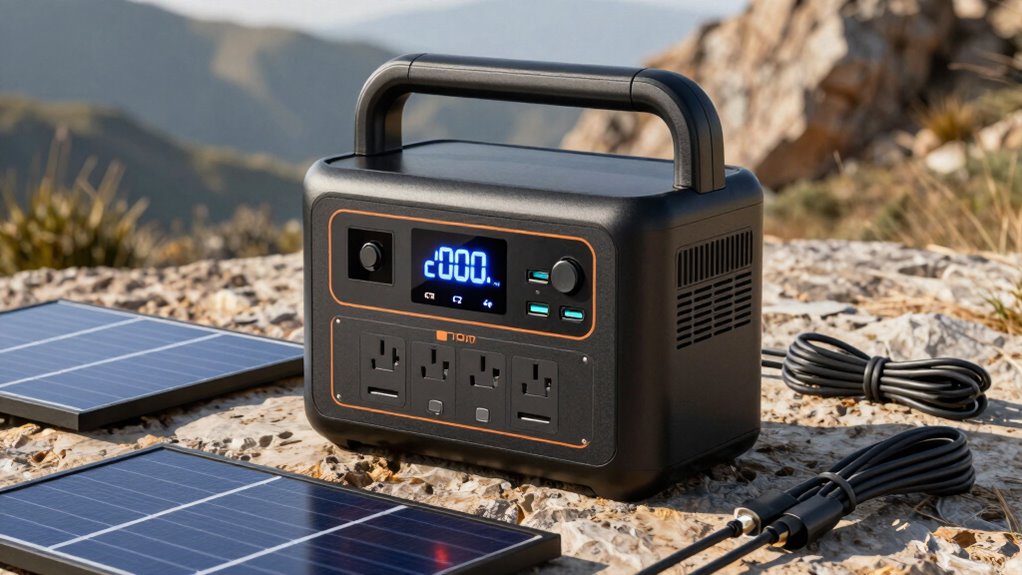

Finding a reliable portable power station with a capacity of 2000Wh can be challenging due to the variety of options available. The EF ECOFLOW DELTA 2 Max stands out as the best overall choice thanks to its robust battery technology and high output power. For those seeking affordability without sacrificing performance, the Anker SOLIX S2000 offers excellent value, while the OUKITEL P2001 Plus impresses with its high wattage peak for demanding devices. Each of these models balances capacity, portability, and power output differently, posing tradeoffs in size, weight, and price. Keep reading to see a detailed breakdown and find the best fit for your needs.

Get business pricing on tech for your team
- Business-only prices and quantity discounts
- Tax-exempt purchasing
- Multiple users, one account, clear invoices
Complete the kit


Key Takeaways
- The top models mostly share similar battery capacities but differ significantly in power output and charging options.
- Build quality and durability are key for outdoor use, but often come with increased weight and size.
- The best value options balance performance and affordability, while premium picks push the limits of capacity and output.
- Compatibility with solar panels varies; some models support fast solar charging, which is essential for off-grid use.
- Price often correlates with additional features like multiple AC outputs, faster recharge times, and advanced battery chemistry.
| EF ECOFLOW Portable Power Station DELTA 2 Max 2048Wh, 2400W LiFePO4 Battery |  | Best Overall for Versatile Power with Expandability | Battery Capacity: 2048Wh | Max Power Output: 2400W | Charge Time (80%): 43 minutes | VIEW ON AMAZON | See Our Full Breakdown |
| DABBSSON Portable Power Station 2000L, 2048Wh Semi-Solid LiFePO4 Battery, 2200W AC Output |  | Best for Portable Heavy-Duty Power in Outdoor Settings | Wattage: 2200 watts | Battery Capacity: 2048Wh | Runtime: 22 hours and 30 minutes | VIEW ON AMAZON | See Our Full Breakdown |
| Anker SOLIX S2000 Portable Power Station (2,010Wh, 1,500W) |  | Best Compact Power with Seamless UPS and Long Battery Life | Capacity: 2010Wh | Continuous Output: 1500W | Peak Output: 3000W | VIEW ON AMAZON | See Our Full Breakdown |
| Anker SOLIX C1000 Gen 2 Portable Power Station |  | Best for Fast Recharging and Portability | Capacity: 1024Wh | Recharge Time: 49 minutes | Output Power: 2000W | VIEW ON AMAZON | See Our Full Breakdown |
| OUKITEL P2001 Plus Portable Power Station, 2048Wh, 2400W Rated / 4800W Peak |  | Best for High Power and Rapid Recharging | Capacity: 2048Wh | Rated Output: 2400W | Peak Output: 4800W | VIEW ON AMAZON | See Our Full Breakdown |
| Anker SOLIX C2000 Gen 2 Portable Power Station, 2,048Wh, 2,400W |  | Best Overall | Capacity: 2,048Wh (expandable to 4kWh) | Rated Output: 2,400W | Peak Output: 4,000W | VIEW ON AMAZON | See Our Full Breakdown |
| EBL 2400W Portable Power Station LiFePO4 Battery for Home Use |  | Best for Heavy-Duty Home Backup | Capacity: 1843.2Wh | Power Output: 2400W | Ports: 4 AC, 2 USB-A, 2 USB-C, 1 car, 2 DC | VIEW ON AMAZON | See Our Full Breakdown |
| AFERIY P210 Solar Generator 2048Wh Portable Power Station 2400W (4800W Peak) |  | Best for Quiet Operation and Smart Management | Battery Capacity: 2048Wh | Inverter Power: 2400W | Peak Power: 4800W | VIEW ON AMAZON | See Our Full Breakdown |
| Jackery HomePower 2000 Plus v2 Power Station, 2048Wh, 2400W AC Output |  | Best for Long-Term Home Backup | Capacity: 2048Wh (expandable to 12kWh) | AC Output: 2400W | Battery Type: LiFePO4 | VIEW ON AMAZON | See Our Full Breakdown |
| AFERIY P280 Portable Power Station 2800W (Peak 5600W) UPS Solar Generator |  | Best for High-Power UPS Backup and Fast Charging | Wattage: 2800W | Peak Power: 5600W | Battery Capacity: 2048Wh | VIEW ON AMAZON | See Our Full Breakdown |
| OUPES Mega 1 Portable Power Station 1024Wh 2000W (4500W Surge) |  | Best for Modular Expansion and Professional-Grade Power | Capacity: 1024 watt-hours | Max Output: 2000 watts | Surge Power: 4500 watts | VIEW ON AMAZON | See Our Full Breakdown |
| portable power station 2000wh | Weight | Capacity |
|---|---|---|
| EF ECOFLOW Portable Power Stat | — | — |
| DABBSSON Portable Power Statio | — | — |
| Anker SOLIX S2000 Portable Pow | 35.7 lbs | 2010Wh |
| Anker SOLIX C1000 Gen 2 Portab | 11% lighter than similar models | 1024Wh |
| OUKITEL P2001 Plus Portable Po | — | 2048Wh |
| Anker SOLIX C2000 Gen 2 Portab | 41.7 lb (18.9 kg) | 2,048Wh (expandable to 4kWh) |
| EBL 2400W Portable Power Stati | 55 Pounds | 1843.2Wh |
| AFERIY P210 Solar Generator 20 | 48.5 lbs | — |
| Jackery HomePower 2000 Plus v2 | 40.6 lbs | 2048Wh (expandable to 12kWh) |
| AFERIY P280 Portable Power Sta | 44 pounds | — |
| OUPES Mega 1 Portable Power St | Approx. 45 lbs | 1024 watt-hours |
More Details on Our Top Picks
EF ECOFLOW Portable Power Station DELTA 2 Max 2048Wh, 2400W LiFePO4 Battery
The EF ECOFLOW DELTA 2 Max stands out for its impressive 2048Wh LiFePO4 battery combined with a high 2400W output, making it suitable for both backup power and outdoor use. Compared with the OUKITEL P2001 Plus, the DELTA 2 Max offers more outlets and faster charging, but this comes with increased weight and price. Its ability to expand capacity up to 6kWh offers unmatched flexibility, especially for users who need long-term power solutions. However, the setup for solar charging can be more involved, and portability might be limited for some. This choice is ideal for families or small businesses seeking reliable, expandable power with quick recharge times.
Pros:- Fast charging with 80% in just 43 minutes
- Long-lasting LiFePO4 battery with 3000 cycles
- Expandable capacity up to 6kWh for versatile use
Cons:- Can be heavy to carry for some users
- Higher price point compared to simpler models
- Requires setup for optimal solar charging
Best for: Homeowners or outdoor enthusiasts needing reliable, expandable power with fast charging and multiple charging options
Not ideal for: Lightweight travelers or users with limited space who prioritize portability over capacity and expandability
- Battery Capacity:2048Wh
- Max Power Output:2400W
- Charge Time (80%):43 minutes
- Battery Chemistry:LiFePO4
- Cycle Life:3000 cycles
- Expandable Capacity:Up to 6kWh
- Number of Outlets:15
- Charging Options:Solar, AC, Car
Our verdict“This model fits those wanting a durable, expandable power station with rapid charging and multiple power options.”
DABBSSON Portable Power Station 2000L, 2048Wh Semi-Solid LiFePO4 Battery, 2200W AC Output
The DABBSSON 2000L offers a robust 2048Wh semi-solid LiFePO4 battery paired with a 2200W continuous output, making it a solid choice for camping, RVs, or home backup. Unlike the Anker SOLIX S2000, which emphasizes seamless UPS and long-term home use, the DABBSSON prioritizes higher power output and longer runtime in a portable form. Its 41-pound weight is a tradeoff for durability and capacity, and the limited number of AC outlets may be insufficient for complex setups. It shines for users who need high power on the go but are willing to carry a heavier device. This makes it well-suited for outdoor adventurers or emergency backup where capacity and durability matter most.
Pros:- Longer runtime and durable semi-solid LiFePO4 battery
- High continuous power output of 2200W
- Fast recharging in just 1 hour
Cons:- Relatively heavy at 41 pounds
- Limited AC outlets may restrict multiple high-power device use
- Requires optional solar panel for solar recharging
Best for: Campers, RV travelers, or outdoor users needing high power and durability in a portable unit
Not ideal for: Lightweight backpackers or those with limited space who need a more lightweight solution
- Wattage:2200 watts
- Battery Capacity:2048Wh
- Runtime:22 hours and 30 minutes
- Item Weight:41 pounds
- Output Wattage:2200W
- Charging Time:1 hour
Our verdict“Ideal for outdoor enthusiasts needing rugged, high-capacity power that’s still portable enough for adventures.”
Anker SOLIX S2000 Portable Power Station (2,010Wh, 1,500W)
The Anker SOLIX S2000 offers a slightly smaller 2010Wh capacity paired with a 1500W continuous output, making it well-suited for users who prioritize space and long-term service. Its 10,000-cycle LFP battery promises a lifespan of about 15 years, which outperforms many competitors like the OUKITEL P2001 Plus in longevity. Its compact size and six recharge methods, including 400W solar input, provide great flexibility. The absence of a 12V DC port is a notable drawback for some applications, and its maximum output might be limiting for high-wattage appliances. This pick makes the most sense for home office use or small households aiming for reliable backup with minimal footprint.
Pros:- Long battery life with 10,000 cycles (~15 years)
- Compact, lightweight design for a 2kWh station
- Six recharge options including 400W solar input
Cons:- No 12V DC port for certain devices
- Limited to 1500W continuous output
- Price premium for advanced features
Best for: Home office users or small households needing long-lasting, space-efficient backup power
Not ideal for: Heavy-duty outdoor use or high-wattage appliances requiring more than 1500W continuous power
- Capacity:2010Wh
- Continuous Output:1500W
- Peak Output:3000W
- Battery Cycles:10,000
- Dimensions:8.2 × 11.1 × 12.7 in
- Weight:35.7 lbs
Our verdict“Best suited for those seeking a compact, long-lasting backup power solution with seamless UPS integration.”
Anker SOLIX C1000 Gen 2 Portable Power Station
The Anker SOLIX C1000 Gen 2 combines a 1024Wh capacity with a rapid 49-minute recharge via HyperFlash technology, making it ideal for quick turnarounds and lightweight transport. Its 2000W output ensures it can handle many household devices, though it lacks the higher capacity of larger units like the EF ECOFLOW Delta 2 Max. Its compact size and support for solar recharging make it perfect for off-grid trips, but the limited outlet count and higher price may deter those with extensive power needs. This model is designed for users who want quick recharges and high power in a smaller, portable package.
Pros:- Fast recharge in 49 minutes with HyperFlash
- High 2000W output in a compact form factor
- Supports solar recharging and UPS backup
Cons:- Limited capacity at 1024Wh
- Only 10 ports, which may be insufficient for multiple devices
- Higher price relative to size
Best for: Campers or emergency users who value fast recharging and portability over large capacity
Not ideal for: Those needing to power high-wattage appliances continuously or long-term backup solutions
- Capacity:1024Wh
- Recharge Time:49 minutes
- Output Power:2000W
- Battery Cycles:4000
- Weight:11% lighter than similar models
- Size:14% smaller than similar models
Our verdict“Excellent for quick recharging and portability but not for long-term or high-capacity power needs.”
OUKITEL P2001 Plus Portable Power Station, 2048Wh, 2400W Rated / 4800W Peak
The OUKITEL P2001 Plus delivers a substantial 2048Wh capacity with a 2400W rated output and a peak of 4800W, making it ideal for powering entire homes or demanding appliances. Its fast recharging—just 90 minutes from 0 to 100%—surpasses many competitors, including the EF ECOFLOW Delta 2 Max, which takes longer to recharge, albeit with more advanced safety features. The LiFePO4 battery ensures over 4000 cycles, but its weight at nearly 47.4 pounds makes portability a concern for some. This model is best for users requiring high surge capacity and quick recharge times, especially for emergency or home backup scenarios.
Pros:- High 2400W rated and 4800W peak power
- Fast 90-minute recharge from zero
- Long-life LiFePO4 battery with 4000+ cycles
Cons:- Heavy at nearly 47.4 pounds
- Limited number of outlets for extensive device use
- Larger footprint may be less portable
Best for: Homeowners or emergency responders needing high power and rapid recharge capability
Not ideal for: Lightweight travelers or those with limited space who need a portable, lighter option
- Capacity:2048Wh
- Rated Output:2400W
- Peak Output:4800W
- Recharge Time:90 minutes
- Battery Type:LiFePO4
- Charge Cycles:4000+
Our verdict“Best for users who prioritize high surge capacity and quick recharge over weight and portability.”
Anker SOLIX C2000 Gen 2 Portable Power Station, 2,048Wh, 2,400W
The Anker SOLIX C2000 Gen 2 stands out for its rapid 58-minute recharge time and expandable capacity up to 4kWh, making it a versatile choice for those who want quick recharging and future-proofing. Compared to the Jackery HomePower 2000 Plus, it offers a higher peak output and faster recharge, but at a slightly heavier weight and with an expansion battery sold separately. Its high 4,000W peak power allows it to run larger appliances like RV A/C units, making it suitable for outdoor enthusiasts and emergency preparedness. The compact design and lighter weight (41.7 lbs) improve portability, yet it remains a bit heavy for backpacking or extremely remote camping. Overall, it’s ideal for users seeking robust, fast-charging power with expandable capacity, but those needing ultra-lightweight gear might find it less convenient.
Pros:- Very fast recharge time — fully charged in 58 minutes
- Expandable capacity up to 4kWh with expansion battery
- High 4,000W peak output can run large appliances
- Lighter and more compact than comparable options
Cons:- Expansion battery for 4kWh capacity sold separately
- At 41.7 lbs, still relatively heavy for portability
Best for: Campers and emergency preppers who need fast recharging and expandable power capacity
Not ideal for: Backpackers or ultralight campers who prioritize minimal weight and portability
- Capacity:2,048Wh (expandable to 4kWh)
- Rated Output:2,400W
- Peak Output:4,000W
- Battery Type:LiFePO4
- Recharge Time:58 minutes to 100%
- Weight:41.7 lb (18.9 kg)
Our verdict“This pick is best suited for users who prioritize quick recharging and expandable capacity over ultra-lightweight portability.”
EBL 2400W Portable Power Station LiFePO4 Battery for Home Use
The EBL 2400W Portable Power Station offers a substantial 1843.2Wh capacity and a robust 2400W output, making it well-suited for home backup and high-wattage outdoor devices. Unlike the AFERIY P210, which emphasizes quiet operation and smart app management, the EBL prioritizes raw power and port variety, providing multiple AC, USB, and DC ports for simultaneous device use. Due to its 55-pound weight, it’s less portable but excels at stationary backup or worksite applications where weight is less critical. Its long cycle life of over 3500 cycles means it can sustain years of frequent use. If your main focus is durable, high-capacity power for multiple devices in a semi-permanent setup, this model makes a compelling choice; but for frequent, lightweight travel, it may be too bulky.
Pros:- High-capacity battery supports multiple devices simultaneously
- Long lifespan with over 3500 charge cycles
- Multiple ports including fast-charging USB-C
- Durable LiFePO4 cells with a 10+ year service life
Cons:- Heavy at 55 pounds, less portable for on-the-go use
- Large size may limit portability in tight spaces
Best for: Homeowners seeking reliable backup power and long-term durability for multiple devices
Not ideal for: Lightweight campers or those needing a portable solution for remote adventures
- Capacity:1843.2Wh
- Power Output:2400W
- Ports:4 AC, 2 USB-A, 2 USB-C, 1 car, 2 DC
- Battery Type:LiFePO4
- Cycle Life:Over 3500
- Weight:55 Pounds
Our verdict“Ideal for home backup and stationary high-wattage needs, especially where durability outweighs portability.”
AFERIY P210 Solar Generator 2048Wh Portable Power Station 2400W (4800W Peak)
The AFERIY P210 stands out for its quiet operation and smart app management, offering a 2048Wh LiFePO4 battery and 2400W inverter with a peak of 4800W. Compared with the Anker SOLIX C2000, it provides a similar capacity but emphasizes silent, app-controlled operation suitable for discreet outdoor or residential backup. The 7-year warranty and long cycle life of over 3500 cycles make it a durable choice for those seeking longevity. Its six outlets and multiple ports support diverse device needs, but the 48.5-pound weight could limit portability for frequent travelers. This model is perfect for users who want a quiet, smart, and reliable backup, though it might be less suited for those who need ultra-lightweight gear or quick recharges.
Pros:- Long-lasting LiFePO4 battery with 3500+ cycles
- Quiet operation under 30 dB
- Supports multiple devices via 6 outlets
- Smart app for remote monitoring and control
Cons:- Relatively heavy at 48.5 lbs, less portable
- Approximate runtime of 1 hour at full load, limiting continuous use
Best for: Campers and homeowners who value quiet operation and smart remote management
Not ideal for: Travelers requiring ultra-light equipment or those needing rapid recharging in remote locations
- Battery Capacity:2048Wh
- Inverter Power:2400W
- Peak Power:4800W
- Cycle Life:3500+ cycles
- Weight:48.5 lbs
- Number of Outlets:6
Our verdict“This model suits users prioritizing silent operation and smart management over ultra-lightweight portability.”
Jackery HomePower 2000 Plus v2 Power Station, 2048Wh, 2400W AC Output
The Jackery HomePower 2000 Plus v2 is distinguished by its exceptional longevity, with a LiFePO4 battery rated for over 6000 cycles—roughly 16 years of use—making it ideal for long-term residential backup. Its expandable capacity to 12kWh allows for extended outages and large-scale home energy needs, unlike the AFERIY P210, which is more compact and app-controlled. Weighing only 40.6 lbs, it is the lightest among the expandable 2kWh options, emphasizing ease of installation and mobility. The 140W USB-C fast charging supports modern devices, but the 2200W continuous wattage may limit high-demand appliances. This model is perfect for users wanting a durable, long-lasting backup system for permanent or semi-permanent installation, though less suitable for portable outdoor use.
Pros:- Expandable to 12kWh for extensive backup
- Longest battery cycle life—over 6000 cycles (~16 years)
- Lightest expandable 2kWh system at 40.6 lbs
- Fast 140W USB-C charging for devices
Cons:- Solar panels sold separately, adding additional cost
- Limited runtime of approximately 1 hour at full load
Best for: Homeowners seeking durable, long-lasting backup power with expandability
Not ideal for: Travelers needing ultra-portable, lightweight solutions for remote adventures
- Capacity:2048Wh (expandable to 12kWh)
- AC Output:2400W
- Battery Type:LiFePO4
- Battery Cycles:6000+
- Weight:40.6 lbs
Our verdict“This system is best for users prioritizing long-term durability and expandability over portability.”
AFERIY P280 Portable Power Station 2800W (Peak 5600W) UPS Solar Generator
The AFERIY P280 offers impressive 2800W continuous power and a peak of 5600W, with a 2048Wh LiFePO4 battery designed for high-demand backup and portable energy. Its rapid 38-minute recharge and dual solar inputs make it highly capable for emergency situations and off-grid use, especially compared to the Anker SOLIX C2000, which emphasizes lighter weight and faster recharge but with slightly less peak power. The P280’s server-level UPS feature ensures seamless power during outages, a major plus for critical appliances. Weighing 44 pounds, it balances high power with reasonable portability, suitable for home backup, camping, and RV use. The limited outlets (only 1 main) can restrict simultaneous device charging, but its high wattage and fast recharge make it a strong choice for high-demand scenarios requiring quick setup.
Pros:- Fast recharge in just 38 minutes
- High 2800W continuous power with 5600W peak
- Supports dual solar inputs for flexible renewable energy
- Reliable server-level UPS with fast response
Cons:- Relatively heavy at 44 lbs, less portable for frequent movement
- Limited number of outlets (only 1), restricting device simultaneity
Best for: Home or RV users needing high wattage, rapid recharging, and reliable UPS backup
Not ideal for: Lightweight backpackers or those seeking ultra-portable solutions for remote adventures
- Wattage:2800W
- Peak Power:5600W
- Battery Capacity:2048Wh
- Cycle Life:Unknown
- Weight:44 pounds
Our verdict“Best suited for users who need quick recharging, high power, and reliable backup for critical devices, accepting some weight for capability.”
OUPES Mega 1 Portable Power Station 1024Wh 2000W (4500W Surge)
The OUPES Mega 1 stands out for its ability to scale up to 5120Wh, making it ideal for users needing flexible, high-capacity power in off-grid or emergency scenarios. Compared to the EF ECOFLOW Delta 2 Max, which has a slightly larger capacity of 2048Wh but fewer expansion options, the Mega 1 offers a more customizable setup—though this added flexibility can complicate setup and increase cost. Its fast recharge—0-80% in just 36 minutes—means less downtime, a significant advantage over less responsive models. The UPS feature with <20ms transfer time provides reliable backup power for sensitive electronics, a benefit over many competitors lacking immediate transfer. However, the unit's weight and complex expansion process might be a barrier for users seeking straightforward portability or quick setup. This pick makes the most sense for professionals or serious off-grid users who need reliable, scalable power with fast recharge times, willing to manage the added complexity. Overall, it balances professional features with versatility, but at a premium price and weight.Pros:- Modular design allows expansion up to 5120Wh for future-proofing
- Fast recharge with 0-80% in just 36 minutes minimizes downtime
- Reliable <20ms UPS ensures continuous power for sensitive devices
- Versatile outputs support a broad range of devices
Cons:- Heavy weight may challenge portability and transport
- Complex setup for expansion could intimidate non-technical users
- Premium price point may be prohibitive for casual buyers
Best for: Professionals or advanced users who need scalable, reliable power for off-grid, emergency, or professional applications.
Not ideal for: Casual campers or users seeking lightweight, simple solutions—its weight and setup complexity are significant drawbacks.
- Capacity:1024 watt-hours
- Max Output:2000 watts
- Surge Power:4500 watts
- Recharge Time:0-80% in 36 minutes
- Expansion Capable:Up to 5120Wh
- Output Types:Multiple AC, USB, and DC ports
- UPS Transfer Time:<20 milliseconds
- Material:Lithium Iron Phosphate
- Weight:Approx. 45 lbs
Our verdict“This power station is best suited for users needing scalable, professional-grade power with fast recharge capabilities, despite its weight and setup complexity.”
How We Picked
Our evaluation focused on capacity, power output, build quality, and versatility. We prioritized models that deliver consistent performance at 2000Wh, ensuring they can handle essential appliances and devices. Ease of use, portability, and safety features also influenced rankings, alongside value for money. We compared specifications, customer reviews, and brand reputation to identify models that meet real-world needs, balancing performance with price. The ranking reflects a combination of technical merit and practical considerations, helping buyers identify options suited to different priorities and budgets.
Factors to Consider When Choosing Portable Power Station 2000wh
Choosing the right portable power station with 2000Wh capacity involves more than just battery size. Buyers should consider factors like output versatility, charging options, and portability to match their specific use cases. Understanding these elements can prevent costly mistakes and ensure the selected model fits seamlessly into your lifestyle, whether for home backup, camping, or RV use.Power Output and Compatibility
Assess the total wattage and types of outlets needed for your devices. Some models offer higher continuous power (wattage) suitable for larger appliances, while others focus on multiple AC, USB, or DC ports for diverse device compatibility. Pay attention to surge capacity, which indicates how well the station can handle startup power spikes for devices like refrigerators or power tools. Choosing a model with sufficient output ensures your essential gear operates smoothly without overloads.
Battery Chemistry and Longevity
Battery chemistry impacts longevity, safety, and charging cycles. Lithium Iron Phosphate (LiFePO4) batteries generally last longer and are safer compared to traditional lithium-ion types, making them preferable for regular use. While LiFePO4 models may be heavier and more expensive upfront, they often deliver more consistent performance over time. Consider your expected usage frequency and whether investing in advanced chemistry aligns with your long-term needs.
Portability and Size
Size and weight are critical if portability matters. Compact models are easier to carry for outdoor adventures, but they might compromise on features or power output. Larger units with higher capacity tend to be bulkier and heavier, which could limit mobility. Think about how often you’ll move the station and whether a lighter, more portable design justifies a slight reduction in power or features.
Charging Options and Speed
Fast recharging capabilities via wall or solar power can significantly extend usability, especially in off-grid scenarios. Look for models that support quick wall charging and multiple solar input ports if rapid recharge times are essential. Consider whether the power station can be recharged while used simultaneously (pass-through charging), which adds convenience during extended outages or trips.
Price and Value
Price is often a reflection of build quality, features, and brand reputation. While higher-priced options may offer more advanced features or longer battery life, they aren’t always necessary for every user. Evaluate whether the extra cost aligns with your primary needs—occasional backup or frequent outdoor use—and avoid overspending on features you won’t utilize. Conversely, opting for the cheapest model might sacrifice durability or power capacity.
Frequently Asked Questions
Can a portable power station 2000Wh run my refrigerator continuously?
Many 2000Wh stations can run a standard refrigerator for several hours, depending on its wattage. Typically, a refrigerator uses 100-200W, so a 2000Wh capacity could power it for about 10-20 hours. However, you should verify the surge wattage and continuous wattage ratings of the power station to ensure compatibility. For longer runs, consider models with higher surge capacity and multiple outlets to distribute power efficiently.
Is it worth investing in a solar-compatible power station?
Yes, solar compatibility can be a valuable feature if you plan to use the power station off-grid or during extended outages. Solar input allows recharging during the day without relying solely on grid power, which can save money and increase independence. Check the maximum solar input wattage supported to ensure your panels can recharge the station efficiently. Keep in mind that solar recharging is slower than wall charging, so it’s best suited for supplemental or emergency use.
How important is the battery chemistry in choosing a portable power station?
Battery chemistry plays a significant role in the station’s longevity, safety, and performance. Lithium Iron Phosphate (LiFePO4) batteries are safer and last longer, often offering over 2000 charge cycles. Traditional lithium-ion batteries may be less expensive but tend to degrade faster and pose higher fire risks. Investing in LiFePO4 models generally provides better value over time, especially if you plan frequent use or require reliable, long-term performance.
Should I prioritize higher surge wattage or continuous wattage?
Both metrics matter, but their importance depends on your device needs. Continuous wattage indicates the maximum power the station can supply steadily, while surge wattage reflects the initial power spike when starting equipment like refrigerators or power tools. If you plan to run devices with high startup demands, a higher surge rating is beneficial. For steady operation of smaller devices, focus on sufficient continuous wattage. Ensuring both are adequate prevents overloads and shutdowns.
What features make a portable power station more user-friendly?
Features like multiple charging ports, fast recharge, and a clear display of remaining capacity enhance usability. A rugged design with handles or wheels improves portability, especially for outdoor use. Some models include app connectivity for remote monitoring, which can be a game-changer for managing power. Safety features such as overload protection and thermal management also contribute to a more reliable and user-friendly experience, reducing worries during operation.
Conclusion
For most users seeking a dependable all-around option, the EF ECOFLOW DELTA 2 Max offers a compelling combination of capacity, output, and durability, making it the best overall pick. Those on a tighter budget or looking for excellent value should consider the Anker SOLIX S2000, which balances price and performance. For premium buyers willing to pay for cutting-edge features and longer lifespan, models like the OUKITEL P2001 Plus stand out. Beginners or casual users might prefer more straightforward models with simpler interfaces, while outdoor enthusiasts should prioritize rugged, portable options with solar compatibility. Your ideal choice depends on how you plan to use the station and which features matter most in your scenario.
Fall Picks
fall essentials
As an affiliate, we earn on qualifying purchases.