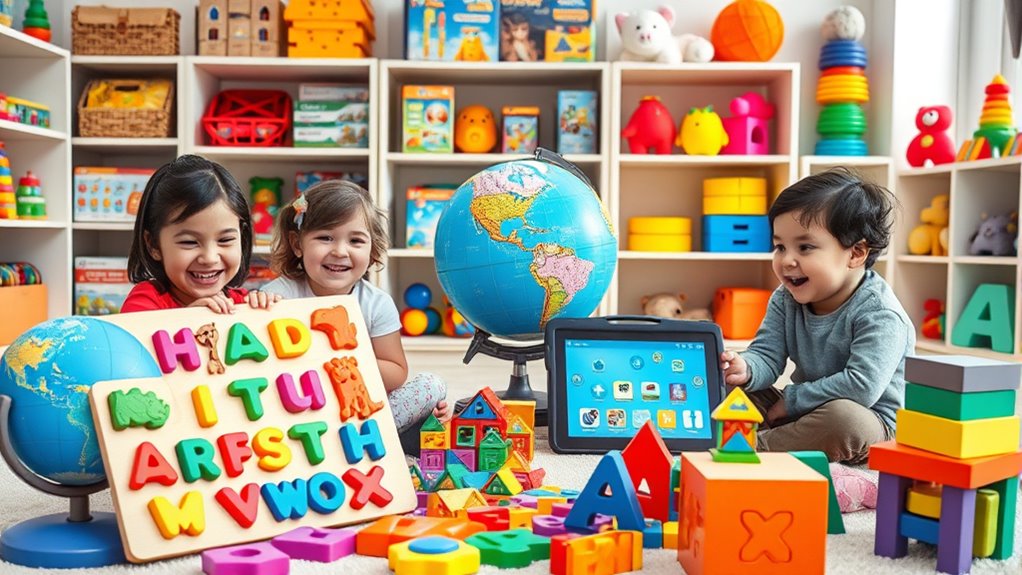

Choosing an educational toy involves balancing fun with developmental value. The PicassoTiles 100 Piece Magnetic Tiles stands out as the best overall for fostering creativity and spatial skills, thanks to its versatile building potential. For early language development, the Talking Flash Cards for Toddlers offers engaging vocabulary practice, while the LEGO STEM Explorers Brainometry is ideal for nurturing curiosity in science and engineering. However, parents face tradeoffs between price, complexity, and age appropriateness. Continue reading for a detailed breakdown of the top options and what makes each unique.

Get business pricing on tech for your team
- Business-only prices and quantity discounts
- Tax-exempt purchasing
- Multiple users, one account, clear invoices
Key Takeaways
- The best educational toys blend multiple skill areas, such as STEM, language, and motor skills, within a single product.
- Open-ended toys like magnetic tiles and building sets tend to provide more long-term engagement than single-focus options.
- Age-appropriate complexity is key; toys that are too advanced can frustrate, while overly simple toys may not challenge children enough.
- Durability and safety features critically impact long-term value, especially for younger children who tend to be rougher.
- Pricing varies widely, but investing in a versatile, high-quality toy often yields better educational outcomes over time.
| PicassoTiles 100 Piece Magnetic Tiles – Clear 3D Building Blocks for Kids 3+ |  | Best Overall for Creative STEM Play | Brand: PicassoTiles | Model Name: PT100 | Age Range: 3+ | VIEW ON AMAZON | See Our Full Breakdown |
| Talking Flash Cards for Toddlers Ages 1-4, 224 Words – Blue |  | Best for Vocabulary and Speech Development | Brand Name: Airbition | Educational Objective: Cognitive Skills | Age Range: 1+ | VIEW ON AMAZON | See Our Full Breakdown |
| 1000X Handheld Digital Microscope for Kids with 2.0″ IPS Screen |  | Best for STEM Exploration and Scientific Inquiry | Magnification: 1000X | Camera Resolution: 2MP | Display: 2.0″ IPS Screen | VIEW ON AMAZON | See Our Full Breakdown |
| MOTREE Preschool Math Manipulatives Learning Toys for Toddlers 2-4 |  | Best for Early Math and Fine Motor Skills | Included Components: Counting board, Cards, Number blocks | Age Range: 36 months – 5 years | Material: Natural basswood | VIEW ON AMAZON | See Our Full Breakdown |
| Magnetic Wooden Fishing Game Toy for Preschoolers, Alphabet Fish Catching Counting Games Puzzle with Numbers and Letters |  | Best for Letter and Number Recognition Skills | Brand: NASHRIO | Age Range: 36 months – 3 years | Material: Wood | VIEW ON AMAZON | See Our Full Breakdown |
| Learning Resources MathLink Cubes – Set of 100 Cubes for STEM Learning and Math Skills |  | Best Overall Educational Toy for Foundational Math Skills | Quantity: 100 cubes | Age Range: 5+ | Materials: Plastic | VIEW ON AMAZON | See Our Full Breakdown |
| Learning Resources Spike The Original Fine Motor Hedgehog |  | Best for Toddler Fine Motor Skill Development | Suitable Age: 18 months+ | Number of Quills: 12 | Material: Chunky plastic | VIEW ON AMAZON | See Our Full Breakdown |
| LeapFrog Magic Adventures Globe |  | Best Interactive Globe for Cultural and Habitat Exploration | Screen Size: 2.8 inches | Batteries: 4 AA (included for demo, new recommended) | Age Range: 5+ | VIEW ON AMAZON | See Our Full Breakdown |
| Melissa & Doug Pattern Blocks and Boards with 120 Multi-Colored Wooden Shape Tiles, 5 Double-Sided Puzzle Boards, Tangram Puzzles, Montessori Toys for Kids |  | Best Screen-Free Pattern Recognition and Shape Play Set | Number of Tiles: 120 | Number of Puzzle Boards: 5 | Material: Wood | VIEW ON AMAZON | See Our Full Breakdown |
| LeapFrog Mr. Pencil’s Scribble Write and Read |  | Best Early Writing and Reading Interactive Toy | Age Range: 3+ | Batteries: 3 AA batteries (included for demo, new batteries recommended) | VIEW ON AMAZON | See Our Full Breakdown | |
| Learning Resources Time Activity Set |  | Best for Hands-On Time Telling Practice | Includes: teaching clock, write-and-wipe clock, activity cards, puzzles, dice, activity guide | Intended Audience: Students and classrooms | Purpose: Learn to tell time, practice identifying hours and half-hours | VIEW ON AMAZON | See Our Full Breakdown |
| Learning Resources STEM Explorers Brainometry |  | Best for Critical Thinking and Problem-Solving | Ages: 5+ | Pieces: 34 puzzle pieces | Includes: 10 double-sided challenge cards | VIEW ON AMAZON | See Our Full Breakdown |
| 4 Pack LCD Writing Tablet for Kids, 8.5 Inch Colorful Doodle Board Drawing Tablet |  | Best for Creative Drawing and On-the-Go Learning | Number of Pack: 4 | Screen Size: 8.5 inches | Colors Included: Blue, Light Blue, Green, Pink | VIEW ON AMAZON | See Our Full Breakdown |
| LeapFrog 2-in-1 LeapTop Touch |  | Best for Interactive Preschool Learning On the Go | Brand: LeapFrog | Age Range: 2-5 years | Includes: 2-in-1 LeapTop Touch, Parent’s Guide | VIEW ON AMAZON | See Our Full Breakdown |
More Details on Our Top Picks
PicassoTiles 100 Piece Magnetic Tiles – Clear 3D Building Blocks for Kids 3+
This set stands out for fostering both creativity and foundational STEM skills, making it ideal for young children who enjoy hands-on construction. Compared with the more specialized MOTREE Preschool Math Manipulatives, these magnetic tiles offer a broader scope for free-form building, though they lack the precise math focus. The magnetic aspect encourages understanding of polarities and spatial reasoning, but the fragile tiles can crack if mishandled by energetic kids. Its simple assembly and storage make it accessible for family use, and the large set supports group play. However, for older children seeking more complex engineering challenges, this might feel too basic.
Pros:- Encourages creativity and STEM exploration
- Supports large, scalable structures for group play
- Easy to assemble and store
Cons:- Can be fragile if mishandled by energetic children
- Limited complexity for older children or advanced learners
Best for: Families seeking a versatile, open-ended building toy that promotes creativity and basic STEM concepts for children aged 3 and up.
Not ideal for: Parents looking for structured math or science experiments, as this set emphasizes free-form building over specific academic skills.
- Brand:PicassoTiles
- Model Name:PT100
- Age Range:3+
- Unit Count:100
- Included Components:Instruction Manual
Our verdict“This set makes the most sense for young kids and families who want a flexible, engaging building toy that sparks imagination.”
Talking Flash Cards for Toddlers Ages 1-4, 224 Words – Blue
This set excels at expanding early language skills with 224 colorful words and sounds, making it a strong companion to the more tactile MOTREE Preschool Math Manipulatives. While the flash cards support speech therapy and cognitive growth, they require manual operation, which may be less intuitive for some toddlers. Its screen-free, durable design minimizes screen time and reduces eye strain, but the reliance on batteries and limited content in English might be drawbacks for some parents. This product is best for parents prioritizing interactive, auditory learning, especially when introducing new vocabulary.
Pros:- Interactive with 224 words and sounds
- Supports speech therapy and cognitive growth
- Rechargeable with volume control
Cons:- Requires manual operation, which may reduce engagement
- Limited to English content, less versatile for bilingual households
Best for: Parents of toddlers and preschoolers focused on building vocabulary, speech, and cognitive skills through interactive play.
Not ideal for: Children who prefer hands-on tactile activities or advanced language learners seeking bilingual content, as this is limited to English and manual operation.
- Brand Name:Airbition
- Educational Objective:Cognitive Skills
- Age Range:1+
- Set Name:224 Words
- Color:Blue
- UPC:714955910177
Our verdict“Ideal for parents wanting a durable, screen-free tool to boost vocabulary and speech in young children.”
1000X Handheld Digital Microscope for Kids with 2.0″ IPS Screen
This microscope offers impressive magnification and imaging quality, making it ideal for curious children interested in exploring plant cells or insects in detail. Compared with the PicassoTiles magnetic tiles, it emphasizes scientific investigation over construction. The high magnification and photo/video features support detailed documentation, but its limited 2-hour battery life and the need for USB connections for power and data could be inconvenient. It’s best suited for children with an existing interest in science and who can handle the device responsibly, but very young kids might find the operation challenging.
Pros:- High lab-quality magnification of 1000X
- Includes photo and video capture for documentation
- Portable with rechargeable battery
Cons:- Limited battery life of 2 hours per charge
- Requires USB for operation, less convenient for outdoor use
Best for: Parents of children with a keen interest in science, microscopy, or nature exploration, especially those who value portable, high-quality imaging tools.
Not ideal for: Young children who need simple, less technical toys or those looking for educational toys with longer battery life and standalone operation.
- Magnification:1000X
- Camera Resolution:2MP
- Display:2.0″ IPS Screen
- Battery:600mAh, lasts 2 hours
- LED Lights:8 adjustable LEDs
- Material:ABS plastic
Our verdict“This device is best for science-minded kids and parents wanting detailed exploration capabilities in a portable format.”
MOTREE Preschool Math Manipulatives Learning Toys for Toddlers 2-4
This set makes early math engaging with wooden number blocks, a finger board, and flash cards, offering a more structured approach than the open-ended PicassoTiles. It supports foundational addition and subtraction within 10, fostering early numeracy and fine motor skills. While its focus on basic arithmetic is valuable, it doesn’t extend to more complex math concepts, and younger children may need adult guidance. Its durable, non-toxic materials make it a safe choice for preschoolers, but it might feel limited for children ready for more advanced math challenges.
Pros:- Supports early math and fine motor skills
- Made of durable, non-toxic wood
- Includes multiple components for varied activities
Cons:- Limited to basic addition and subtraction within 10
- May require adult supervision for younger children
Best for: Parents and teachers seeking an educational, durable set to teach basic math concepts to preschoolers and toddlers.
Not ideal for: Children who have already mastered basic addition and subtraction or who need more advanced math activities at this stage.
- Included Components:Counting board, Cards, Number blocks
- Age Range:36 months – 5 years
- Material:Natural basswood
- Model Number:Math Manipulatives
Our verdict“This set is best for early learners who need a solid, hands-on introduction to foundational math skills.”
Magnetic Wooden Fishing Game Toy for Preschoolers, Alphabet Fish Catching Counting Games Puzzle with Numbers and Letters
This fishing game combines fun with learning, encouraging children to recognize letters and numbers while developing hand-eye coordination. It surpasses the simpler Learning Resources Spike The Original Hedgehog in interactivity, thanks to magnetic fish and a fishing pole. The eco-friendly wooden construction and colorful design make it appealing and safe, but its limited age range and small parts mean it’s less suitable for older kids or those who have outgrown basic letter and number recognition. It’s a charming, educational gift for preschoolers, though not designed for extended use beyond early childhood.
Pros:- Encourages learning of letters and numbers through play
- Made from safe, eco-friendly materials
- Helps develop fine motor skills and coordination
Cons:- Limited to preschool age, not suitable for older children
- Small parts require adult supervision for safety
Best for: Parents seeking a colorful, engaging activity to teach early letter and number recognition to children aged 3 and up.
Not ideal for: Older children or those seeking more comprehensive or advanced math and literacy activities, as the toy’s scope is limited to preschool age.
- Brand:NASHRIO
- Age Range:36 months – 3 years
- Material:Wood
- Model Number:SC-T004A1
- UPC:046432481369
Our verdict“This fishing game makes a delightful, educational activity for young children just starting to recognize letters and numbers.”
Learning Resources MathLink Cubes – Set of 100 Cubes for STEM Learning and Math Skills
This set of 100 MathLink Cubes distinguishes itself as the most versatile for early math development, supporting counting, addition, subtraction, and patterning. Compared with the Melissa & Doug Pattern Blocks, these cubes foster a broader range of STEM activities, though they lack the shape variety for advanced pattern recognition. The durable plastic and all-sides snapping design make it suitable for classroom use, but their simplicity means advanced learners might find them limiting. These cubes excel for educators or parents seeking a comprehensive, tactile math tool that grows with young children, but they may not keep kids engaged for long if more complex activities are desired.
Pros:- Supports a wide range of early math skills and STEM activities
- Durable and easy to snap together for complex patterns
- Ideal for classroom, homeschool, or gift-giving occasions
Cons:- May be too simple for advanced learners
- Limited to basic geometric shapes and colors
Best for: Homeschoolers or teachers looking for a durable, multi-skill math manipulative for children aged 5 and up
Not ideal for: Parents of older children seeking more challenging or advanced math activities
- Quantity:100 cubes
- Age Range:5+
- Materials:Plastic
- Features:Geometric shape cutouts, snap together on all sides
Our verdict“This set is best for early learners and educators needing a versatile, durable math manipulative that supports foundational skills.”
Learning Resources Spike The Original Fine Motor Hedgehog
Spike the Fine Motor Hedgehog stands out as an engaging tool for children 18 months and older to build hand strength and coordination. Unlike the more complex Melissa & Doug Pattern Blocks, Spike offers simple color sorting and counting activities that are perfect for very young children developing pincer grasp and hand-eye coordination. Its portability and chunky plastic design make it ideal for on-the-go play, but its limited activity scope means it won’t challenge older or more advanced children. This toy makes the most sense for parents or caregivers seeking a straightforward, hands-on fine motor activity for toddlers, yet it may not hold attention beyond basic skill-building.
Pros:- Encourages fine motor skill development
- Engages children with color sorting and counting
- Portable and easy to store for travel
Cons:- Limited to basic color and number activities
- May be too simple for older children
Best for: Parents or caregivers of toddlers needing an easy-to-transport fine motor toy for developing grasp and coordination
Not ideal for: Parents of preschoolers or older children who require more complex or varied activities
- Suitable Age:18 months+
- Number of Quills:12
- Material:Chunky plastic
Our verdict“This toy is ideal for introducing toddlers to fine motor skills in a portable, engaging way, but offers limited challenge for older kids.”
LeapFrog Magic Adventures Globe
The LeapFrog Magic Adventures Globe offers a highly engaging way for children 5 and up to explore the world through BBC videos, quizzes, and animations. Compared to the Melissa & Doug Pattern Blocks, which focus on shape and pattern recognition, this globe emphasizes geographic knowledge and cultural awareness. Its 2.8-inch screen, stylus, and multimedia content foster interactive learning, but it relies on batteries that may need frequent replacement, and the content is geared toward a younger audience. This pick makes the most sense for children eager to discover global facts through multimedia, though it may not satisfy those seeking hands-on, tactile activities.
Pros:- Interactive videos and games enhance learning about the world
- Engages children with quizzes and animations
- Includes a stylus for interactive exploration
Cons:- Requires batteries for operation
- Limited to educational content suitable for ages 5+
Best for: Parents of children interested in geography, cultures, and interactive learning experiences
Not ideal for: Families preferring screen-free, hands-on activities for children under 5
- Screen Size:2.8 inches
- Batteries:4 AA (included for demo, new recommended)
- Age Range:5+
Our verdict“Ideal for curious children who enjoy multimedia exploration of the world, but less suited for screen-free play or younger kids.”
Melissa & Doug Pattern Blocks and Boards with 120 Multi-Colored Wooden Shape Tiles, 5 Double-Sided Puzzle Boards, Tangram Puzzles, Montessori Toys for Kids
This Melissa & Doug set offers a comprehensive collection of 120 wooden tiles in vibrant colors, designed to foster pattern recognition, spatial awareness, and early math skills. Compared with the LeapFrog globe, which emphasizes geography, this set excels for open-ended, tactile activities that develop shape and pattern understanding. Its durable wood construction and multiple puzzle boards support independent or guided play, although younger children may need supervision to manage the small storage box. While it promotes creativity and hands-on learning, its focus on pattern and shape activities means it won’t cover broader STEM skills or digital learning, making it ideal for parents emphasizing screen-free play.
Pros:- Encourages pattern recognition and spatial skills
- Made of durable, solid wood for long-lasting use
- Provides open-ended, screen-free educational play
Cons:- May require adult supervision for younger children
- Limited to pattern and shape activities
Best for: Parents seeking a durable, tactile activity to teach patterns, shapes, and spatial skills without screens
Not ideal for: Children who prefer digital or more complex STEM activities beyond pattern matching
- Number of Tiles:120
- Number of Puzzle Boards:5
- Material:Wood
- Shapes:Various
- Colors:Multi-colored
Our verdict“This set is perfect for parents prioritizing hands-on, creative play that strengthens early math and spatial skills without screens.”
LeapFrog Mr. Pencil’s Scribble Write and Read
LeapFrog Mr. Pencil makes a compelling choice for children 3 and up learning to write uppercase and lowercase letters, with engaging animations and sounds. Unlike the MathLink Cubes, which focus on math skills, this toy centers on literacy and fine motor development, offering step-by-step guidance for tracing and writing. Its interactive features and options to personalize with the child’s name help sustain engagement, but the need for batteries and limited activities suited for very young children could be drawbacks. This toy is ideal for toddlers and preschoolers just beginning to write, though older children seeking advanced literacy activities might find it too basic.
Pros:- Interactive learning with animations and sound features
- Helps children practice writing and number tracing
- Personalized with child’s name for extra engagement
Cons:- Requires batteries, which may need frequent replacement
- Limited to basic writing and counting activities
Best for: Parents of preschoolers or early kindergarten children working on handwriting and basic literacy skills
Not ideal for: Children beyond early elementary age who need more advanced reading or writing challenges
- Age Range:3+
- Batteries:3 AA batteries (included for demo, new batteries recommended)
Our verdict“This toy is best for young children starting to learn letters and numbers, providing fun, guided practice in writing skills.”
Learning Resources Time Activity Set
This comprehensive set stands out for its variety of tools that make learning to tell time engaging and tactile. Compared with digital or app-based options, it offers a physical, interactive experience that helps children understand analog clocks better. However, this set is better suited for early learners who focus on basic time concepts, as it doesn’t extend to more complex time-telling skills. Its durability and multiple learning aids make it ideal for classroom use or independent practice, but adult supervision is needed to guide some activities. The inclusion of a teaching clock, activity cards, puzzles, and dice provides a well-rounded approach to mastering hours and half-hours, making it a practical addition for educators and parents seeking a straightforward, tangible learning tool.
Pros:- Multiple engaging tools for interactive learning
- Suitable for independent, classroom, and small-group activities
- Durable and easy to handle for young learners
Cons:- Requires adult supervision for some activities
- Limited to basic analog time learning only
Best for: Parents and teachers seeking a durable, interactive clock-learning tool for early elementary children.
Not ideal for: Parents of children who already master basic time concepts or need advanced time-telling skills, as this set focuses on foundational hours and half-hours only.
- Includes:teaching clock, write-and-wipe clock, activity cards, puzzles, dice, activity guide
- Intended Audience:Students and classrooms
- Purpose:Learn to tell time, practice identifying hours and half-hours
Our verdict“This set is ideal for early learners who need a tactile, straightforward way to grasp telling time on analog clocks.”
Learning Resources STEM Explorers Brainometry
This STEM puzzle set makes a strong impression with its focus on developing critical thinking through tactile challenges. Unlike digital puzzles, Brainometry’s physical blocks and challenge cards promote spatial awareness and fine motor skills while encouraging independent problem-solving. Compared with the more creative drawing options like the LCD doodle boards, this set emphasizes cognitive skills over artistic expression. It’s well-suited for children aged 5 and up, but the limited number of challenge cards might leave more advanced kids seeking additional content. Its sturdy construction makes it easy to take on trips or use repeatedly without wear, but the small challenge set could feel restrictive for frequent or advanced users. Overall, it’s a smart choice for parents wanting to foster logical reasoning in a screen-free format.
Pros:- Encourages critical thinking and pattern recognition
- Screen-free, tactile educational entertainment
- Portable and durable for travel and regular use
Cons:- Limited number of challenge cards for ongoing use
- May require adult supervision for younger children
Best for: Parents and educators seeking a durable, challenging puzzle for developing critical thinking in children aged 5+.
Not ideal for: Families looking for creative artistic tools or those wanting a large variety of challenges, as this set’s limited challenge cards may not satisfy advanced or frequent users.
- Ages:5+
- Pieces:34 puzzle pieces
- Includes:10 double-sided challenge cards
- Material:Sturdy, lightweight toy blocks and durable coated cards
- Storage:Portable storage box
Our verdict“This puzzle set is perfect for young children who thrive on logical challenges and need a screen-free activity that builds reasoning skills.”
4 Pack LCD Writing Tablet for Kids, 8.5 Inch Colorful Doodle Board Drawing Tablet
This set of four colorful LCD doodle boards offers a versatile, portable outlet for drawing, writing, and early learning. Unlike digital tablets with complex features, these simple pressure-sensitive screens focus on basic artistic and educational activities, making them ideal for younger children. The bright, clear displays and easy erase functions support repeated use, but heavy pressure or frequent use may wear out the screens or require battery replacements sooner than expected. Compared to more sophisticated devices like the LeapFrog LeapTop, these are less about structured lessons and more about freeform creativity or practicing handwriting. They’re best suited for families who want multiple devices for different children or activities on the move, but they lack the advanced features for detailed or artistic projects.
Pros:- Bright, pressure-sensitive LCD display
- Includes four colorful units for multiple users
- Easy to erase and lock for repeated use
Cons:- Battery life may require frequent replacements
- Limited to drawing and writing, not multi-functional
Best for: Parents seeking affordable, portable drawing tools for children aged 3-8 to encourage creative expression and basic writing skills.
Not ideal for: Parents wanting a device for detailed artwork or advanced educational apps, as these tablets are limited to drawing and writing with no app integration.
- Number of Pack:4
- Screen Size:8.5 inches
- Colors Included:Blue, Light Blue, Green, Pink
- Battery:Built-in button battery
- Pressure Sensitivity:Yes
- Lock Switch:Yes
- Erase Button:Yes
Our verdict“These colorful doodle boards are ideal for young children who need a simple, portable outlet for drawing and practicing basic writing skills.”
LeapFrog 2-in-1 LeapTop Touch
This versatile device combines a laptop and tablet in one, making it stand out for its engaging, multi-mode design. Unlike standalone tablets like the LCD doodle boards, the LeapFrog LeapTop Touch offers structured learning modes that teach ABCs, numbers, and music, along with customizable features like spelling names. Its portability and handle make it particularly appealing for travel or on-the-go learning, but some reviews note that the screen responsiveness could be better, and batteries need replacement over time. While it’s limited to preschoolers aged 2-5, the device’s interactive features and familiar design make it a favorite for early learners craving a more dynamic experience than static toys. However, it’s less suitable for children outside the age range or those seeking more advanced tech features.
Pros:- Dual-function flip-screen design for laptop and tablet modes
- Multiple interactive learning modes including ABCs, numbers, and music
- Customizable options for spelling and personal names
Cons:- Requires batteries, which may need frequent replacing
- Some responsiveness issues with the touch screen
Best for: Parents of preschool children who want a durable, interactive device combining learning and play for ages 2-5.
Not ideal for: Older children or those seeking advanced tech features or more sophisticated educational content, as the LeapTop is tailored strictly for early learners.
- Brand:LeapFrog
- Age Range:2-5 years
- Includes:2-in-1 LeapTop Touch, Parent’s Guide
- Batteries:3 AA batteries (included for demo, recommended new)
- Model Number:80-600900
- Warranty:90 Day Warranty Against Manufacturer Defects
Our verdict“This device is perfect for preschoolers who enjoy interactive, multi-mode learning in a portable, familiar format.”

How We Picked
I evaluated the featured products based on several criteria that matter most to parents and caregivers: educational value, ease of use, durability, safety, and versatility. I prioritized toys that offer a balance of engaging play and skill development, ensuring they are age-appropriate and capable of holding a child’s interest over time. Cost was also a factor, with a focus on providing options across different budgets. The ranking reflects a combination of these factors, highlighting products that excel in multiple areas while also considering tradeoffs like complexity and price point.Factors to Consider When Choosing Educational Toy
When selecting an educational toy, it’s important to consider several factors that influence both immediate engagement and long-term developmental benefits. The right toy depends on your child’s age, interests, and learning style, so understanding these broader criteria can help you make smarter choices. Avoid common pitfalls like choosing toys too advanced or too simple, which can lead to frustration or boredom. Additionally, investing in quality and safety features ensures the toy remains a trusted part of your child’s learning toolkit.Age Appropriateness
Ensure the toy matches your child’s developmental stage. Toys designed for older children may contain small parts or complex instructions unsuitable for younger kids, creating safety hazards or frustration. Conversely, toys meant for younger children might lack the challenge needed to foster growth. Choosing age-appropriate options helps keep your child engaged and safe, maximizing learning without unnecessary stress or stagnation.
Educational Focus and Skill Development
Identify what skills you want to promote—be it STEM, language, motor skills, or creativity. Some toys excel at teaching specific subjects, like puzzles for problem-solving or globes for geography, while others promote multiple skills simultaneously. Consider toys that offer adjustable levels of difficulty or open-ended play to grow with your child, providing ongoing value as their abilities develop.
Durability and Safety
Look for toys made from high-quality, non-toxic materials that withstand rough handling. Safety features like rounded edges, secure parts, and certifications should always be checked. Durable toys not only last longer but also save money over time, reducing the need for frequent replacements. Remember, a safe and sturdy toy is fundamental for peace of mind and uninterrupted learning play.
Versatility and Engagement
Versatile toys that can be used in multiple ways tend to provide better value. For example, building blocks can be rearranged into countless structures, fostering creativity and problem-solving. Toys that evolve with your child’s interests—like STEM kits that can be expanded—offer ongoing engagement. Avoid overly specialized toys that quickly lose their appeal once the novelty wears off.
Price and Long-term Value
While budget constraints matter, investing in higher-quality toys can deliver better educational outcomes and durability. Consider the long-term benefits—can the toy be used for multiple ages or skill levels? Sometimes, paying more upfront results in greater satisfaction and developmental payoff. Balance cost with the toy’s potential to grow with your child and provide sustained engagement.
Frequently Asked Questions
How do I choose an educational toy suitable for my child’s age?
Start by checking the manufacturer’s recommended age range, but also observe your child’s current skills and interests. A good educational toy should challenge them just enough to keep them engaged without causing frustration. For example, younger children benefit from simple, tactile toys like puzzles or basic building blocks, while older kids may enjoy more complex STEM kits or creative projects. Matching the toy’s difficulty level with your child’s developmental stage ensures both safety and learning success.
Are electronic educational toys better than traditional ones?
Electronic toys can offer interactive features and immediate feedback that enhance learning, especially in areas like language and geography. However, traditional toys like blocks and puzzles often promote open-ended play, fostering creativity and problem-solving without screen time. The best choice depends on your child’s preferences and learning goals. Combining both types can provide a balanced approach, ensuring cognitive development while also encouraging imagination and motor skills.
How important are safety certifications when choosing an educational toy?
Safety certifications such as ASTM, CE, or CPSIA indicate that the toy has been tested for standards related to toxic materials, choking hazards, and mechanical safety. Prioritizing certified toys reduces the risk of accidents and exposure to harmful substances. It’s especially vital for younger children who tend to put toys in their mouths. Always check labels and reviews to confirm that the toy meets safety standards to ensure a secure learning environment.
Should I prioritize price or quality when buying educational toys?
While budget considerations are important, investing in higher-quality toys often results in better durability and educational value. Cheap toys may break easily or lack engaging features, leading to quick disinterest. High-quality toys are typically made from safer, non-toxic materials and are designed to last through active play. Striking a balance by choosing well-reviewed, durable options within your budget can offer the best long-term learning benefits.
Can a single toy effectively promote multiple skills?
Yes, many versatile educational toys are designed to develop multiple skills simultaneously. For example, building sets like magnetic tiles encourage spatial reasoning, fine motor skills, and creativity. Puzzles can enhance problem-solving, pattern recognition, and patience. Selecting toys that support various types of learning can provide a richer developmental experience and keep your child engaged over time, reducing the need to buy multiple separate toys.
Conclusion
For parents seeking a well-rounded, engaging experience, the PicassoTiles 100 Piece Magnetic Tiles offers outstanding value and versatility, making it the best overall pick. If your priority is budget-friendly, the 4 Pack LCD Writing Tablet provides educational fun without breaking the bank. For those looking to invest in a premium, long-lasting option, the LeapFrog Magic Adventures Globe enhances geography skills with interactive features. Beginners or younger children will benefit most from simple, durable toys like the Melissa & Doug Pattern Blocks, while STEM-focused families may prefer the Learning Resources STEM Explorers Brainometry for more advanced exploration. Tailor your choice based on your child’s interests and developmental stage to maximize their learning journey.
Halloween Picks
halloween
As an affiliate, we earn on qualifying purchases.