📊 Full opportunity report: An Audio Companion That Responds To Your Walking Route on IdeaNavigator AI — validation score, market gap, and execution plan.

Get business pricing on tech for your team
- Business-only prices and quantity discounts
- Tax-exempt purchasing
- Multiple users, one account, clear invoices
TL;DR
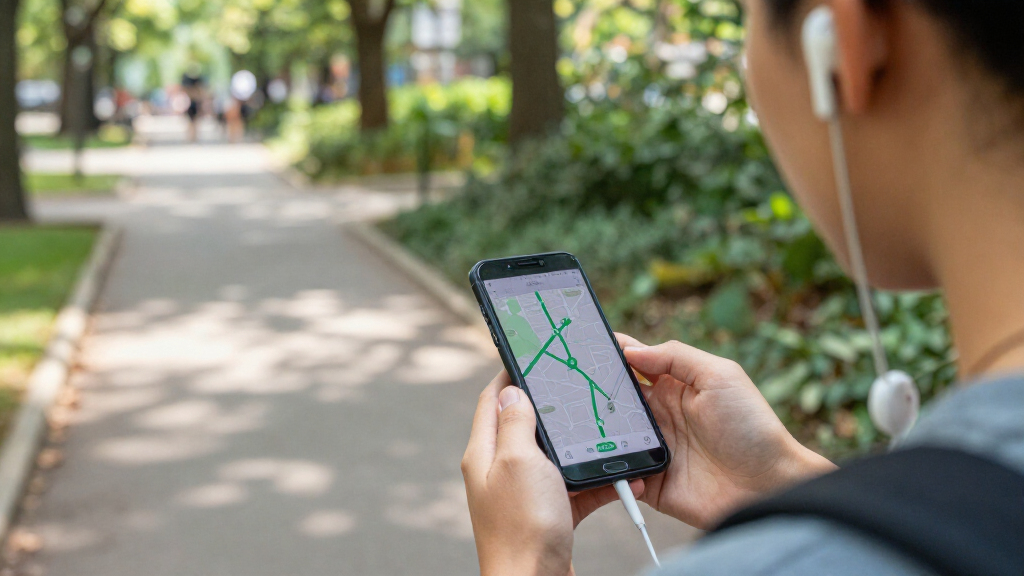
IdeaNavigator AI has proposed an audio walking app that generates narration tied to a user’s live route, drawing on open information about local history, buildings and places. The proposal calls for a two-city pilot measuring week-four walking retention and auditing factual accuracy; no product launch or test results are reported.
IdeaNavigator AI has proposed an audio walking app that would generate narration in response to a person’s live route, describing local history, architecture and other details as they walk. The proposal frames the product as a testable concept, not a launched service, and recommends a two-city pilot to measure repeat use and check the accuracy of its route-based narration.
The suggested app would let a user start a walk and receive spoken material generated around the route, with narration responding at corners and landmarks. Proposed subject modes include history, architecture and nature, alongside the option to save favorite routes. The concept is aimed at walkers who want stories about their own neighborhoods as well as places they visit.
IdeaNavigator AI argues that generative language models can produce location-grounded narration on demand using open information, including historical records, architecture details and place data. It presents that capability as a way to reduce the per-route production work associated with traditional audio tours. The proposal does not identify a specific model, data provider, operating system or finished app.
For validation, the plan recommends launching in two cities, tracking walks per week through the fourth week of use, and auditing narration accuracy across a sample of routes. The proposed business model combines a consumer subscription with a licensing tier for tourism boards. No pricing, pilot partners, user numbers or findings are provided.
IdeaNavigator AI · Concept brief
An Audio Companion That Responds To Your Walking Route
A proposed walking app would shape spoken stories around a person’s live route, drawing on open information about local history, architecture and places. Its next step is a two-city test, not a reported launch.
Let the route set the story: narration arrives as walkers reach corners and landmarks.
How a route could become a listening experience
The concept pairs a walker’s location with information about nearby places, then delivers short spoken material as the walk unfolds. These are proposed capabilities; the technical design has not been specified.
Listen as you move
A user starts a walk and receives narration connected to the route, with moments tied to corners and landmarks.
Choose what to notice
Proposed modes include history, architecture and nature, bringing different perspectives to the same surroundings.
Save favorite walks
Saved routes could make the experience useful for neighborhood walks as well as visits to unfamiliar places.
From fixed tours to live routes
Traditional audio tours are often researched and recorded for specific sites. A route-responsive service aims to cover more everyday streets by generating narration from a walker’s location and available place information.
Start a walk
The user chooses a route or begins moving.
Match nearby places
Location and open information ground the material.
Generate narration
A language model turns place details into a story.
Listen at useful moments
Audio responds as the walker reaches points of interest.
What the proposed pilot should reveal
IdeaNavigator AI recommends testing in two cities. The measures could show whether people return and whether the generated details are dependable enough to hear on a walk.
An early signal of whether participants keep using the experience after their first walks.
Review narration against source information. No method, sample size or error threshold is supplied.
The proof still needed
Interesting premise. Unproven outcomes.
Lower route-production costs and stronger demand are part of the proposal’s rationale, not demonstrated results. A useful pilot would need to show both repeat use and reliable, location-matched narration.
Open questions before a launch
The proposal leaves important product, data and business details unanswered.
Where do facts come from?
Sources, handling of conflicting records, correction tools and the accuracy threshold are not specified.
How does it fit real walks?
Speaking frequency, accessibility, offline use and safety while walking need further detail.
Can the model work?
Location-history protections, subscription pricing, tourism-board interest and ongoing costs remain unknown.
Key questions
Has the audio walking app launched?
No launch is reported. This is a concept with a recommended two-city test; no app or release date is named.
How would it respond to a route?
It would generate narration linked to a live route, describing local history, buildings and other details near landmarks.
How would the concept be tested?
The proposed pilot would track walks per week through week four and audit narration accuracy across sample routes.
How might it make money?
A consumer subscription and tourism-board licensing are suggested. No pricing or customer interest is reported.
Testing Stories Beyond Tourist Routes
The concept targets a gap between general audio listening and conventional guided tours. Podcasts generally do not adapt to a listener’s surroundings, while many audio tours focus on established tourist areas. A route-responsive service could instead offer material about ordinary streets and neighborhoods, if it can produce information that is both relevant and reliable.
That makes the proposed pilot’s measures important. Week-four retention would offer an early indication of whether people return after trying the experience, while an accuracy audit could reveal whether generated narration is dependable enough to use during a walk. These are proposed tests, not evidence that the product has found demand or solved accuracy challenges.
The tourism-board licensing idea also points to a possible institutional customer alongside individual subscribers. Whether local organizations would pay for this kind of narration, and whether a subscription can support ongoing data and content costs, remains untested in the proposal.
Products Worth Considering

Bose QuietComfort Headphones (2nd Gen), Wireless Noise-Cancelling Over-Ear Headphones, Black

Jackery Explorer 2000 v2 Portable Power Station, 2042Wh

Anker SOLIX C300 Portable Power Station, 288Wh
As an affiliate, we earn on qualifying purchases.
From Fixed Tours to Live Routes
Traditional audio tours often require content to be researched and recorded for particular sites or routes. That model can provide curated information, but it limits coverage to places for which a tour has been produced. The idea described by IdeaNavigator AI is to generate material dynamically, using a walker’s location and available place information rather than relying only on a pre-recorded landmark itinerary.
The proposal treats recent language-model capabilities as a reason to explore this approach, but it does not provide a technical demonstration or independent evaluation. The premise is that models can turn open data into narration while a person walks. In practice, a product would need to match information to the correct location, avoid unsupported details and deliver it at useful moments without distracting users.
Accuracy, Demand and Launch Status
No app launch, pilot or test results are specified. It is not clear which cities would participate, when testing might begin, who would build the service or what sources would supply the location information. The proposal also does not state how often the app would speak, how users could correct errors, or how it would handle incomplete or conflicting records.
Generated narration can sound authoritative even when its underlying details are wrong. The suggested accuracy audit acknowledges that risk, but the plan gives no audit method, sample size or acceptable error threshold. It also does not address privacy practices for location data, accessibility, offline use, safety while walking, subscription pricing or whether tourism boards have expressed interest.
Accordingly, the claims about lower route-production costs and a market opportunity remain the proposal’s rationale, not independently demonstrated outcomes. The two-city test is a recommendation, not a confirmed commitment.
Pilot Measures to Watch
The next concrete step described is a two-city validation test. If one proceeds, the key reported results would be how frequently participants walk with the app through week four and what an audit finds about the factual accuracy of its narration. Those measures could help determine whether the concept merits further development, but the proposal supplies no timetable or named pilot partners.
Further details would be needed to assess the service as a product: which location datasets it uses, how narration is checked, what protections apply to route histories, and whether the consumer subscription or tourism-board licensing model can support it. Until those details and pilot findings are available, the idea remains an early product proposal.
Source: IdeaNavigator AI
Key Questions
Has the audio walking app launched?
No launch is reported. IdeaNavigator AI describes a product concept and recommends testing it in two cities; it does not name an available app or launch date.
How would the app respond to a walking route?
The proposed service would generate narration linked to a user’s live route, with material about local history, buildings and other details delivered around corners and landmarks. Its technical design has not been specified.
How would the concept be tested?
The proposed pilot would run in two cities, track walks per week through week four and audit the accuracy of narration on a sample of routes. No pilot results are available.
How might the service make money?
The suggested model combines a consumer subscription with a licensing option for tourism boards. Pricing and customer interest have not been reported.
Source: IdeaNavigator AI