
Tokenized sports team equity offers a new way to invest and engage with your favorite teams by turning ownership interests into digital tokens on blockchain platforms. These tokens can be traded, providing liquidity and fractional ownership that wasn’t possible before. But as this innovation grows, questions about legal frameworks and regulations come into play. Understanding where it’s legal and how it works can help you navigate this emerging landscape—an area worth exploring further.
Key Takeaways
- Digital tokens on blockchain represent fractional ownership of sports teams, enabling liquidity and tradability of stakes.
- Tokenized equity automates dividends and voting rights through smart contracts, enhancing transparency and efficiency.
- Legal status varies; some jurisdictions classify tokens as securities, requiring compliance with registration and trading regulations.
- Leagues like NBA are exploring legal frameworks to integrate tokenized ownership within existing laws.
- Tokenization broadens ownership access, reduces transaction costs, and fosters global fan engagement and investment opportunities.
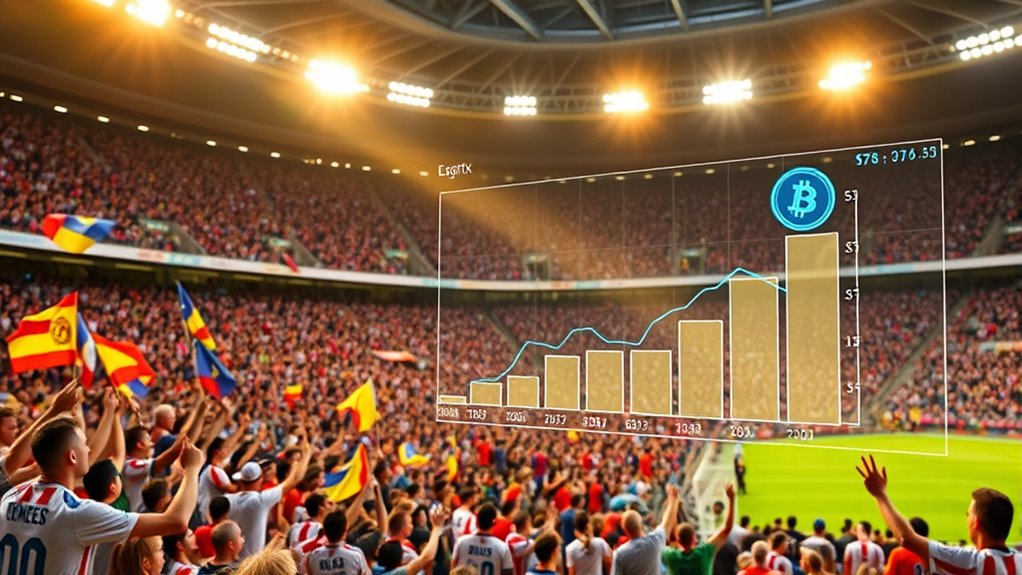
Have you ever wondered how technology is transforming sports ownership? One of the most exciting developments is the emergence of tokenized sports team equity. This concept involves creating digital tokens on a blockchain that represent fractional ownership of a sports team. Instead of owning a whole share, you can buy a small portion—these tokens correspond proportionally to the value of the franchise or a minority interest in it. This process turns traditionally illiquid shares into liquid, tradable digital contracts, making ownership more flexible and accessible. Smart contracts automate key functions like dividend payments and voting rights, executing these agreements automatically on the blockchain. This setup not only streamlines operations but also ensures transparency and security. By enabling fractional ownership, tokenization opens up investment opportunities to a broader audience, including passionate fans who might otherwise find ownership out of reach. It allows them to participate economically and even influence team decisions through governance rights embedded within the tokens.
Tokenized sports team equity makes ownership flexible, accessible, and secure through blockchain-based digital tokens and smart contracts.
The benefits of tokenizing sports team equity are substantial. For starters, it enhances liquidity for minority ownership stakes, which have historically been difficult to buy or sell. This increased liquidity provides investors and fans with easier ways to enter and exit their investments. Additionally, it democratizes ownership—fans, sponsors, and local communities can now share in the economic rewards and governance of their favorite teams. For team owners, tokenization offers flexibility to retain control while selectively tokenizing minority stakes for purposes like buyouts or potential relocation. It also rewrites traditional valuation models, expanding global wealth distribution and creating new economic opportunities. Teams can even leverage programmable tokens to reward loyal fans through bonus incentives, boosting fan engagement on a worldwide scale. Tokenization also has the potential to reduce transaction costs and middlemen, making deals more efficient. Moreover, as the regulatory environment continues to evolve, it may become easier to implement these innovations within legal frameworks.
Mechanically, tokenized equity works by issuing digital tokens on a blockchain platform that represent ownership percentages or shares. These tokens are tradable assets that can be bought, sold, or transferred peer-to-peer without relying solely on centralized exchanges. Smart contracts govern the automatic distribution of dividends and voting rights based on your holdings, aligning your economic benefits with those of traditional shareholders. Developers can embed additional features into these tokens, such as fan rewards or governance participation, making them multifunctional tools for engagement and investment. This system provides transparency, security, and flexibility, all while opening new pathways for ownership and participation.
However, legal and regulatory considerations are still evolving. Different countries have varying rules about the legality and acceptance of tokenized equity, with some jurisdictions viewing it as securities and subjecting it to strict regulations. The sports industry, including leagues like the NBA, is exploring how to incorporate tokenization within existing frameworks, balancing innovation with compliance. Securities laws may require registration, disclosures, and adherence to trading rules, which means the legal landscape is complex and constantly changing. Despite these challenges, the potential benefits—such as increased liquidity, broader participation, and improved fan engagement—are encouraging more experimentation and interest in tokenized sports assets worldwide. Expect to see this innovative approach gaining traction as blockchain technology continues to shape the future of sports ownership.

Braun MultiQuick 7 3-in-1 Immersion Blender with Food Processor – Powerful Handheld Electric Stick Blender - Emulsifier for Chopping, Beating & Whisking - Ideal for Soup, Puree, Smoothies & More
Braun is the #1 hand blender brand* *Source: Independent Research Institute, Sales Leader Full Year 2024
As an affiliate, we earn on qualifying purchases.
Conclusion
Imagine holding a piece of your favorite team in your hand, its value shimmering like a trophy, ready to be traded or enjoyed. As blockchain breathes new life into sports ownership, you’ll find yourself part of a vibrant, evolving arena—where fans and investors unite under a digital sky. With the right legal frameworks, this future is within reach, turning passion into tangible assets, and transforming the way you connect with the game you love.

SYBO DL2112 Commercial Grade Food Heat Lamp, Electric 2-Bulb Food Warmer with Adjustable Stand, 500W, Gray
Commercial-Grade Performance: Elevate your food service with Sybo's professional commercial grade heat lamp. Its generous 12" x 20"...
As an affiliate, we earn on qualifying purchases.

COSMO COS-QS75 30 in. Haven Collection 500 CFM Ducted Under Cabinet Range Hood, Touch Controls, LED Lights, Stainless Steel
EFFICIENT AIRFLOW: Featuring 500 CFM airflow, backlit touchscreen, 4-speed fan and twin centrifugal motors. Ducted range hood vents...
As an affiliate, we earn on qualifying purchases.

MURENKING Stand Mixer,5.3-Qt & 500W & 6+P Speed MK36 Tilt-Head Kitchen Electric Food Mixers Home Baking Dough Machine with Accessories (Gray Blue)
【5.3QT & 500W & 6+P SPEED】 - Owning 500W powerful motor, then its kneading could keep as low...
As an affiliate, we earn on qualifying purchases.