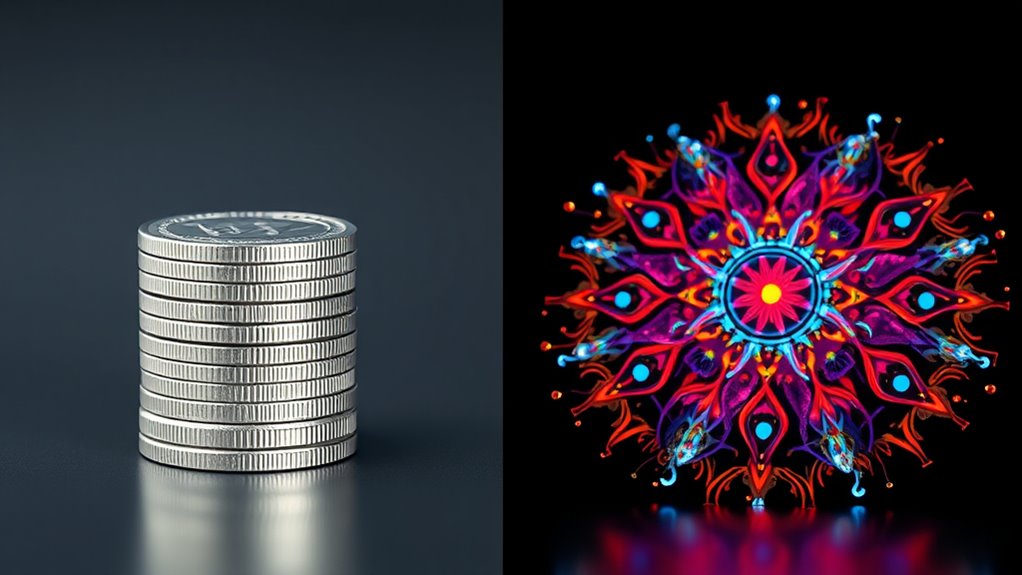

Fungible tokens, like Bitcoin, are easily interchangeable and hold the same value, making them very liquid. Non-fungible tokens (NFTs) are unique, representing specific assets like digital art, and aren’t easily traded, which can create liquidity issues. While fungible tokens have clear market prices, NFT values are influenced by factors like scarcity and creator reputation. This difference makes understanding their dynamics vital for making investment decisions. Stick around to uncover more insights about these token types.
Key Takeaways
- Fungible tokens are interchangeable and hold equal value, while non-fungible tokens (NFTs) represent unique, distinct assets.
- Fungible tokens ensure high liquidity, allowing quick trades, whereas NFTs face liquidity challenges due to their uniqueness.
- Valuation of fungible tokens is straightforward, while NFTs depend on subjective factors like scarcity and creator reputation.
- The trading market for fungible tokens is vast and liquid, unlike the often slower and more complex NFT market.
- Market trends and demand significantly influence NFT values, while fungible tokens are less affected by individual asset characteristics.

As the digital economy evolves, understanding the differences between fungible and non-fungible tokenized assets becomes essential. You might be wondering why this matters. Well, the distinction between these two types of assets can considerably impact your investment decisions, especially regarding liquidity and valuation challenges.
Fungible tokens, like cryptocurrencies such as Bitcoin or Ethereum, are interchangeable and hold equal value. You can trade one Bitcoin for another, and it won’t make a difference because they’re fundamentally the same. This interchangeability creates a high level of liquidity. If you decide to sell your Bitcoin, you’ll likely find a buyer quickly since there’s a vast market for it. The ability to easily convert these tokens into cash or other assets makes them attractive for many investors.
Fungible tokens like Bitcoin are interchangeable, ensuring high liquidity and quick access to buyers in a vast market.
On the flip side, non-fungible tokens (NFTs) represent unique items or assets. Think of them as digital collectibles or art pieces. Each NFT has distinct characteristics that set it apart from others, making them non-interchangeable. This uniqueness can lead to considerable valuation challenges. For example, how do you determine the worth of a digital artwork? Unlike fungible assets, there’s no straightforward market price to reference. The value of an NFT often hinges on factors like scarcity, provenance, and the creator’s reputation, which can fluctuate wildly over time.
When diving into NFTs, you’ll notice that liquidity issues can arise. Since they’re not as widely traded as fungible tokens, finding a buyer for a specific NFT can take longer. You may have to wait for the right buyer who appreciates the item’s unique qualities, which can lead to longer holding periods and potential losses if you need to sell quickly. Additionally, the valuation of NFTs can be further complicated by factors like color accuracy and market trends that influence demand for unique digital assets.
Frequently Asked Questions
How Do I Create My Own Fungible Token?
To create your own fungible token, you’ll need to choose a blockchain platform like Ethereum or Binance Smart Chain. Next, familiarize yourself with token standards like ERC-20 for Ethereum. Then, write a smart contract that defines your token’s attributes, such as total supply and distribution rules. Once your contract is ready, deploy it on the blockchain, and you’ll have your fungible token up and running for others to trade or use!
What Platforms Support Non-Fungible Tokens?
You’d think only a few platforms support non-fungible tokens, right? Well, think again! Popular NFT marketplaces like OpenSea, Rarible, and Foundation make it easy for you to buy and sell unique digital assets. Plus, blockchain explorers like Etherscan let you track your NFTs on the Ethereum blockchain. Immerse yourself in these platforms, and you’ll find a vibrant community enthusiastic to showcase their one-of-a-kind creations. Get ready to explore the NFT universe!
Can Fungible Tokens Be Used for Voting?
Yes, fungible tokens can be used for voting, especially in decentralized governance mechanisms. They can represent your digital identity within a platform, allowing you to participate in decision-making processes. By utilizing these tokens, you’re able to cast votes that reflect your preferences and influence outcomes. This approach enhances transparency and accountability in governance, making it easier for you to engage with the community and contribute to collective decisions effectively.
What Are the Environmental Impacts of Tokenized Assets?
Tokenized assets can have a significant environmental footprint, primarily due to their energy consumption. If you’re using blockchain technology, especially proof-of-work systems, you’ll notice that transactions require substantial computational power, leading to high energy use. This can contribute to increased carbon emissions if the energy comes from non-renewable sources. You should consider these impacts when engaging with tokenized assets, as their environmental implications are becoming increasingly important in today’s eco-conscious landscape.
How Do I Store My Tokenized Assets Securely?
To store your tokenized assets securely, use a digital wallet that employs robust security protocols. Did you know that 70% of cryptocurrency theft occurs due to poor wallet security? Choose wallets with features like two-factor authentication and encryption. Regularly update your software and back up your wallet’s recovery phrase in a safe place. By taking these precautions, you’ll markedly reduce the risk of losing your valuable assets to cyber threats.
Conclusion
Ultimately, understanding the differences between fungible and non-fungible tokenized assets can help you navigate the evolving digital landscape. Did you know that the NFT market skyrocketed to over $10 billion in sales in just 2021? This rapid growth highlights the unique value and potential of non-fungible tokens. Whether you’re looking to invest in cryptocurrencies or collectible art, knowing the distinctions can empower your decisions and enhance your digital portfolio.