
When buying expensive tech, focus on real-world battery life and build durability, not just specs on paper. Manufacturers often claim impressive features that don’t reflect everyday use, like streaming or multitasking, which can drain batteries faster. Strong build quality ensures your device withstands daily wear and tear, offering lasting value. Prioritizing these practical aspects guarantees you get a device that performs reliably over time. Keep going to discover how to spot these genuine performance claims.

Get business pricing on tech for your team
- Business-only prices and quantity discounts
- Tax-exempt purchasing
- Multiple users, one account, clear invoices
Key Takeaways
- Real-world battery life and longevity are more important than manufacturer claims under ideal conditions.
- Build quality and material durability ensure long-term device resilience and user confidence.
- Actual performance depends on usage patterns, environmental factors, and device handling, not just specs.
- Consistent, practical performance in everyday scenarios outweighs flashy technical specifications.
- Prioritizing foundational aspects like battery life and durability offers better long-term value than focusing solely on high-end features.
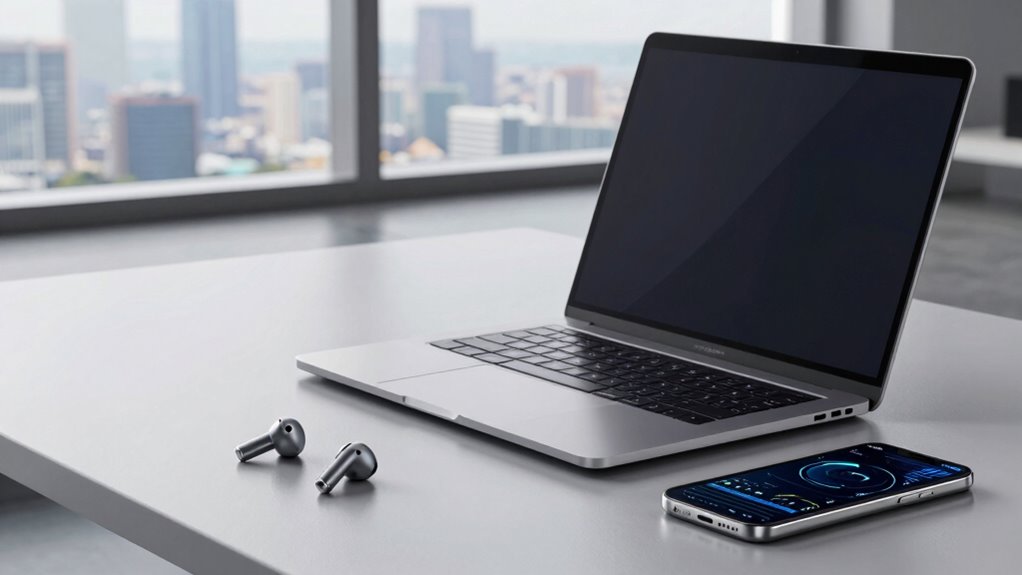
When investing in expensive tech, it’s tempting to rely on performance claims made by manufacturers. Many companies highlight impressive specifications, but what truly matters are the factors that affect your day-to-day experience. Two critical aspects to consider are battery life and build quality. These elements can make or break your satisfaction with a high-end device.
Battery life is often touted as a major advantage, but you shouldn’t take the claims at face value. Manufacturers usually specify ideal conditions that may not match your real-world usage. For instance, a device might advertise 15 hours of battery life, but that’s under perfect circumstances—low screen brightness, minimal background activity, and limited app use. In practice, your usage patterns, such as streaming videos, gaming, or multitasking, can considerably shorten this duration. It’s worthwhile to look for real-world reviews and user reports to gauge how the device performs throughout a typical day. Long-lasting battery life ensures you’re not constantly hunting for chargers, especially if you rely on your device for work or travel. Additionally, understanding real-world battery performance can help set accurate expectations and guide your purchasing decisions. Moreover, battery degradation over time can significantly impact long-term usability, making initial battery health an important consideration. Recognizing performance consistency in various conditions is also vital, as some devices may perform well initially but decline rapidly under heavy use or environmental stress.
Real-world usage often shortens battery life beyond manufacturer claims—check reviews to gauge actual performance.
Build quality is another essential performance claim that matters considerably. When you spend a premium price, you want a device that feels solid and durable. Manufacturers may emphasize sleek designs or premium materials, but the true test lies in how well the device withstands daily wear and tear. Check for reviews that discuss build quality—are the materials rigid? Does it feel premium in your hand? Is it resistant to scratches, dents, or water? High-quality construction not only extends the lifespan of your device but also enhances your confidence in handling it daily. A device with poor build quality might look great initially but could develop issues over time, such as cracking screens or loose components. Furthermore, considering durability testing can provide insights into how well the device holds up over years of use.
While performance claims related to processing power or camera quality are important, they shouldn’t overshadow these foundational aspects. A fast processor won’t matter if the device’s battery dies halfway through your day, or if it feels flimsy in your hand. In fact, a well-built device with impressive battery life often provides a more satisfying experience than one that simply boasts high specs on paper. When shopping for expensive tech, prioritize these real-world performance claims over glossy specifications. Doing so ensures you invest in a device that truly meets your needs and stands the test of time.
best long-lasting smartphone battery
As an affiliate, we earn on qualifying purchases.
As an affiliate, we earn on qualifying purchases.
Frequently Asked Questions
How Do Real-World Tests Compare to Manufacturer’s Performance Claims?
Real-world testing often reveals that manufacturer’s performance claims can be optimistic, but benchmark comparisons provide a clearer picture. You’ll find that actual performance may vary due to factors like thermal management and software optimization. By comparing benchmark results to manufacturer specs, you understand how the tech performs in everyday use. This helps you make smarter buying decisions, ensuring you get the performance you expect from your expensive tech.
Are Higher Performance Specs Always Noticeable in Everyday Use?
Imagine you’re editing videos on a high-end laptop with top-tier specs. In everyday tasks like browsing or streaming, you might not notice the difference, as ergonomics comfort and ease of use matter more. Higher performance specs don’t always translate into noticeable improvements unless you’re doing intensive work. Trust brand reputation and focus on real-world usability, because premium specs only matter if they enhance your daily experience.
What Role Do Software Updates Play in Maintaining Performance?
Software updates play a vital role in maintaining your device’s performance by improving firmware longevity and fixing bugs that could slow it down. Regular update frequency guarantees your tech stays optimized, secure, and compatible with new features. Without these updates, your device might become sluggish or vulnerable over time. By staying current, you make sure your expensive tech continues to operate smoothly and maximizes its lifespan.
Do Expensive Tech Products Have Better Durability or Longevity?
Did you know that premium tech products often last 2-3 years longer than budget options? Expensive tech tends to have better durability and longevity, thanks to superior build quality and rigorous testing. Brands with strong reputations usually offer extensive warranty coverage, giving you extra assurance. While higher upfront costs might seem steep, the combination of durability and solid warranty support often makes these products a smarter, longer-lasting investment for you.
How Do Performance Claims Differ Between Brands?
Performance claims differ between brands mainly due to their reputation and marketing strategies. A reputable brand often backs its claims with rigorous testing and transparency, while others may emphasize flashy marketing to boost appeal. You should look beyond marketing hype and compare real-world reviews, benchmarks, and warranties. This way, you’ll better understand which brand’s claims are credible and align with your needs, ensuring you get value for the high price.
Conclusion
Ultimately, when splurging on pricey tech, it’s tempting to chase every impressive claim. But remember, the real value lies in how it meets your needs, not just the buzzwords. Just as a luxury car offers more than speed, your tech should serve your lifestyle, not just impress with specs. In the end, it’s about balance—balancing performance promises with practical benefits, because in the world of expensive tech, substance often outshines style.
Halloween Picks
halloween
As an affiliate, we earn on qualifying purchases.