In a functional post-AI world, you’ll experience smart environments that adapt automatically to your needs, with AI companions helping manage daily tasks, health, and entertainment. Work and education will transform through automation, personalized virtual classrooms, and lifelong learning. Healthcare will become predictive and personalized, while society will focus on responsible and ethical AI use to guarantee fairness and privacy. To understand how to build this future and guarantee it benefits all, keep exploring these essential steps.
Key Takeaways
- Develop transparent, ethical AI standards and regulations through collaboration among governments, industries, and academia.
- Prioritize AI oversight, bias mitigation, and privacy protections to foster trust and social equity.
- Invest in reskilling and lifelong learning programs to prepare the workforce for AI-driven economic shifts.
- Design interconnected, autonomous environments with seamless AI integration for enhanced daily life and work efficiency.
- Promote global cooperation and responsible innovation to ensure AI benefits are accessible and equitable worldwide.

As AI becomes seamlessly integrated into daily life, our world transforms into a highly interconnected and autonomous environment. You’ll notice your home managing energy, lighting, and security systems automatically, creating an optimized living space tailored to your habits and preferences. Personal AI companions will learn your routines, helping you with daily tasks, managing your health, and providing entertainment that suits your tastes. Autonomous vehicles and delivery drones will handle transportation and logistics smoothly, making commutes and errands faster and more efficient. Virtual assistants will coordinate your calendar, plan your trips, and even suggest fitness routines, freeing you from mundane planning and organization.
Communication tools will break down language barriers through real-time translation, allowing you to collaborate effortlessly with people across the globe. Immersive collaboration platforms will enable seamless teamwork regardless of physical location, fostering a truly interconnected world. As these technologies become widespread, they’ll reshape how you work, learn, and interact, creating new opportunities and challenges.
Real-time translation and immersive collaboration will revolutionize communication, breaking barriers and connecting people worldwide.
The job market will shift markedly as automation takes over repetitive and data-driven tasks. You might need to reskill or upskill to stay relevant, as roles centered on AI oversight, creative problem solving, and human-AI collaboration become more prominent. While productivity gains will boost the economy, there’s a need for policies to address potential job displacement, ensuring social safety nets and fair access to new opportunities. AI-driven platforms will facilitate gig work and remote employment, connecting you with tasks globally and allowing for more flexible work arrangements.
Education will undergo a revolution with immersive AI-powered virtual classrooms accessible worldwide. Personalized learning systems will adapt content to your individual skills and interests, making education more engaging and effective. Lifelong learning will be supported by AI tutors and real-time skill assessments, helping you stay current in a rapidly changing world. Language barriers will diminish thanks to real-time translation tools, enabling you to connect with experts and students across cultures.
In healthcare, AI will enhance diagnostics, predict health issues early, and personalize treatments based on genetic, lifestyle, and environmental data. Robotic surgery and AI-powered caregiving will extend healthcare accessibility, while real-time health monitoring devices will help you manage chronic conditions and prevent illnesses. Mental health support bots will offer scalable emotional assistance, providing help whenever needed. Additionally, advancements in GMC tuning technology could further optimize performance and efficiency in various automotive applications.
Building this future requires careful planning and collaboration. Transparency in AI decision-making, robust regulation, and ethical standards are essential to maintain trust. Governments, industries, and academia must work together to develop policies that address societal impacts, including privacy, bias, and inequality. By fostering responsible innovation and global cooperation, you can help shape a future where AI benefits everyone, creating a truly functional post-AI world that enhances daily life, work, and well-being.

Smokeless Fire Pit for Outside 20 Inch, Portable Stainless Steel Smokeless Firepit Wood Burning with Grill Grate & Ash Pan, 360° Airflow Camping Fire Pits for RV, Patio & Garden, Carrying Bag Included
[Smokeless Firepit with 360° Airflow Design] This smokeless fire pit features a dual-wall stainless steel construction with precision...
As an affiliate, we earn on qualifying purchases.
Frequently Asked Questions
How Will Employment Evolve in a Post-Ai Society?
In a post-AI society, you’ll see employment shift towards roles that require human creativity, empathy, and complex judgment. While some jobs may decline, new opportunities will emerge in AI oversight, design, and ethical oversight. You’ll need to adapt your skills, focusing on areas where human abilities excel. Embrace lifelong learning to stay relevant, and you’ll find that the economy evolves, creating new jobs that complement AI rather than compete with it.
What Ethical Standards Will Govern AI Development in the Future?
You’ll see future AI development governed by strict ethical standards, with only 80% of companies adopting formal guidelines by 2025. You’ll need to prioritize fairness, transparency, and accountability, ensuring AI systems are unbiased, explainable, and responsible. Privacy protections will be essential, and continuous risk assessments will keep AI aligned with societal well-being. As a developer or user, you’ll play a key role in upholding these evolving ethical principles.
How Can Society Ensure AI Benefits Are Widely Shared?
You can guarantee AI benefits are widely shared by supporting inclusive policies that promote accessible AI tools and education. Advocate for regulations preventing monopolies and encouraging fair competition. Push for progressive taxes on AI profits to fund social programs and invest in workforce reskilling initiatives. Promote international cooperation to bridge digital divides, and support small enterprises adopting AI. By actively participating in these efforts, you help create a more equitable AI-driven future for everyone.
What Role Will Government Regulation Play Post-Ai?
You’ll see government regulation playing a balancing act post-AI, ensuring innovation thrives while safeguarding public interests. About 42 states proposed over 210 AI-related bills in 2025, showing active engagement. Your role involves advocating for sensible rules that promote transparency, accountability, and safety. Regulations will shape developer responsibilities, liability, and cross-jurisdictional coordination, helping prevent harm without stifling progress. Stay informed and participate to make sure the regulatory landscape aligns with societal needs and technological advancements.
How Will Human-Ai Relationships Change Over Time?
As human-AI relationships evolve, you’ll find emotional bonds growing deeper, driven by AI’s personalization and human-like cues. You’ll likely rely more on AI for companionship, emotional support, and even intimacy, blurring lines between human and digital connections. Over time, your interactions may become more natural and meaningful, but you’ll also need to navigate potential risks like social withdrawal or unrealistic expectations, balancing AI’s benefits with genuine human relationships.

Aculya Life Open-Top Automatic Litter Box Self Cleaning Cat Litter Box Self-Cleaning Robot for Large Cats with Safety Sensors and APP Control
Open-Design Welcomes Every Cats: Litter box with dimensions:28.50 × 18.35 × 10.12 inch, 5.8L large capacity, open top...
As an affiliate, we earn on qualifying purchases.
Conclusion
Picture a post-AI world so seamlessly integrated that you could teleport across continents in a blink, your life an effortless symphony of innovation. In this future, technology bends to your will, making every dream as easy as snapping your fingers. The impossible becomes routine, and you’ll wonder how you ever survived without this marvel. Embrace the journey, because what’s coming is so extraordinary, it’ll make today’s world look like a dull, ancient relic—prepare to be amazed!
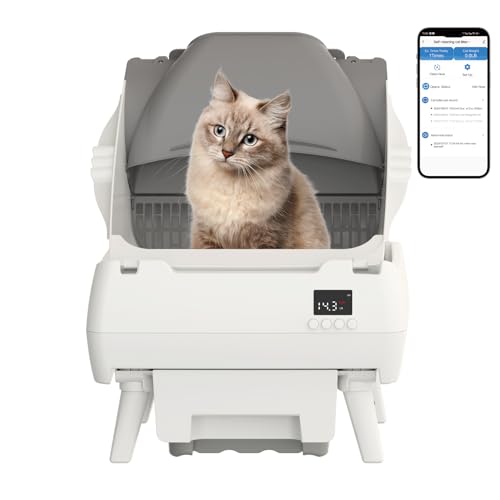
Lohhuby Automatic Cat Litter Box Self Cleaning - App Control, Open-Design, Smart Health Monitor, Suitable for Medium Cats and Kittens, Anti-Pinch Safety, Quiet Operation - White
📲 APP CONTROL: Manage and monitor your automatic litter box remotely through an intuitive app, providing real-time updates...
As an affiliate, we earn on qualifying purchases.

GUNJI Automatic Self-Cleaning Litter Box, 90L Large Capacity for Multiple Cats - APP Controlled with Safety Protection, Included Litter Mat & 1 Roll Garbage Bags (Gray)
Multi-Layer Safety Sensors: Equipped with dual infrared sensors (real-time entrance detection), motion-sensing radars (real-time movement tracking), and Hall...
As an affiliate, we earn on qualifying purchases.