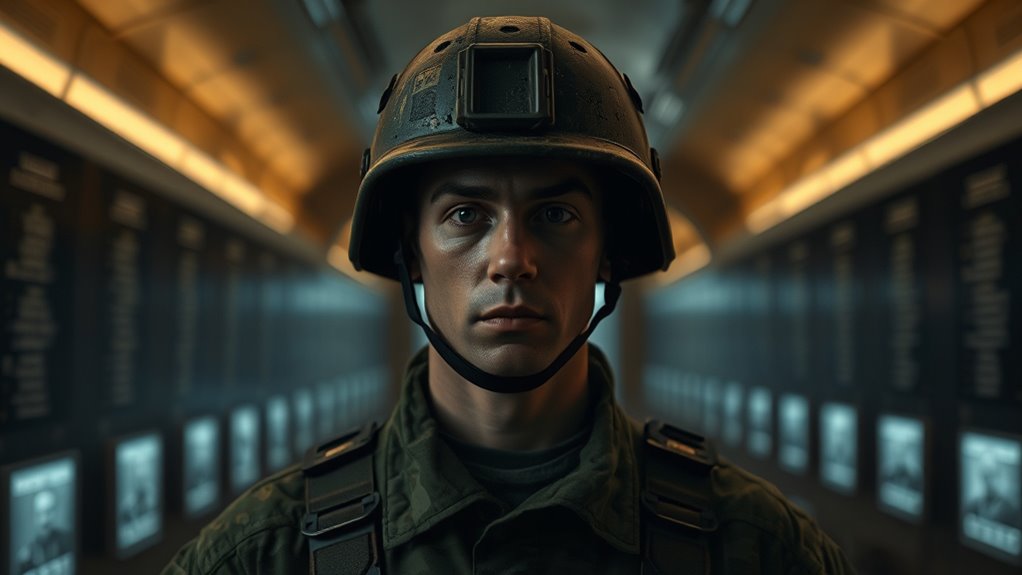

AI now allows families to virtually resurrect soldiers by creating realistic digital avatars that preserve voices, stories, and personalities. Using personal photos, videos, and recordings, you can interact with these recreations through chatbots or voice calls, helping you find comfort and reconnect with loved ones beyond death. While some find solace, others question the ethics and authenticity involved. Curiosity piqued? Keep exploring to uncover how this technology is transforming mourning experiences.
Key Takeaways
- AI uses digital avatars and extensive personal data to recreate soldiers for interactive remembrance.
- Digital recreations provide ongoing emotional support and help families preserve memories of fallen soldiers.
- Ethical concerns include consent, authenticity, and potential emotional dependency on AI reconstructions.
- High-quality recreations require significant data collection and resource investment.
- This technology enhances memorial practices, transforming mourning into interactive and personalized experiences.

As technology advances, families mourning soldiers are turning to AI to keep their loved ones alive in digital form. This innovative approach uses digital avatars to recreate deceased individuals, including soldiers, allowing families to interact with them beyond death. Technologies like Eternos store voice recordings, life stories, and personal memories gathered during their lives, enabling posthumous interactions that feel authentic. To achieve this, AI systems require extensive personal data, such as photos, videos, written accounts, and voice samples, which help simulate the soldier’s personality and mannerisms. Remarkably, even minimal audio samples—sometimes just five seconds—can be enough to generate realistic voice interactions, making conversations feel natural and familiar. These AI systems facilitate dynamic experiences, including chatbots that respond to questions and real-time voice calls that mimic genuine dialogue, creating a continuous and immersive connection.
AI recreates soldiers using minimal data, enabling authentic conversations and ongoing connections beyond death.
For families, this technology offers a meaningful way to cope with loss. It provides a form of ongoing connection, helping them preserve the stories and values of their loved ones. Instead of static photos or memorials, AI recreations bring the soldier’s personality back to life, allowing them to share memories, answer questions, or just listen. This can help families explore unresolved feelings, gain clarity, and find a sense of closure by hearing their loved ones’ voices and stories once more. Many find comfort in transforming grief into an interactive experience, which can ease acceptance and provide a new dimension of remembrance. Moving beyond traditional memorials, digital legacies open possibilities for more personalized and engaging ways to honor soldiers’ sacrifices, fostering a deeper emotional bond. Additionally, the rise of Intelligent Tutoring Systems (ITS) in education emphasizes the potential of technology to enhance personal connections and learning experiences.
However, this technology raises complex ethical and psychological questions. Consent becomes a concern—did the deceased agree to be recreated? Some argue that these digital recreations are “hollow,” potentially hindering natural grief processes and closure. People differ in their acceptance; some find comfort, while others view it as an artificial substitute that may prolong dependency on the past. Philosophical debates question the authenticity of AI-generated personas and whether they truly represent the human essence. There’s also the risk of emotional confusion, where relatives may struggle to distinguish between real memories and simulated interactions, leading to potential psychological impacts.
Implementing this technology involves technical challenges as well. High-quality recreations demand vast multimedia data—photos, videos, and recordings—requiring significant effort and resources. AI models need detailed personal information and ongoing feedback to improve their responsiveness and realism. Costs vary widely, with custom AI avatars often being expensive, limiting accessibility for some families. Despite these hurdles, advancements continue, with research institutions like Indiana University contributing to improving AI’s capacity to authentically replicate personalities and emotional nuances. Real-world applications have already shown the emotional power of these digital legacies, from deepening relationships during life to aiding grief processing after death, illustrating how AI is transforming mourning into an interactive, lasting remembrance.
AI digital avatar memorial
As an affiliate, we earn on qualifying purchases.
As an affiliate, we earn on qualifying purchases.
Frequently Asked Questions
How Is Data Privacy Maintained During AI Reconstruction?
You guarantee data privacy during AI reconstruction by using offline, isolated models that aren’t connected to the internet. Strict access controls, encrypted chips, and secure login portals limit data exposure. You also minimize data input, focusing only on relevant, authorized information, and apply encryption and anonymization techniques. Regular audits and robust governance frameworks help detect and prevent unauthorized access, safeguarding sensitive information throughout the reconstruction process.
Can These AI Recreations Evolve Over Time?
Ever wonder how much an AI can truly change? Yes, these recreations can evolve over time through machine learning and adaptive algorithms that refine responses based on your interactions. They can modify speech patterns and emotional responses, mirroring ongoing personality shifts. However, this evolution is carefully controlled by ethical limits, human oversight, and data privacy protocols, ensuring they stay respectful of the memory while adapting subtly to new inputs.
What Ethical Guidelines Govern the Use of Military AI Recreations?
You must follow strict ethical guidelines when using military AI recreations. The DoD emphasizes human responsibility, guaranteeing humans retain judgment and accountability. You should design systems to avoid bias, be transparent and traceable, and ensure reliability throughout their lifecycle. Additionally, meaningful human control is essential, and you must consider legal, ethical, and military standards. Continuous oversight, training, and ethical review help prevent misuse and uphold moral responsibilities in recreating soldiers.
Are Families Offered Counseling Alongside AI Interactions?
You’re not alone in grief, and families are offered counseling alongside AI interactions like virtual companions. These services act as a safety net, providing emotional support while connecting you to licensed professionals when needed. AI offers a comforting presence, but it’s designed to complement, not substitute, human counseling. This layered approach ensures you get the personalized care and understanding you deserve during such a difficult time.
How Does AI Recreation Impact Soldiers’ Real-Life Legacies?
AI recreation impacts soldiers’ real-life legacies by preserving their stories and heroic acts in immersive ways. You can see detailed reconstructions of their actions, which keeps their memories alive for future generations. This technology allows you to understand their sacrifices more vividly, reinforcing their importance in history. However, you should also consider ethical concerns, such as authenticity and respect, to guarantee their legacies are honored appropriately without distortion or commercialization.
voice cloning for memorials
As an affiliate, we earn on qualifying purchases.
As an affiliate, we earn on qualifying purchases.
Conclusion
As you consider this technology, remember that over 80% of families feel more connected when they see their loved ones’ digital recreations. While it offers comfort, it also raises questions about grief and reality. You might wonder if these virtual soldiers help or hinder the healing process. As AI continues to evolve, you’ll need to decide how much of your memories and emotions you’re willing to entrust to these digital recreations.
interactive remembrance chatbot
As an affiliate, we earn on qualifying purchases.
As an affiliate, we earn on qualifying purchases.
personalized digital legacy creation
As an affiliate, we earn on qualifying purchases.
As an affiliate, we earn on qualifying purchases.