
TL;DR

Get business pricing on tech for your team
- Business-only prices and quantity discounts
- Tax-exempt purchasing
- Multiple users, one account, clear invoices
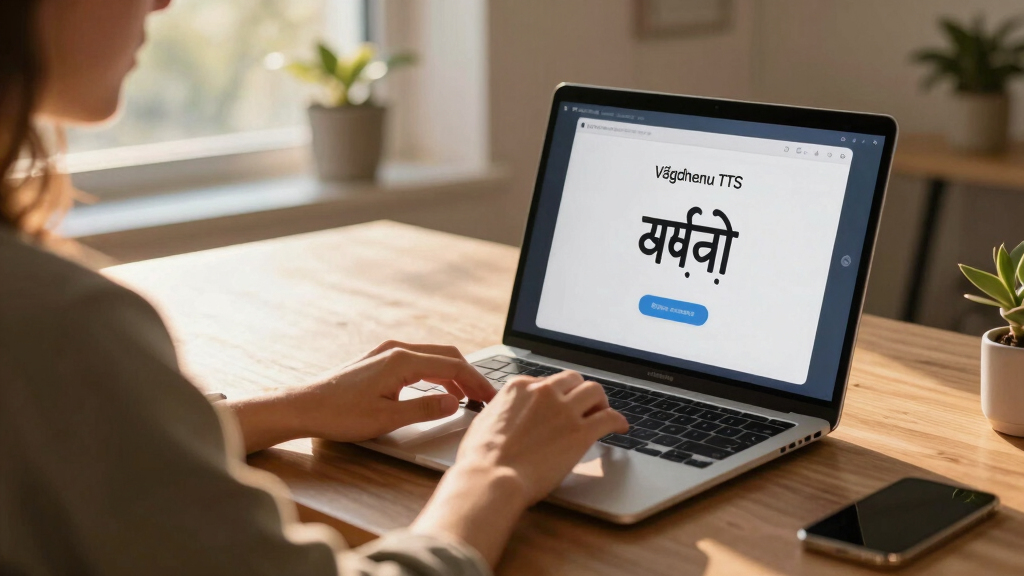
Vāgdhenu is an AI-based Sanskrit TTS system that produces authentic chanting of Vedic mantras. It represents a significant step in digital preservation of Sanskrit and traditional chanting. Its development was announced recently, with ongoing testing and refinement.
Vāgdhenu, an AI-powered Sanskrit Text-to-Speech (TTS) system designed to generate authentic Vedic chanting, was officially announced in March 2024. This development aims to digitally preserve and promote traditional Sanskrit recitations, making them accessible globally. The project is led by a team of computational linguists and Sanskrit scholars, marking a significant advancement in the intersection of technology and cultural heritage.
The Vāgdhenu system uses deep learning models trained on extensive recordings of Vedic chants to produce speech that closely resembles human recitations. According to the developers, the system can accurately reproduce the tonal, rhythmic, and pronunciation nuances characteristic of traditional chanting. The project was first introduced through a research paper and demo videos shared at a recent AI and cultural heritage conference.
Developers emphasize that Vāgdhenu is designed to assist in educational and religious contexts, allowing users to listen to authentic Sanskrit chants anytime and anywhere. The system is currently in a testing phase, with plans for broader deployment in academic institutions, temples, and online platforms. The team states that the technology can also help preserve rare or endangered chanting styles that are at risk of fading.
Potential Impact on Sanskrit Preservation and Cultural Access
The launch of Vāgdhenu represents a notable advance in using artificial intelligence to preserve and disseminate traditional Sanskrit chanting. It offers a tool for educators, religious practitioners, and cultural institutions to access authentic recitations without requiring expert human performers. This could help safeguard rare chanting styles and facilitate the global spread of Vedic knowledge, especially as physical recordings and human teachers become less accessible.
Furthermore, the project highlights the growing role of AI in cultural heritage, demonstrating how technology can support the preservation of ancient languages and practices. However, some experts caution that AI-generated recitations may lack the spiritual and emotional depth of human chanting, raising questions about authenticity and cultural sensitivity.
As an affiliate, we earn on qualifying purchases.
Development of AI in Sanskrit and Vedic Chanting
Over the past decade, there has been increasing interest in applying AI and machine learning to preserve endangered languages and oral traditions. Sanskrit, with its rich liturgical and philosophical texts, has seen several initiatives aimed at digitization and speech synthesis. Prior projects have focused on creating digital dictionaries, translation tools, and basic speech synthesis for Sanskrit. However, Vāgdhenu is among the first to specialize specifically in authentic Vedic chanting, which requires precise tonal and rhythmic accuracy.
The project builds upon recent advances in deep learning-based speech synthesis, which have enabled more natural-sounding and expressive AI voices. It also follows broader trends in using AI for religious and cultural applications, such as digital prayer apps and virtual religious guides. The development of Vāgdhenu reflects both technological progress and a renewed interest in safeguarding spiritual traditions through digital means.
“Vāgdhenu has the potential to revolutionize how we access and preserve Sanskrit chanting, making it more accessible to younger generations and global audiences.”
— Dr. Anjali Sharma, Sanskrit scholar
Remaining Questions About Authenticity and Usage
It is still unclear how well Vāgdhenu can replicate the emotional and spiritual depth of human chanting, which is often considered essential in religious contexts. The developers acknowledge ongoing challenges in capturing the full expressive range of traditional reciters. Additionally, there are questions about how the system will be received by traditional communities and whether it will be integrated into formal religious practices or primarily serve educational purposes.
Further testing and user feedback are needed to assess the system’s effectiveness and cultural acceptance, and it remains to be seen how widely the technology will be adopted.
Next Steps for Development and Adoption
The team plans to expand testing phases, gather feedback from Sanskrit scholars and practitioners, and refine the AI model for greater accuracy. They aim to release a publicly accessible version within the next six months, with integration into educational platforms and religious institutions. Additionally, collaborations with temples and cultural organizations are being explored to promote authentic usage and cultural preservation.
Monitoring user responses and ethical considerations will likely influence future development and deployment strategies.
Key Questions
How does Vāgdhenu generate Sanskrit chants?
Vāgdhenu uses deep learning models trained on recordings of traditional Vedic chants to synthesize speech that mimics human recitation, including tonal and rhythmic nuances.
Can Vāgdhenu replace human chanting?
While it aims for high fidelity and authenticity, experts acknowledge that AI-generated chanting may lack the emotional and spiritual depth of human reciters. It is intended primarily as a tool for education and preservation.
Is Vāgdhenu available to the public now?
As of now, Vāgdhenu is in the testing phase with plans for broader release within the next six months. It is not yet publicly available.
What are the cultural implications of AI-generated chanting?
Some scholars see it as a valuable preservation tool, while others raise concerns about authenticity, spiritual integrity, and the potential impact on traditional recitation practices.
Will Vāgdhenu be used in religious ceremonies?
It is currently unclear whether the system will be adopted for formal religious use or remain a supplementary educational resource. Further community consultation is expected.
Source: hn
Fall Picks
fall essentials
As an affiliate, we earn on qualifying purchases.