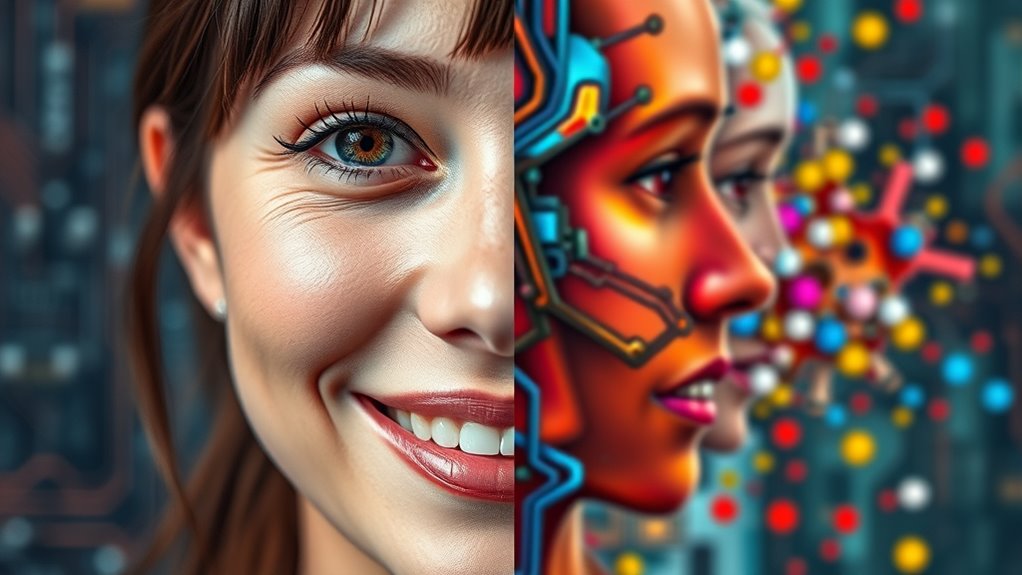

Synthetic media, like deepfakes and AI-generated art, is changing how we create and consume digital content. While it fosters innovative expression, it raises serious ethical concerns, such as consent and misinformation. You might find it harder to trust what you see, as fake content can easily manipulate reality and public opinion. Understanding these complexities is vital, and there’s much more to explore on maintaining integrity in this rapidly evolving landscape.
Key Takeaways
- Synthetic media, including deepfakes and AI-generated art, revolutionizes content creation, enabling innovative storytelling and artistic expression.
- Ethical concerns arise from using individuals’ likenesses without consent, raising issues of trust and respect in creative communities.
- Misinformation can proliferate through synthetic media, blurring the lines between reality and fabrication, thus impacting reputations and public opinion.
- Navigating the digital landscape requires enhanced media literacy to discern fact from fiction and recognize the potential for manipulated realities.
- Promoting responsible use and ethical standards among creators is essential to prevent misinformation and foster a healthy media ecosystem.
Synthetic Media
Have you ever wondered how synthetic media is transforming the way we create and consume content? As technology advances, deepfakes and AI-generated art are becoming more prevalent, reshaping the landscape of digital media. While these innovations hold immense potential for creativity and storytelling, they also raise significant ethical concerns. One of the most pressing issues is the consent challenges that arise when using individuals’ likenesses or voices without their permission. Imagine seeing your face in a video or hearing your voice in a song you never agreed to be part of. It’s a troubling thought, isn’t it?
The rapid development of synthetic media means that anyone with access to the right tools can create convincing content that blurs the lines between reality and fiction. This democratization of content creation can lead to innovative artistic expressions, but it also opens the door to misuse. You might find yourself questioning the authenticity of videos or images that once seemed credible. The ability to manipulate reality raises concerns about misinformation risks, as deepfakes can spread false narratives or damage reputations. You can easily see how a single misleading video could have far-reaching implications, influencing public opinion or swaying elections.
As you navigate this new digital landscape, it’s essential to remain vigilant about the content you encounter. With the rise of synthetic media, discerning fact from fiction has become increasingly challenging. It’s essential to understand the broader context in which this technology operates. When creators use someone else’s likeness without consent, it undermines trust and respect within the creative community. You might even feel a sense of helplessness in an age where anyone can fabricate reality at the click of a button.
The ethical implications of synthetic media are profound, and they demand your attention. As you engage with content, consider the potential harm that could arise from its misuse. Are you ready to question what you see? By fostering a culture of critical thinking and media literacy, you can help combat the spread of misinformation and advocate for the responsible use of synthetic media. It’s crucial to engage in conversations about consent and accountability, ensuring that creators uphold ethical standards. In doing so, you contribute to a healthier media ecosystem, one where creativity thrives without compromising integrity. Additionally, the rise of sound design techniques can enhance how synthetic media is produced, influencing both its artistic quality and ethical considerations. So, the next time you encounter synthetic media, ask yourself: what’s the story behind it?
Frequently Asked Questions
How Can Deepfakes Be Detected Effectively?
To detect deepfakes effectively, you can use AI detection tools that analyze inconsistencies in video and audio. Forensic techniques like pixel-level analysis and temporal inconsistencies can reveal manipulation. By examining facial movements and voice patterns, you can identify anomalies that indicate a deepfake. Staying updated on the latest detection technologies is vital, as creators of deepfakes continuously evolve their methods. Regularly testing content against these tools will enhance your detection capabilities.
What Are the Potential Legal Implications of Synthetic Media?
With over 50% of people worried about their privacy due to synthetic media, the legal implications are significant. You’ll face challenges around intellectual property rights, as creators grapple with ownership of AI-generated content. There’s also the risk of defamation claims if deepfakes misrepresent individuals. As laws evolve, you should stay informed about how these technologies intersect with privacy concerns and intellectual property to protect yourself and your rights in this digital landscape.
Can Synthetic Media Be Used for Positive Purposes?
Absolutely, you can use synthetic media for positive purposes! Ethical applications abound, especially in education. For instance, you can create immersive learning experiences that engage students like never before. By using AI-generated content, you can enhance historical reenactments or visualize complex scientific concepts. These educational uses not only make learning more enjoyable but also help bridge gaps in understanding, allowing you to explore topics in innovative ways. Embrace the potential of synthetic media!
How Do Deepfakes Impact Public Trust in Media?
Deepfakes can shatter public trust in media like a mirror reflecting a distorted reality. When you encounter these convincing fakes, it’s essential to sharpen your media literacy skills. They blur the lines between truth and fabrication, making misinformation prevention a challenge. As you sift through information, question sources and verify authenticity to protect yourself from deception. In this landscape, your critical thinking becomes your best armor against manipulation and mistrust.
What Measures Are Being Taken to Regulate Synthetic Media?
Various measures are being implemented to regulate synthetic media. Governments and organizations are developing regulatory frameworks that set clear guidelines on the creation and distribution of such content. You’ll notice ethical guidelines are also emerging, emphasizing transparency and accountability. These measures aim to protect individuals from misuse while encouraging responsible innovation. As you explore this evolving landscape, you’ll see ongoing discussions about striking a balance between creativity and ethical responsibility.
Conclusion
So, as we dive headfirst into this brave new world of synthetic media, just remember: while deepfakes can make your grandma dance like a TikTok star, they might also have her wondering if she really did vote for that cat in a suit. Embrace the AI art revolution, but don’t forget to question if that masterpiece was created by a genius or a glorified toaster. After all, who needs reality when you’ve got a virtual Picasso?