
📊 Full opportunity report: See The Rally, Review The Game: Pickleball Ratings Explained on IdeaNavigator AI — validation score, market gap, and execution plan.

Get business pricing on tech for your team
- Business-only prices and quantity discounts
- Tax-exempt purchasing
- Multiple users, one account, clear invoices
TL;DR
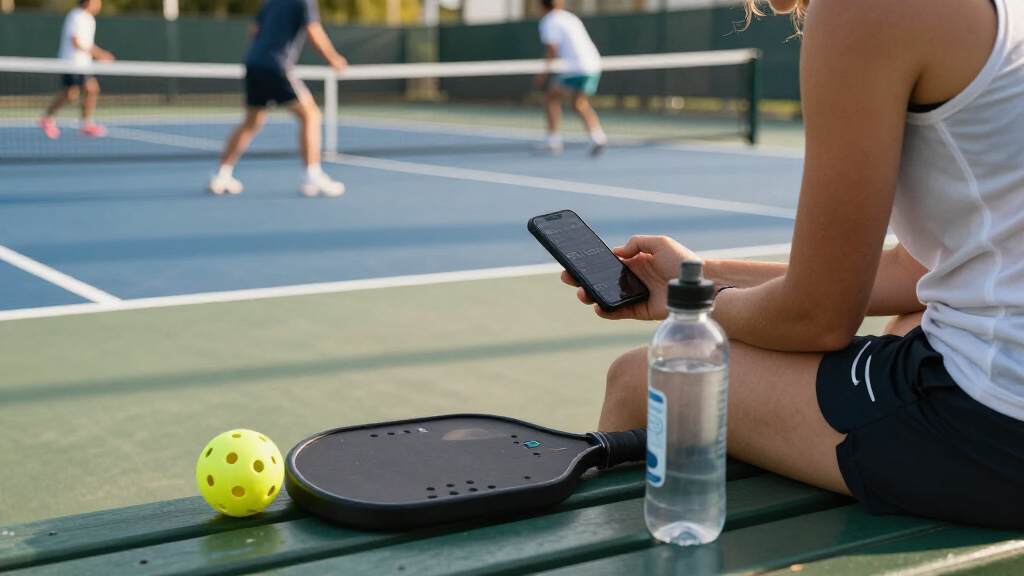
IdeaNavigator AI has outlined a product concept for an app that uses courtside phone video to break pickleball sessions into rallies, tag shots and errors, and track performance. The proposal is to test it at three clubs across 200 sessions; no pilot results or evidence of customer demand are reported.
IdeaNavigator AI has proposed a phone-based app that would replay pickleball rallies and track performance, with an initial test at three clubs across 200 sessions. The concept targets recreational players who want to review points and understand their progress, but it remains a product proposal: no completed pilot, working product, or user results are reported.
The proposed app would use a phone mounted at the court fence to record play. Its software would aim to identify individual rallies, tag shot types and errors, rate rally quality, and create a session highlight reel. It would also track skill measures over time, with the goal of helping users understand changes in their ratings.
The concept focuses on players who want feedback but may not have access to a coach or a dedicated video-analysis setup. IdeaNavigator AI describes gaps in current recreational play: rallies are over quickly, practice such as the third-shot drop can be difficult to evaluate, and players may see their DUPR ratings change without knowing what contributed to the movement. These are the proposal’s stated problem claims, not findings from a reported user study.
For validation, the plan calls for mounting phones at three clubs and processing 200 sessions. The suggested measures are repeat usage and subscription conversion among club members. The business concept pairs a consumer subscription with possible partnerships to equip facility courts; pricing, technical performance, and partner commitments are not specified.
Testing Demand for Court Video Feedback
The proposal addresses a practical question for recreational players: whether ordinary courtside video can become feedback they will use regularly, rather than footage they rarely review. Rally segmentation and shot tagging could make video easier to revisit than a full-session recording, while trend metrics may give players a clearer way to track practice over time.
Those benefits depend on the app accurately distinguishing rallies, shots, and errors from phone footage. If the system misses or mislabels play, its ratings could confuse users rather than clarify performance. The proposed pilot is therefore important as a demand test, but it would also need to establish whether the experience is reliable enough to support the claims made for it.
The business question is similarly unresolved. A subscription model depends on players returning after an initial trial, while facility partnerships depend on clubs accepting the installation and operating requirements. The suggested measures—repeat use and conversion—could indicate initial interest, but the proposal gives no thresholds for success or evidence that either revenue stream is viable.
pickleball rally video analysis app
As an affiliate, we earn on qualifying purchases.
As an affiliate, we earn on qualifying purchases.
From Pickleball Growth to Video Review
Pickleball has attracted a large and growing recreational audience in the United States, creating interest in products aimed at practice and player improvement. The concept describes that audience as affluent and motivated to improve, but supplies no market-size estimates or supporting demographic data. Those characterizations should be treated as assumptions behind the opportunity, not as independently established findings in this proposal.
The suggested approach builds on two capabilities: players can record courtside video with phones, and computer-vision tools may be used to analyze footage. The proposal does not identify a specific model, describe its accuracy, or show that it can reliably interpret pickleball rallies in real-world court conditions. It presents these capabilities as reasons to test the idea now, rather than evidence that the proposed app is already working.
DUPR is a rating system used in pickleball, and the concept frames unexplained rating movement as a frustration for some recreational players. It does not describe a connection to DUPR, access to rating data, or a method for proving that particular shot-level trends caused a rating change. The proposed app would need to distinguish its own performance measures from an official or external rating.
Pilot Results and Accuracy Remain Unknown
No product launch, trial results, or customer interviews are included in the proposal. It is not clear whether a working app exists, who would build or operate it, when the three-club test might take place, or whether clubs have agreed to participate.
Key technical questions are also unanswered: how the app would handle different camera angles, obstructed views, lighting, multiple courts, and players moving in and out of frame; how it would distinguish shot types and errors; and how it would calculate a rally-quality score. The proposal gives no accuracy measures, privacy or video-storage details, or plan for obtaining players’ consent.
The recommended sample of 200 sessions is a proposed test size, not a result. No baseline, target repeat-use rate, subscription price, conversion threshold, or comparison group is provided. It is also unclear how an app’s skill metrics would relate to DUPR changes, or whether users would find the explanations useful.
Three-Club Trial Is the Proposed Test
The next step in the outlined plan is to deploy mounted phones at three clubs, collect and process 200 sessions, then measure whether members return to the app and convert to paid subscriptions. No timetable or confirmed participating facilities are stated, so the trial should not be treated as scheduled.
A useful assessment would need to report how consistently the software identifies rallies and shots, alongside repeat use and paid conversion. It would also need to explain how footage is handled and how the app’s ratings relate—or do not relate—to established player-rating systems. Until those details and results are available, the concept remains an early opportunity to test rather than a demonstrated product.
Source: IdeaNavigator AI
Key Questions
What is the proposed pickleball app meant to do?
It would use courtside phone video to separate play into rallies, tag shots and errors, create highlight reels, and track performance measures. These are proposed features; no functioning product is documented.
Has the app been tested with players?
The proposal describes a future test at three clubs across 200 sessions. It provides no pilot results or confirmation that the trial has begun.
Would the app change a player’s DUPR rating?
No such connection is described. The concept proposes tracking skill metrics that might help explain rating movement, but it does not establish that its measures affect or predict DUPR ratings.
How might the service make money?
The proposed business model combines consumer subscriptions with potential partnerships for courts equipped with mounted cameras. No prices, signed partnerships, or revenue results are reported.
Source: IdeaNavigator AI
Halloween Picks
halloween
As an affiliate, we earn on qualifying purchases.