Ohio is making a big leap in education by investing heavily in robotics, leading to real change in Cleveland. You’ll see classrooms equipped with locally made kits, giving students hands-on experience that links directly to industry skills. Universities like Ohio State are leading research and offering accessible programs, while high school programs focus on practical training. Keep exploring, and you’ll discover how these efforts are shaping Ohio’s future workforce and tech innovation.
Key Takeaways
- Cleveland schools integrate robotics kits into classrooms, fostering experiential learning and student engagement.
- State investments support local manufacturing of robotics kits, ensuring sustainable, community-driven educational resources.
- Ohio universities rank highly nationally, providing advanced robotics research and accessible programs for students.
- High school CTE programs emphasize practical skills, preparing students for high-demand robotics technician careers.
- State policies promote AI and robotics education, including teacher training and ethical guidelines, boosting Ohio’s high-tech future.
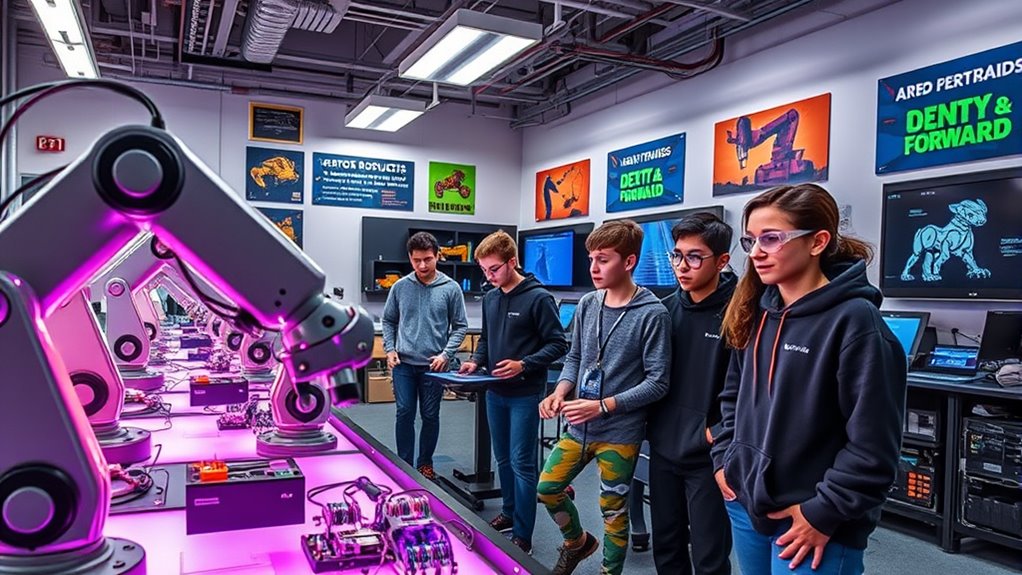
Ohio is taking a bold step forward in education by investing heavily in robotics. This initiative aims to prepare students for the jobs of tomorrow by integrating robotics education into classrooms across the state. With a budget of around $9 million, Ohio plans to outfit every classroom with robotics kits over three years. These kits are produced locally using 3D printers, which not only supports local manufacturing but also gives higher education students hands-on experience in additive manufacturing. This local production approach guarantees that the program stays sustainable and responsive to community needs. As the XRP program gains legislative momentum, more support is expected to be included in the state’s budget, reinforcing Ohio’s commitment to building a robust talent pipeline that connects education directly to industry demands. Ohio’s investment in STEM education is expected to significantly boost the state’s attractiveness to tech companies and startups. You’ll see that Ohio’s universities are making significant strides in robotics research and education. Ohio State University ranks #18 nationally, and Case Western Reserve University is #24, both attracting students interested in robotics careers. These institutions are recognized for their research output, publishing influential papers that shape the field. The University of Cincinnati also plays an essential role, ranking #68 nationally and offering accessible programs with a high acceptance rate. Students at these schools benefit from substantial financial aid, making advanced robotics education more attainable. These universities serve as hubs for innovation and talent development, fueling Ohio’s broader efforts to cultivate a skilled workforce. Meanwhile, high schools across Ohio are experiencing increased participation in Career and Technical Education (CTE). More students are engaging in programs that focus on engineering technology and robotics, though some are still hesitant to pursue these fields. State investments continue to drive growth, with students expressing a strong interest in acquiring skills that lead to well-paying jobs without necessarily attending a four-year college. Robotics is a key component within these career clusters, preparing students for technician roles and immediate employment in high-demand industries. Ohio’s focus on practical, job-ready skills ensures that students graduate ready to enter the workforce, closing the gap between education and employment opportunities. Colleges like the University of Northwestern Ohio offer specialized degrees in robotics technology, which are highly popular among students seeking technical careers. These programs emphasize hands-on training, equipping students with the skills needed for robotics technician roles. Locations across Ohio provide diverse options for students interested in this field, reflecting the state’s commitment to expanding access to robotics education. Additionally, Ohio’s policies require school districts to develop thorough AI guidelines, which include robotics. Teachers receive professional development to effectively teach these emerging technologies, ensuring students gain AI literacy and understand ethical considerations like data privacy and plagiarism. In Cleveland, robotics is transforming education through experiential learning in schools. Students engage directly with robotics kits, gaining practical experience that sparks interest and builds confidence. This hands-on approach helps them connect classroom knowledge to real-world applications, preparing them for future careers in technology. Furthermore, the integration of sustainable practices in robotics education aligns with Ohio’s commitment to environmental responsibility. Ohio’s investments and policies are creating an environment where robotics education not only enhances learning but also opens pathways to high-tech careers, making the state’s next educational leap both tangible and promising.

ELEGOO UNO R3 Smart Robot Car Kit V4 for Arduino Robotics for Kids Ages 8-12 12-16 STEM Science Kits Coding Gifts for 8 9 10 11 12 13 14 15 16 Year Old Boys Girls Teens Cool Engineering Building Toys
- Educational STEM Kit: Hands-on programming and robotics learning
- Complete Module Set: Includes 24 modules with remote control
- Easy Assembly: Modified interfaces for simple setup
As an affiliate, we earn on qualifying purchases.
As an affiliate, we earn on qualifying purchases.
Frequently Asked Questions
How Are Robotics Programs Funded in Cleveland Schools?
Robotics programs in Cleveland schools are funded through a mix of hybrid models, grants, sponsorships, and in-kind support. You can tap into external grants like the Ohio Space Grant Consortium, seek sponsorships from local organizations, or receive donations of materials and services. Schools also collaborate with industry and higher education partners, leveraging resources and manufacturing capabilities. This diverse funding approach helps expand robotics education and create sustainable, community-driven programs.
What Career Opportunities Do Robotics Skills Offer Students?
With robotics skills, you open doors to diverse career opportunities like robotics engineer, AI specialist, or technician. You’ll design, build, and maintain robots across industries such as manufacturing, healthcare, and logistics. These roles often pay well—average salaries exceeding $114,000—and offer growth potential. By developing your skills now, you position yourself for a future in rapidly expanding fields that value innovation, problem-solving, and technical expertise.
How Do Robotics Initiatives Impact Student Academic Performance?
Robotics initiatives act like a catalyst, igniting your academic performance. You’ll see remarkable gains as your understanding of STEM concepts deepens, and your coding skills skyrocket from almost zero to mastery. The engaging nature of robotics makes learning feel less like a chore and more like an adventure, boosting your motivation, focus, and problem-solving abilities. This hands-on approach transforms your classroom experience, setting you up for success across multiple subjects.
Are There Partnerships With Local Tech Companies in Cleveland’s Robotics Programs?
Yes, Cleveland’s robotics programs partner with local tech companies. These partnerships, like Sherwin-Williams’ involvement, support initiatives such as the Experiential Robotics Platform, providing funding, expertise, and resources. You benefit from these collaborations through increased access to robotics kits, mentorship, and real-world industry experience. These strong ties help prepare you for future careers in automation, AI, and STEM fields, making Cleveland’s tech community more vibrant and innovative.
What Challenges Do Schools Face When Integrating Robotics Into Curricula?
You face multiple challenges when integrating robotics into curricula. For example, over 60% of schools report high equipment costs as a barrier. You also need specialized teacher training, which takes time and resources. Infrastructure issues, like limited space and unreliable internet, complicate projects. Additionally, managing software debugging and evaluating student progress can be tough. Overcoming these obstacles requires investment, collaboration, and strategic planning to truly bring robotics into education.
Conclusion
As Cleveland’s transformation showcases the power of robotics, you realize Ohio’s future hinges on this innovation. While traditional classrooms foster foundational knowledge, robotics pushes boundaries, blending creativity with technology. This juxtaposition reminds you that progress isn’t just about learning facts but reimagining what education can be. Embracing robotics means you’re not just keeping up—you’re shaping the future, turning challenges into opportunities and potential into reality. Ohio’s next leap is truly a bold step forward.