The German government is investing heavily in artificial intelligence to lead the next economic revolution. With a €5.5 billion strategy, they aim to make AI a pillar of innovation, growth, and societal progress. Initiatives focus on funding research, developing skills, and building a robust digital infrastructure. Key sectors like healthcare, mobility, and industry benefit from AI integration, positioning Germany as a global leader. To discover how these efforts shape Germany’s future, explore further.
Key Takeaways
- Germany’s High-Tech Strategy 2025 allocates €5.5 billion to AI research, aiming for AI to contribute 10% to GDP by 2030.
- The government fosters innovation through funding, digital infrastructure, and collaboration across sectors and research institutions.
- Focus areas include healthcare, environment, aerospace, and mobility, leveraging AI to enhance industrial competitiveness and sustainability.
- Initiatives like federated data spaces and digital test beds support AI deployment while safeguarding privacy and data sharing.
- Policies aim to position Germany as a global leader in AI technology, driving economic growth and societal progress.

Germany is making a bold bet on artificial intelligence as a key driver of its economic and societal future. The government’s High-Tech Strategy 2025 (HTS 2025) lays out a comprehensive plan to harness AI for tackling societal challenges like digitalization, sustainability, and the future of work. You’ll see that AI is woven into this strategy as a core element, fostering collaboration across ministries, science, industry, and civil society to accelerate innovation. The government is committing significant resources, including funding decisions that prioritize AI research, education initiatives like the Digital Pact for Schools, and the development of a skilled workforce. The aim is to create an ecosystem where AI not only advances technological progress but also becomes a pillar of economic growth.
Germany’s High-Tech Strategy 2025 aims to make AI a cornerstone of economic growth and societal innovation.
Germany’s 2025 coalition agreement underscores AI’s central role in the country’s digital future. It emphasizes digital sovereignty and innovation, with the federal government establishing the new Ministry for Digital and Government Modernization (BMDS). This move consolidates digital responsibilities to streamline efforts, modernize government services, and promote AI deployment across sectors. You’ll notice that these policies are designed to position Germany as a leader in AI, ensuring that the country remains competitive in a rapidly evolving global landscape.
The government’s €5.5 billion national AI strategy announced in 2025 targets making AI contribute about 10% of Germany’s GDP by 2030. You’ll find that funding is directed toward building AI infrastructure, nurturing talent, and advancing industrial applications like machine vision, which is vital for Germany’s strong automotive, robotics, and manufacturing sectors. Programs like EXIST support university spin-offs and startups, providing advisory services, funding, and venture debt to accelerate AI innovation. Additionally, the Central Innovation Programme for SMEs (ZIM) backs R&D projects, ensuring that even smaller companies can participate in AI development. Support mechanisms include digital test beds, regulatory sandboxes, and pilot projects, especially those focusing on environmental and climate benefits.
Germany’s focus on key sectors such as healthcare, environment, climate, aerospace, and mobility reflects strategic priorities. You’ll see that machine vision technology is especially emphasized, given its importance in Germany’s industrial landscape. The strategy seeks to foster human-machine interaction and promote industrial research to bridge the gap between cutting-edge research and practical application. This approach aims to boost competitiveness and sustainability in traditional sectors through digital transformation and innovation.
Finally, the government prioritizes expanding digital infrastructure and establishing data ecosystems. Efforts include modernizing digital networks, creating federated data spaces like Manufacturing-X and Health-X, and encouraging participation in industry-specific data ecosystems like Catena-X. These initiatives aim to improve data sharing while protecting individual rights, supporting AI deployment across industries. With national cloud operations and integrated federal IT systems, Germany seeks to build a resilient, data-driven environment that sustains its AI ambitions for years to come. This strategy also emphasizes the importance of establishing a robust digital infrastructure, including national cloud services and secure data sharing platforms, to support AI development.
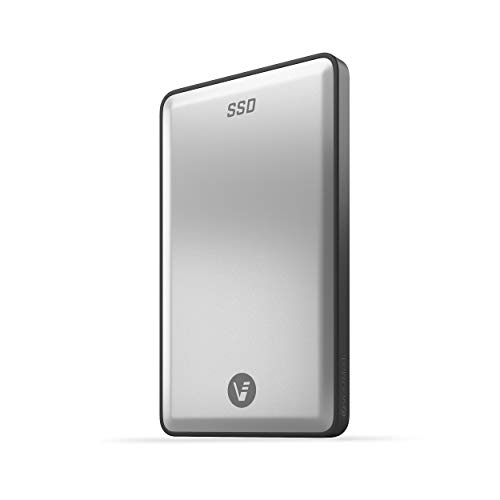
VectoTech 8TB External SSD USB-C Portable Solid State Drive (USB 3.1 Gen 2) | 3D NAND Flash | Rapid
PERFORMANCE – Ultra fast read/write speeds of up to 540MB/s, lets you transfer conveniently large files, 4K videos,...
As an affiliate, we earn on qualifying purchases.
Frequently Asked Questions
How Will AI Impact Germany’s Traditional Manufacturing Industries?
AI will transform Germany’s traditional manufacturing industries by boosting productivity and efficiency through automation, predictive maintenance, and real-time quality control. You’ll see faster processes, reduced downtime, and better resource management. While some jobs may decline, new skill demands will emerge, requiring workforce training. Overall, AI helps you stay competitive globally and sustain economic growth, making manufacturing smarter, more innovative, and more resilient against international challenges.
What Are the Ethical Considerations in Germany’s AI Strategy?
Did you know that 80% of Germans support ethical AI? Your focus should be on respecting human rights, fairness, and transparency in AI development. You need to guarantee algorithms avoid bias, uphold privacy, and promote accountability. By fostering a responsibility culture among developers and users, you help prevent harm while aligning with European guidelines. Prioritize societal dialogue and inclusive initiatives to ensure AI benefits everyone ethically and responsibly.
How Is AI Funding Allocated Across Different Sectors?
You’ll see AI funding in Germany allocated mainly to industrial sectors like automotive, chemicals, biotech, cleantech, medicine, and agrifood. The government prioritizes these areas through flagship projects and strategic investments, focusing on scaling next-gen models, data infrastructure, and industrial applications. They also support research in materials science and satellite technology, ensuring AI’s integration into key sectors for economic growth and technological sovereignty.
What Skills Will Workers Need in Germany’s Ai-Driven Economy?
In Germany’s AI-driven economy, you’ll need supercharged skills like mastery of machine learning, deep learning, and programming languages such as Python and C++. You’ll also become an expert in data modeling, natural language processing, and robotics. Plus, you’ll develop AI literacy, ethical judgment, and decision-making prowess. Staying adaptable and continuously learning is essential, turning you into a futuristic worker capable of shaping industries and transforming the very fabric of work itself.
How Does Germany’s AI Approach Compare to Other Nations?
You’ll notice Germany focuses heavily on industrial AI, especially in manufacturing, logistics, and automotive sectors, leveraging world-class infrastructure and strong university-industry ties. Unlike the U.S. and China, which prioritize broad consumer markets and surveillance, Germany emphasizes ethical AI, innovation, and societal benefits. While France invests more financially, Germany’s targeted, industrial approach aims to boost productivity and maintain its manufacturing edge, contrasting with the more expansive strategies of other nations.

SanDisk 8TB Desk Drive SSD – Desktop External Solid State Drive, Up to 1000MB/s, USB-C, USB 3.2 Gen 2 - SDSSDT40-8T00-NA25
Available in capacities up to 8TB SSD(1), giving you capacity for your photo and video collection, music library,...
As an affiliate, we earn on qualifying purchases.
Conclusion
As you consider Germany’s bold move to invest heavily in AI, it’s clear they’re aiming for a major economic boost. Did you know that by 2030, AI could add up to €13 trillion to the global economy? This shows just how pivotal AI could be for the future. If Germany’s strategies succeed, they’ll not only stay competitive but also lead the next wave of technological innovation. It’s an exciting time to watch these developments unfold.

Crucial X10 8TB Portable SSD, Up to 2,100MB/s, USB 3.2 USB-C, External Solid State Drive, Compatible with Windows, Mac & Android, Durable Storage for Games, Photos & Files, Blue - CT8000X10SSD9-02
Ultra-fast Speeds: Designed for creators, students and PC gamers, this matte blue external SSD delivers fast data access...
As an affiliate, we earn on qualifying purchases.

SSK 8TB SSD External Hard Drive, Portable SSD Drive up to 2000 MB/s, USB 3.2 Gen2X2 External Solid State Drives for iPhone 15/16 PRO、Mac、Phone OTG、Laptops with LED Indicator
Blazing 20Gbps: Instantly view and edit files with external ssd speed up to 2000MB/s.(This speed runs on CrystalDiskMark...
As an affiliate, we earn on qualifying purchases.