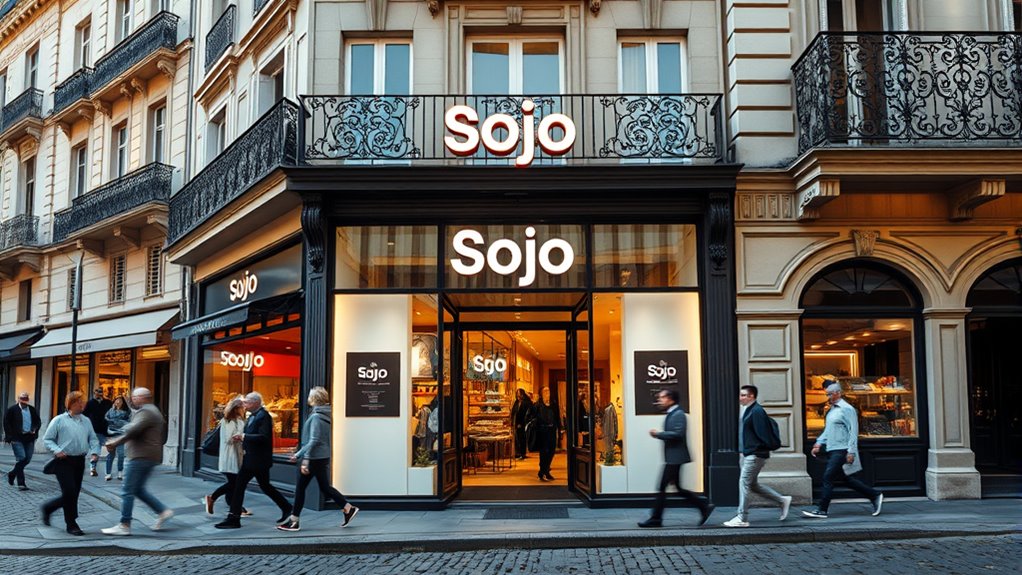

French legislation actively supports repairability and promotes a circular economy, making it easier for you to access sustainable repair services like Sojo in Paris. These laws encourage both businesses and consumers to favor repair over replacement, with incentives to make eco-friendly choices. This supportive legal environment helps normalize repair services in retail spaces, signaling a positive shift in the market. To learn how this legislation directly benefits Sojo’s expansion plans, continue exploring these developments.
Key Takeaways
- France mandates repairability in clothing and footwear, encouraging sustainable repair services like Sojo’s.
- Legislation offers subsidies and incentives for repair, making services more accessible to consumers.
- Legal frameworks promote a circular economy, supporting repair and reuse in retail environments.
- France’s forward-thinking sustainability laws create a favorable environment for Sojo’s physical repair hubs.
- Legislation enables innovative retail concepts, integrating repair services into mainstream shopping experiences like Sojo’s Paris launch.
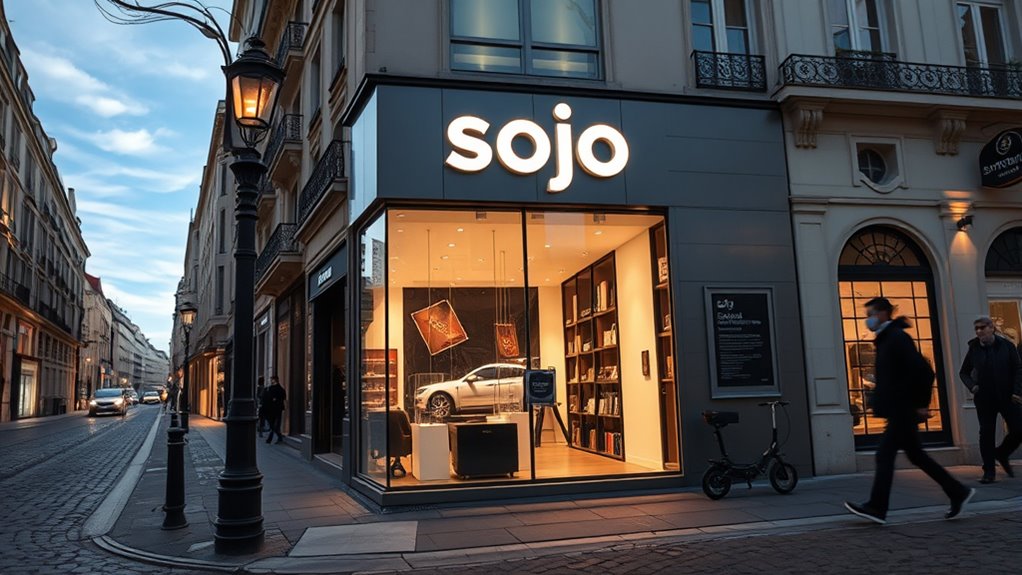
French legislation supporting sustainability is opening new opportunities for innovative retail concepts like Sojo. You can see how this legal framework actively encourages eco-friendly practices that resonate with consumer values today. France mandates that manufacturers design clothing and footwear to be repairable, embedding repairability directly into product design. This means that your clothes and shoes are no longer disposable items but parts of a circular economy where reuse and repair take center stage. Such laws aim to reduce waste and promote sustainability, positioning France as one of the most forward-thinking markets globally in retail sustainability. These laws have led to increased consumer demand for repair services, creating a fertile environment for companies like Sojo to expand. Moreover, this aligns with global efforts to reduce greenhouse gas emissions, fostering a more sustainable retail landscape. Subsidies are also available for repairs to clothing and footwear. If you choose to repair rather than replace, you benefit from financial incentives that make sustainable choices more accessible. These measures encourage consumers like you to see repair as a practical, cost-effective alternative, fostering a shift in shopping habits. The legislation supports a holistic ecosystem where repair and alteration services are not just encouraged but legally integrated, creating an environment where businesses offering these solutions can thrive. As a consumer, this means easier access to repair services, making it more convenient and affordable to extend the life of your garments. For a company like Sojo, these laws present a strategic opportunity. France’s robust support for repair and reuse aligns perfectly with Sojo’s mission to embed repair culture within mainstream shopping experiences. You’ll notice Sojo’s decision to expand into France, choosing Paris’s Westfield Les 4 Temps as its first international site outside the UK. This move isn’t random; it’s a calculated step to leverage France’s leadership in sustainability legislation and market receptivity. By establishing a physical presence in a prominent retail hub, Sojo aims to normalize repair services as part of everyday shopping. The Paris launch is still in preparation, but the choice of location signals confidence in the country’s supportive environment for repair-centered retail models. Sojo’s repair and alteration service, called ‘Fix & Fit,’ exemplifies how the legal landscape supports practical sustainability solutions. Whether booked online or in-store, the service offers tailoring, repairs, and refitting handled by skilled in-house tailors, with options for in-store pickup or home delivery. This model promotes reuse, reduces waste, and integrates seamlessly into your shopping journey. The company’s expansion into physical hubs, including those in London’s Westfield malls, demonstrates its commitment to accessible, omnichannel repair services. These hubs are strategically placed in high-foot-traffic locations, making repair services a natural part of your retail experience. Westfield malls play a crucial role in Sojo’s market entry, providing visibility and consumer trust through established retail environments. The partnership with these malls allows Sojo to blend repair services into everyday shopping, encouraging you to consider repair as a standard part of fashion consumption. Overall, France’s legislative push for sustainability not only supports eco-conscious shopping but also enables innovative retail concepts like Sojo to thrive, shaping a future where repair, reuse, and sustainability become core elements of your retail experience.
clothing repair kit
As an affiliate, we earn on qualifying purchases.
As an affiliate, we earn on qualifying purchases.
Frequently Asked Questions
How Will Local Regulations Impact Sojo’s Operational Model?
Local regulations will shape your operational model by requiring high repair standards, transparency, and in-person service points. You’ll need to adapt your services to meet sustainability mandates, such as repairability and eco-friendly practices, which can boost customer trust. Subsidies make your services more affordable, encouraging more customers to repair rather than replace. Additionally, hiring local staff familiar with French laws guarantees compliance, helping you build a strong, sustainable presence in Paris.
What Licensing Requirements Are Necessary for Sojo’s Services?
You’ll need to navigate a maze of licensing requirements, like a skilled sailor charting a course through French regulations. Secure the right business permits for your repair services, register with trade authorities, and obtain necessary local licenses for workshops. Make sure your repair specialists hold recognized certifications, and keep your digital operations compliant with GDPR and consumer laws. With these licenses in hand, you’ll sail smoothly into Paris’s vibrant repair market.
Are There Any Tax Incentives for Foreign Companies Like Sojo?
Yes, as a foreign company like Sojo, you can benefit from France’s tax incentives. You’ll enjoy a reduced corporate income tax rate of 25%, with smaller profits taxed at just 15%. If you invest in R&D or hold intangible assets, you can access favorable tax regimes like the IP box at 10%. Additionally, incentives for innovative projects and capital investments further boost your tax efficiency, making France an attractive location for your growth.
How Does French Legislation Affect Sojo’s Data Privacy Policies?
French legislation requires you to align Sojo’s data privacy policies with GDPR standards, ensuring lawful processing, transparency, and user rights. You must provide clear privacy notices in French, covering digital legacy and minors’ data. Additionally, you need to monitor data processing activities linked to French users globally, comply with the SREN Law, and respect user rights, including data access, rectification, and deletion, all while safeguarding against unauthorized requests and ensuring transparency.
What Legal Challenges Might Sojo Face Entering the French Market?
You might find maneuvering France’s complex legal landscape a bit like dancing through a carefully choreographed routine. French laws on product standards, repairability, and consumer rights could introduce some bumps along the way, requiring careful compliance. Licensing, permits, and local regulations may also pose challenges. However, with proactive planning and adaptation, you can turn these hurdles into opportunities for building trust and establishing a strong, compliant presence in the French market.
shoe repair kit
As an affiliate, we earn on qualifying purchases.
As an affiliate, we earn on qualifying purchases.
Conclusion
With French legislation opening the doors, you’re now standing at the crossroads of opportunity and innovation. Just as a seed finds fertile soil to grow, sojo’s Paris presence blossoms, ready to carve its mark in the city’s vibrant landscape. This new chapter isn’t just a step forward—it’s a bridge to endless possibilities, inviting you to be part of a journey where laws become the wind beneath your wings, carrying you toward a brighter, bolder future.
clothing repair services France
As an affiliate, we earn on qualifying purchases.
As an affiliate, we earn on qualifying purchases.
sustainable clothing repair
As an affiliate, we earn on qualifying purchases.
As an affiliate, we earn on qualifying purchases.