
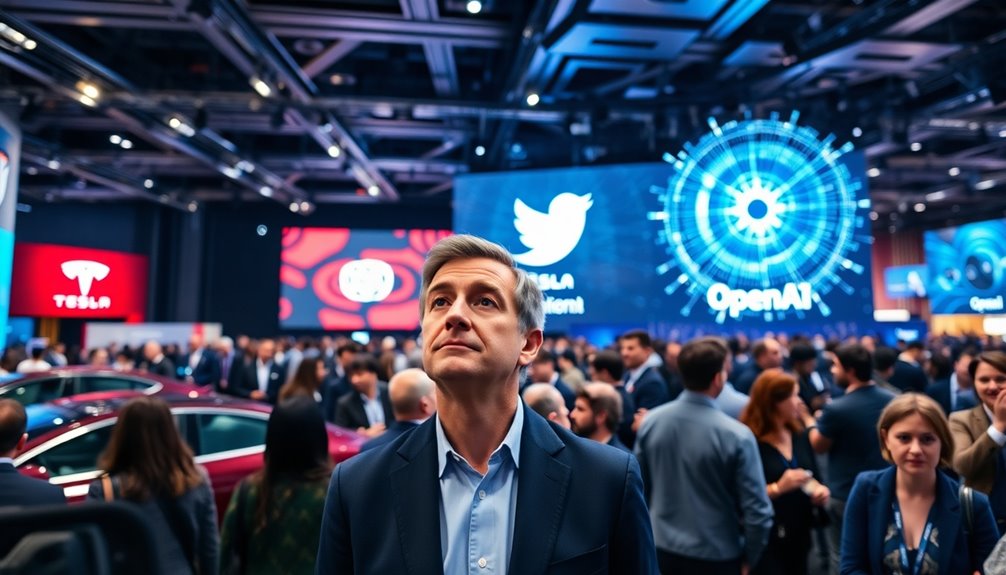
As Tesla and OpenAI navigate a rapidly changing landscape, Elon Musk's recent $97.4 billion bid to acquire OpenAI's non-profit arm has sparked significant interest. You might wonder why Musk, a co-founder of OpenAI, is making such a bold move now, especially as OpenAI transitions toward a for-profit model, currently valued at $157 billion. His goal is clear: he wants to realign OpenAI with its original mission of prioritizing AI safety and development, a cause he feels has become overshadowed by profit motives.
OpenAI, on the other hand, isn't backing down. CEO Sam Altman humorously rejected Musk's bid, even cheekily suggesting he'd buy Twitter for a mere $9.74 billion. This playful jab hints at a deeper strategy. OpenAI is in a funding frenzy, seeking $40 billion to reach a staggering $300 billion valuation. Their partnerships, particularly with Microsoft, are crucial for this growth. These relationships help them navigate the high costs associated with AI infrastructure, especially with projects like the ambitious $500 billion Stargate initiative.
Musk's involvement in the AI landscape doesn't stop with OpenAI. His startup, xAI, plays a role in the bid and could potentially merge with OpenAI if his offer succeeds. This merger could reshape the AI industry, aligning Musk's vision of ethical AI development with OpenAI's capabilities. The non-profit structure Musk aims to reinstate is critical in prioritizing ethical considerations and public welfare in AI development.
However, it's worth noting that Musk's history with OpenAI hasn't been entirely smooth. Since his departure in 2018, he's been in legal disputes over the organization's direction, reflecting a complex relationship with the company he helped start.
In the broader context, competition in the AI space is heating up. Microsoft has invested heavily in Anthropic, a rival to OpenAI, while Google's DeepMind is making strides toward Artificial General Intelligence (AGI). As these tech giants vie for dominance, the ethical implications of AI development come into sharper focus.
Musk's bid, alongside OpenAI's pivot to a profit-driven model, raises questions about the future of AI governance and the balance between ethical considerations and commercial interests.
Ultimately, you're witnessing a pivotal moment in the AI industry. Musk's attempt to reclaim influence over OpenAI could significantly alter the competitive landscape, setting new standards for governance and ethical practices in AI development. What unfolds next could redefine not just the companies involved but also the future of artificial intelligence itself.