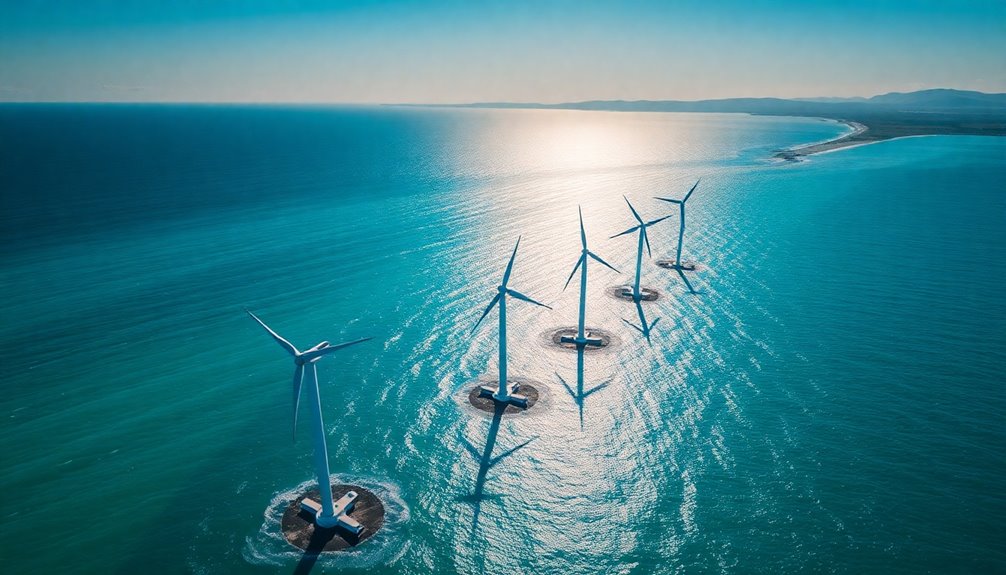

The East Coast of Florida and regions off South Africa are emerging as leading spots for ocean power generation. These areas boast high power densities, making energy extraction more feasible. Seasonal demand peaks in warmer months aligns with these power sources, optimizing output. If you're curious about how local conditions and unique challenges shape ocean energy strategies, there's so much more to explore on this fascinating topic.

Get tech for your team delivered free — and shop member deals
- Fast, free delivery on millions of items
- Access to Prime Big Deal Days deals on October 6–7
- Prime Video, Amazon Music and more included
Key Takeaways
- Florida's East Coast is a leading location due to its high power densities and shallow waters suitable for energy extraction.
- South Africa also showcases significant potential for ocean power generation with favorable local conditions.
- Seasonal variations enhance energy output during warmer months, aligning with peak electricity demand.
- Ocean currents and waves represent promising renewable resources for energy generation in these regions.
- Understanding local environmental factors is essential for optimizing ocean energy extraction strategies.
As global electricity demand continues to rise, tapping into the vast potential of ocean power generation becomes increasingly critical. You might be surprised to learn that locations like Florida's East Coast and South Africa exhibit high power densities, making them ideal for ocean current energy extraction. These regions not only have the necessary energy potential but also feature shallow waters that enhance the feasibility of energy extraction.
When you look at the Southeast coast of the U.S. and Eastern Africa, the opportunities become even clearer. Seasonal variations play a significant role as power densities fluctuate throughout the year. During warmer months, energy demand peaks, aligning with higher power densities in these areas. This seasonal aspect highlights the importance of understanding local conditions to maximize energy output. Additionally, high power densities consistently found off Florida's East coast and South Africa further solidify their status as prime locations for ocean energy production.
Oceans cover over 70% of the Earth's surface, providing a vast resource for renewable energy. Traditional energy sources are under increasing strain, making it vital to explore marine renewable energy options. However, this field is still in its infancy compared to wind and solar power. Recent studies have begun to fill the gap in data regarding ocean energy potential, emphasizing the significance of ocean currents and waves as substantial renewable resources.
Factors influencing energy estimates include data density, environmental conditions, and measurement methods. For instance, the unique challenges of operating Ocean Current Turbines (OCTs) in a marine environment require careful design considerations. You must account for depth, current speed, and potential ecological impacts, such as changes in marine flow and animal collisions.
The economic and environmental benefits of harnessing ocean energy are substantial. By diversifying energy sources, you enhance regional and national energy security while supporting economic growth through innovative technologies.
As ocean energy becomes a more prominent player in the renewable sector, it promises to significantly contribute to a low-carbon energy mix and promote ecological health.
As an affiliate, we earn on qualifying purchases.
Frequently Asked Questions
What Is Ocean Power Generation and How Does It Work?
Ocean power generation harnesses energy from the ocean's natural movements, like waves and tides, to produce electricity.
You can think of it as capturing the kinetic energy from surface waves or tidal currents using specially designed devices such as turbines or oscillating water columns.
This renewable energy source generates power without harmful emissions, making it a cleaner alternative to fossil fuels.
What Are the Environmental Impacts of Ocean Power Generation?
Imagine the ocean as a delicate symphony, where each wave, current, and creature plays a vital note. When you harness ocean power, you risk disrupting this harmony.
The devices can alter water flows, stress marine wildlife with noise, and leak harmful chemicals. Entanglement and altered behaviors may emerge, creating discord in ecosystems.
As you pursue energy from the ocean, remember to balance innovation with the responsibility of protecting these essential, interconnected melodies.
How Does Ocean Power Compare to Other Renewable Energy Sources?
When you compare ocean power to other renewable sources, you'll find it offers unique advantages.
Tidal energy is more predictable and reliable than solar or wind, while wave energy harnesses vast potential.
Though currently more expensive, ocean energy can lead to long-term savings and reduced greenhouse gas emissions.
Offshore wind is gaining ground economically, but ocean power's stability and sustainability make it an attractive option for the future of clean energy.
What Is the Cost of Developing Ocean Power Generation Facilities?
When you consider developing ocean power generation facilities, costs can range from 3 to 8 million dollars per megawatt installed.
Initial project expenses might exceed 50 million due to technical challenges, especially with systems like the Oyster wave energy project. Geographic location, technology type, and installation complexities also impact costs.
While high at first, advancements in technology and economies of scale are expected to lower these expenses over time, enhancing economic feasibility.
What Are the Future Trends in Ocean Power Technology?
Future trends in ocean power technology are exciting for you.
You'll see advancements in tidal stream technology and wave energy converters, improving energy efficiency and reliability.
Innovations in material sciences help tackle environmental challenges, making systems more durable.
AI integration will enhance data analytics, optimizing performance and maintenance.
As investments grow, strategic partnerships will expand your access to new technologies, positioning you to benefit from this rapidly evolving renewable energy sector.
Conclusion
In the world of ocean power generation, it's clear that some locations shine brighter than others. With advancements in technology and an increasing focus on renewable energy, harnessing the ocean's vast potential is more feasible than ever. As the saying goes, "the early bird catches the worm." By investing in these leading sites now, we can secure a sustainable energy future and ride the wave of innovation that ocean power offers. Don't miss out on this opportunity!
Halloween Picks
halloween
As an affiliate, we earn on qualifying purchases.