
Smart energy tools revolutionize how you manage your home’s power by allowing real-time monitoring, automation, and integration of renewable sources. You can optimize energy use, reduce bills, and support sustainability efforts effortlessly. These systems communicate with the grid, shift loads, and store excess energy, making your home more efficient and resilient. As AI and advanced technology evolve, you’ll discover even smarter ways to control and benefit from your energy system—keep exploring to learn more.
Key Takeaways
- Enable homes to generate, store, and use renewable energy, reducing reliance on the grid and lowering costs.
- Utilize real-time monitoring and automation to optimize energy consumption and enhance efficiency.
- Facilitate dynamic interaction with the grid, allowing homes to feed excess power and earn credits.
- Integrate AI and predictive analytics for proactive energy management based on weather and usage patterns.
- Promote sustainability by empowering homeowners to actively participate in renewable energy practices.
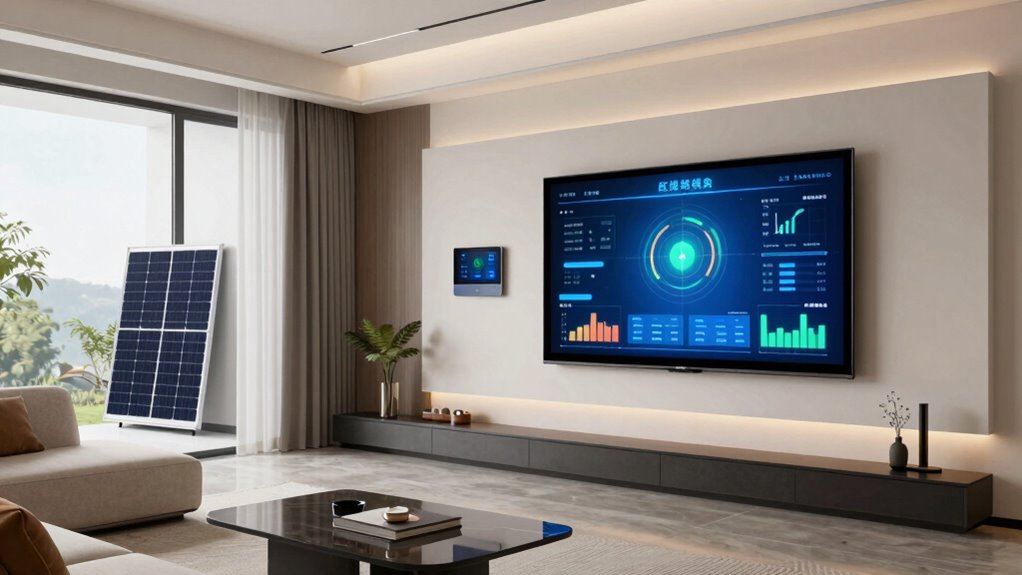
Have you ever wondered how modern homes are becoming more energy-efficient? The answer lies in the innovative energy tools now available, which are transforming the way you manage your household’s power consumption. These tools leverage advanced technology to optimize energy use, reduce waste, and support sustainable practices. A fundamental aspect is renewable integration, allowing your home to seamlessly incorporate sources like solar panels or small wind turbines. Instead of relying solely on the grid, you can generate your own clean energy and store excess power in home batteries. This not only cuts down your reliance on fossil fuels but also lowers your energy bills over time.
Modern homes use innovative tools to generate, store, and optimize clean energy, reducing costs and supporting sustainability.
Smart grid interaction further enhances your control and efficiency. Instead of passively drawing energy, your home actively communicates with the grid through smart meters and connected devices. During periods of low demand or high renewable output, your system can automatically shift your energy use to maximize the availability of clean power. For example, appliances like washing machines or electric vehicle chargers can run during times when renewable energy is abundant, reducing your carbon footprint. This interaction also enables your home to feed excess power back into the grid, supporting community-wide sustainability efforts and earning you credits in some cases.
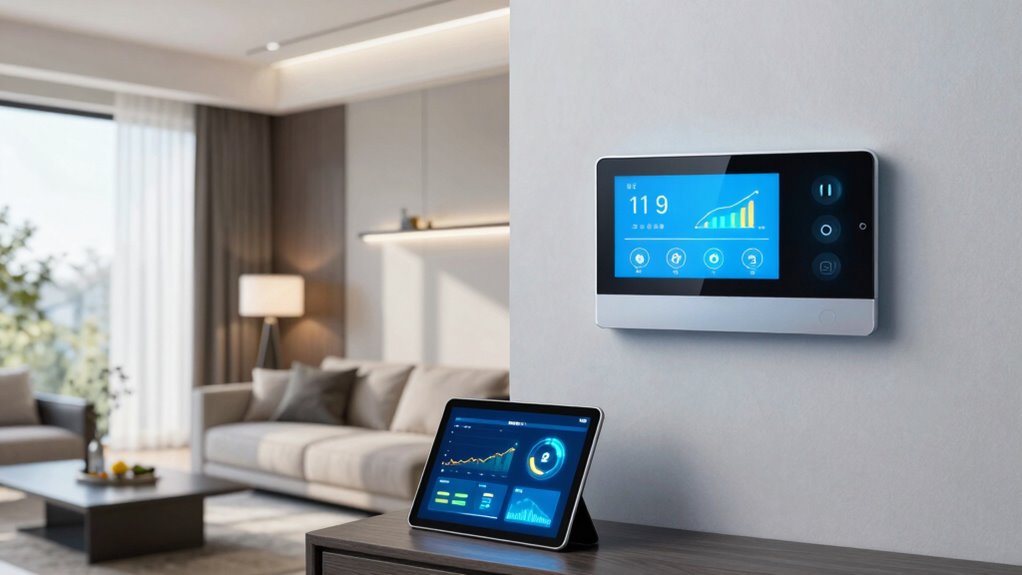
The integration of renewable sources and smart grid interaction is made possible by sophisticated energy management systems. These systems monitor your energy production and consumption in real time, adjusting settings to optimize efficiency. You might see your smart thermostat automatically adjusting temperature settings based on solar output or energy prices, ensuring you stay comfortable without wasting power. These tools also send you detailed insights about your energy habits, helping you make smarter choices and identify opportunities for savings. Additionally, advancements in renewable energy technology are accelerating the adoption of these solutions, making them more accessible and effective for homeowners. As a result, the energy efficiency of your home can be significantly improved, contributing to lower overall energy costs. Embracing home automation further enhances these benefits by integrating various systems into a seamless, user-friendly interface. Moreover, the development of energy storage solutions allows for greater flexibility in managing energy supply and demand, making these systems even more reliable and efficient.
Implementing smart energy tools isn’t just about saving money; it’s about taking an active role in a more sustainable future. You become part of a larger network that supports renewable energy adoption and reduces reliance on fossil fuels. As these technologies evolve, expect even more intuitive and integrated solutions, making it easier for you to manage your home’s energy responsibly. For instance, AI-powered energy management systems are increasingly capable of learning your habits and optimizing energy use accordingly. They can even predict future energy needs based on weather forecasts and usage patterns, further improving efficiency. These innovations not only enhance your energy savings but also contribute to a smarter, greener grid. In essence, smart energy tools empower you to control your energy environment more effectively, contributing to a cleaner planet while enjoying the benefits of lower costs and greater convenience. They’re changing the way you experience home energy, making sustainability a natural part of everyday life.
As an affiliate, we earn on qualifying purchases.
Frequently Asked Questions
How Secure Are Smart Energy Tools From Cyber Threats?
Smart energy tools are generally secure, but cybersecurity vulnerabilities can still exist if you don’t keep devices updated. You might face data privacy concerns if sensitive information isn’t properly protected. To stay safe, make sure your home network has strong, unique passwords and enable two-factor authentication. Regular software updates and choosing reputable brands also help mitigate risks, giving you peace of mind while managing your modern home efficiently.
Can Smart Energy Tools Integrate With Existing Home Systems Easily?
You can easily integrate smart energy tools with your current home systems, especially with home automation and energy monitoring. For example, a homeowner connected a smart thermostat to their existing smart home setup, seamlessly syncing it with voice control and energy monitoring apps. This allows you to optimize energy use effortlessly, making your home smarter and more efficient without complex installations. Most smart energy tools are designed for smooth compatibility with popular home systems.
What Is the Average Cost of Implementing Smart Energy Solutions?
You’ll typically spend between $200 and $1,500 on smart energy solutions, but costs vary based on system complexity and brand. A cost comparison shows smarter, integrated systems might be pricier upfront but save you money long-term through energy efficiency. Thanks to recent technology advancements, more affordable options are available, making it easier for you to upgrade your home without breaking the bank.
Do These Tools Require Professional Installation or Can Homeowners Do It Themselves?
Most smart energy tools are designed for DIY installation, so you can often set them up yourself without professional help. They usually come with clear instructions, making DIY installation straightforward. However, you should be comfortable with basic troubleshooting in case you encounter issues. If you’re unsure, some devices offer customer support to help with user troubleshooting, ensuring your smart energy system works efficiently and safely in your home.
How Do Smart Energy Tools Impact Long-Term Energy Savings?
Smart energy tools boost your long-term energy savings by enhancing energy conservation and optimizing your home’s efficiency. They monitor usage patterns, identify waste, and allow you to adjust settings remotely. This leads to reduced energy consumption and lower utility bills. Over time, these tools help you achieve cost efficiency, making your home more sustainable and saving you money while supporting environmentally friendly practices.
Conclusion
By harnessing smart energy tools, you’re not just managing your home—you’re transforming it into a futuristic haven where energy flows effortlessly and waste becomes a thing of the past. These innovations don’t just save you money; they redefine what’s possible in home management. Embrace this revolution now, or risk being left behind in a world where only the smartest homes survive and thrive. The future isn’t coming—you’re living it.