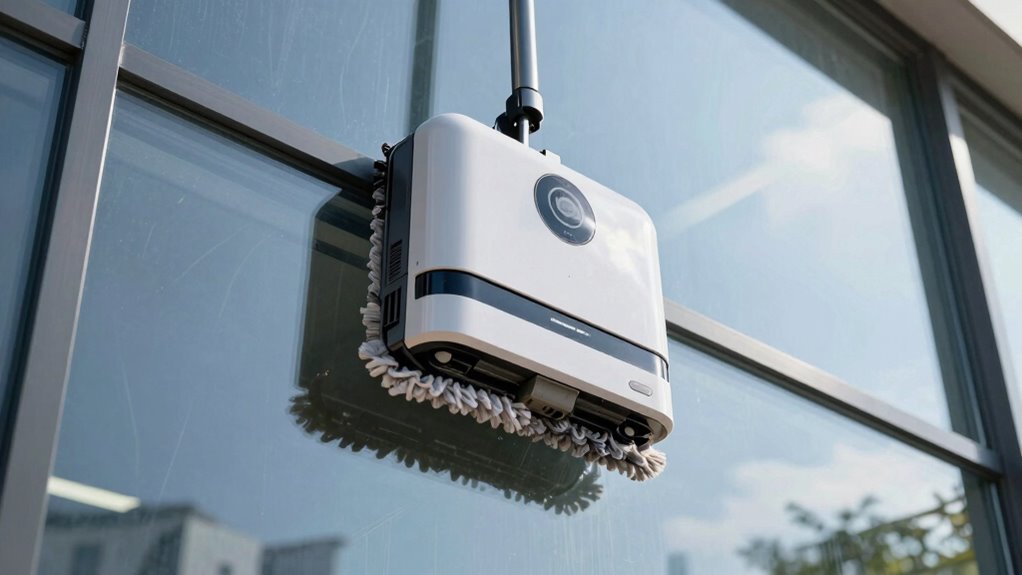

Before allowing a window cleaning robot on expensive glass, make certain it’s well-maintained with clean sensors and brushes to avoid scratches or cracks. Check that the battery life is sufficient for the task and that it’s properly charged to prevent shutdowns during cleaning. Confirm that the robot’s design and materials are compatible with your glass to reduce damage risks. Paying attention to these factors helps protect your investment and guarantees effective cleaning—more important details await you.
Key Takeaways
- Ensure the robot is regularly maintained, including brushes, sensors, and software updates, to prevent surface damage.
- Verify the robot’s compatibility with high-end glass materials to avoid scratches or cracks.
- Check battery life and management features to ensure uninterrupted cleaning of large, valuable windows.
- Use models with safety features and reliable power systems to prevent accidental drops or slips.
- Confirm proper calibration and cleaning protocols to protect delicate surfaces from damage during operation.
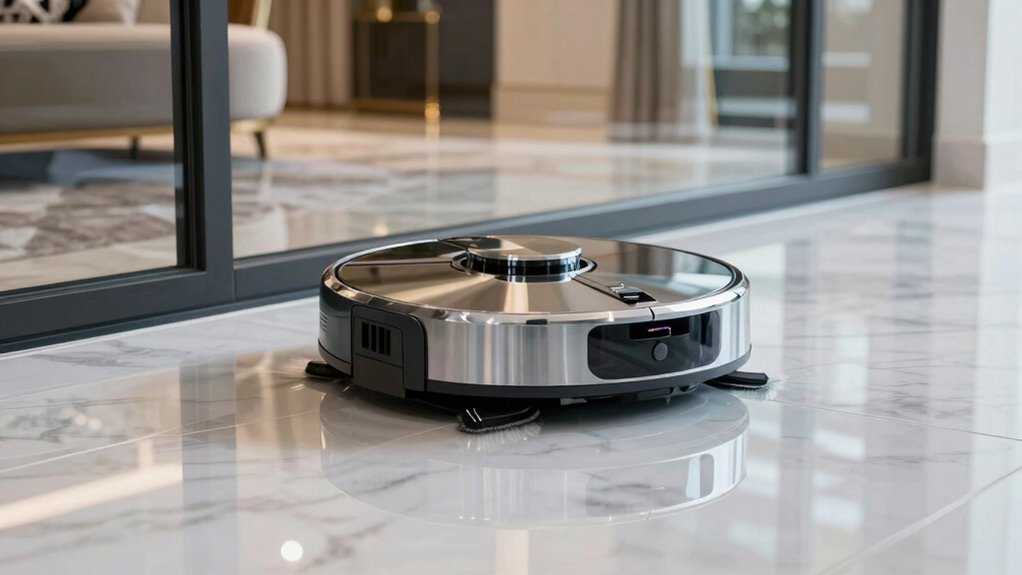
If you have expensive glass windows, maintaining their pristine condition can be a costly and delicate task. When contemplating a window cleaning robot, you need to be aware of how it interacts with your valuable glass and what it requires to operate safely. These robots are designed to make cleaning easier, but they aren’t foolproof. One of the most critical aspects to regard is robot maintenance. Regular upkeep ensures that the device functions properly and minimizes the risk of damage to your glass. A robot with poorly maintained brushes or sensors might scratch or crack delicate surfaces, especially if dust or debris gets trapped during cleaning. Plus, many models need periodic software updates and calibration to keep them running smoothly. Ignoring maintenance can lead to malfunctions, which might result in costly repairs or replacements, particularly when dealing with expensive glass.
Battery life is another essential factor. Most window cleaning robots rely on rechargeable batteries, and their endurance varies widely depending on the model. If you’re cleaning large, high-end panes, you want a robot with a robust battery life that can cover the entire surface without interruptions. A short battery life means frequent recharges, which can slow down your cleaning process and increase the risk of the robot stopping mid-clean, potentially causing smudges or uneven cleaning. Also, some robots have quick-charge features, so you can top them up quickly if needed, but these aren’t universal. Before letting a robot work on your expensive glass, check how long its battery lasts on a full charge and whether it has a reliable power management system. This will prevent unexpected shutdowns that could leave your windows partially cleaned or, worse, cause the robot to fall or slip. Proper battery management is crucial to ensure consistent performance and safety. Additionally, understanding the robot’s design features can help you select a model that’s better suited for your specific windows and minimizes the risk of damage. Being aware of the material compatibility of cleaning pads and brushes can further prevent scratches and maintain the integrity of your glass surfaces.
window cleaning robot with safety features
As an affiliate, we earn on qualifying purchases.
As an affiliate, we earn on qualifying purchases.
Frequently Asked Questions
How Do I Ensure the Robot Won’T Damage Delicate Glass?
To prevent damage to delicate glass, make certain your robot has properly calibrated sensors that detect edges and fragile areas. Regularly check and adjust sensor calibration for accuracy. Additionally, set up an emergency shutdown feature that activates if the robot encounters excessive resistance or abnormal movement. This safety measure helps protect your glass from accidental scratches or breakage, giving you peace of mind during cleaning.
Are There Specific Robots Designed for High-End, Fragile Windows?
Yes, there are specific robots designed for high-end, fragile windows. These models emphasize robot durability and cleaning precision, ensuring they handle delicate surfaces with care. You should look for robots with gentle scrubbing mechanisms, soft microfiber pads, and advanced sensors to prevent accidents. Investing in a high-quality, specialized window cleaning robot provides peace of mind, knowing your expensive glass receives careful, effective cleaning without risking damage.
What Is the Recommended Cleaning Frequency for Expensive Glass?
You should clean expensive glass with a window cleaning robot about once every 2-4 weeks, depending on environmental factors. Consider cost implications, as frequent cleaning can add up, but regular maintenance helps preserve clarity and value. Follow maintenance tips like inspecting for damage and using gentle cleaning solutions to avoid scratches. This balance guarantees your high-end glass stays pristine without unnecessary expenses or risk.
How Do I Prevent Streaks or Residue After Robot Cleaning?
To prevent streaks or residue after robot cleaning, make sure you use the right cleaning solutions, ideally streak-free and suitable for glass. Before starting, calibrate your robot properly to ensure even coverage. Regularly clean the robot’s brushes and squeegees to prevent dirt buildup, which can cause streaks. Additionally, avoid using excessive cleaning solutions, as too much can leave residue, and always wipe the glass with a microfiber cloth afterward for a spotless finish.
Can the Robot Operate Safely on Tinted or Reflective Glass?
Yes, your robot can operate safely on tinted or reflective glass if it’s properly calibrated and has accurate sensors. Verify the robot’s calibration is up-to-date, especially its sensor accuracy, to prevent slipping or damage. Reflective surfaces can sometimes confuse sensors, so double-check the manufacturer’s instructions. Regular maintenance and calibration help the robot navigate smoothly, avoiding scratches or mishaps on sensitive, expensive glass surfaces.
Conclusion
Before you let a window cleaning robot touch your expensive glass, remember to check its compatibility, secure the frame, and remove any obstacles. Trust in its cleaning power, test it carefully, and stay vigilant during the process. Protect your investment by staying informed, staying prepared, and staying cautious. Because when you combine technology with care, you guarantee your beautiful glass stays flawless, your home stays safe, and your peace of mind remains intact.