
📊 Full opportunity report: Stenvrik: News as Geography on ThorstenMeyerAI.com — validation score, market gap, and execution plan.
TL;DR
Stenvrik has launched a new news platform that visualizes stories on a 3D globe, organized by city hubs, aiming to redefine how news is consumed through geography. The product is in closed beta, emphasizing a cost-effective, trend-detecting system.
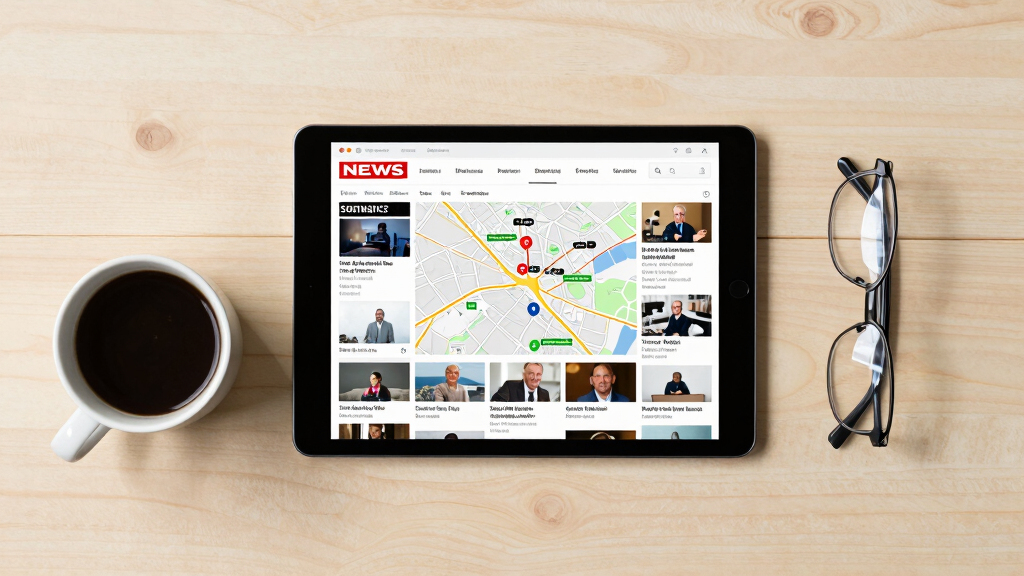
Stenvrik has launched a new news platform that visualizes live stories on a rotating 3D globe, organized into 49 city hubs, marking a significant shift from traditional list-based news feeds. This approach aims to provide users with geographic context and real-time trend detection, making news consumption more spatially aware and dynamic.
The platform features approximately 1,700 live stories pinned to a globe, with the interface allowing users to spin the world and see what is happening in specific cities such as Tokyo and Berlin. Unlike conventional feeds, which prioritize the newest stories, Stenvrik’s globe highlights where news is occurring and how clusters form geographically.
The underlying technology is driven by an autonomous trend engine that continuously surfacing, clustering, and pinning stories to relevant city hubs. This engine operates independently, running on owned compute resources, which keeps operational costs near zero per month, enabling a sustainable business model. The trend signals generated are also fed into the broader content network, providing strategic insights for content planning and market intelligence.
Originally developed as a prototype by Claude Design, the project was a low-cost demo that proved viable for production. Its client-side rendering and server-side trend engine make it both cost-efficient and scalable, serving as a strategic tool for both consumer engagement and internal analytics.
Stenvrik — news as geography
Not what is the news — where is it happening. ~1,700 live stories pinned to 49 city hubs on a rotating globe, with an autonomous trend engine that also feeds the network.
Spin the world; the news sorts itself.
A 60fps 3D globe where every story is pinned to the city it belongs to. Clusters, gaps, regions heating up — context a vertical feed throws away.
Independent commentary, produced with AI assistance under human editorial oversight. The views are the author’s own and may change. Stenvrik is in closed beta; features, availability, and behavior may change and it is provided without guarantee of uptime or fitness for a particular purpose. The autonomous trend engine clusters and places stories programmatically and may contain errors, mis-placements, or omissions — verify independently before relying on any of it. Product and company names are trademarks of their respective owners; mention does not imply endorsement.
Geography as a New News Organization Principle
This development signifies a potential shift in news consumption, emphasizing geographic context over chronological feeds. By organizing stories spatially, Stenvrik aims to enhance understanding of regional trends and global interconnections, which can influence markets, politics, and societal responses. For news publishers and platforms, this approach offers a differentiated interface that could reshape user engagement and strategic insights, especially as traditional feeds become commoditized.

Replogle Illuminated World Globe with Stand, 12 Inch diamteter light up globe with 3-D Raised Relief Texture. Perfect for Children And Kid's Classroom and home Decor, Made In USA
- Illuminated Blue Ocean Globe: Light-up 12-inch world globe
- Walnut Colored Hardwood Base: Sturdy hardwood stand in walnut color
- Numbered Diecast Semi-Meridian: Detailed numbered semi-meridian
As an affiliate, we earn on qualifying purchases.
As an affiliate, we earn on qualifying purchases.
From Prototype to Production with Minimal Cost
Stenvrik originated as a simple demo by Claude Design, showcasing a 3D globe visualization of news stories. Its transition into a full-fledged product was driven by its low operational costs and innovative approach to news organization. The platform’s focus on geographic clustering aligns with broader trends toward spatial awareness in digital media, and its autonomous trend engine reflects advances in AI-driven content analysis. The project exemplifies how a minimal-cost prototype can evolve into a strategic tool with real-world applications.
“The globe isn’t just a visualization; it’s the core information architecture that helps users understand where news is happening and how regions are heating up.”
— Thorsten Meyer, developer of Stenvrik
Unclear Impact on User Habits and Broader Adoption
It is not yet confirmed how widely this geographic news interface will be adopted by users or how it will influence existing news consumption habits. The long-term engagement metrics and the potential for mainstream adoption remain unknown, as the platform is currently in closed beta with limited availability.
Next Steps: Expanding Access and Measuring Engagement
Stenvrik plans to open its platform to more users in the coming months and will monitor engagement levels and feedback. The company may also explore integrating the geographic visualization into larger news ecosystems or expanding the trend engine’s capabilities for broader market intelligence. Further developments could include adding more city hubs and refining the clustering algorithms to better serve both consumers and strategic content planning.
Key Questions
How does Stenvrik’s geographic approach differ from traditional news feeds?
Instead of a list sorted by recency, it visualizes stories on a 3D globe, organized by city hubs, emphasizing where news is happening and how regions are trending.
Is the platform available to the public now?
No, it is currently in closed beta with limited access. Broader availability is expected in the coming months.
What is the cost structure of the platform?
The platform is designed to run at near-zero monthly costs because rendering is client-side and the trend engine operates on owned compute resources, making it highly scalable and sustainable.
Could this change how news organizations operate?
Yes, by providing geographic trend signals and a spatial interface, it could influence content strategy, regional reporting, and audience engagement.
What are the main limitations or uncertainties now?
It remains unclear how users will respond to the geographic format long-term, and whether it will be widely adopted outside the beta phase.
Source: ThorstenMeyerAI.com