📊 Full opportunity report: Industrial Operations Simplified With Phone-Photo Gauge Monitoring on IdeaNavigator AI — validation score, market gap, and execution plan.

Get tech for your team delivered free — and shop member deals
- Fast, free delivery on millions of items
- Access to Prime Big Deal Days deals on October 6–7
- Prime Video, Amazon Music and more included
TL;DR
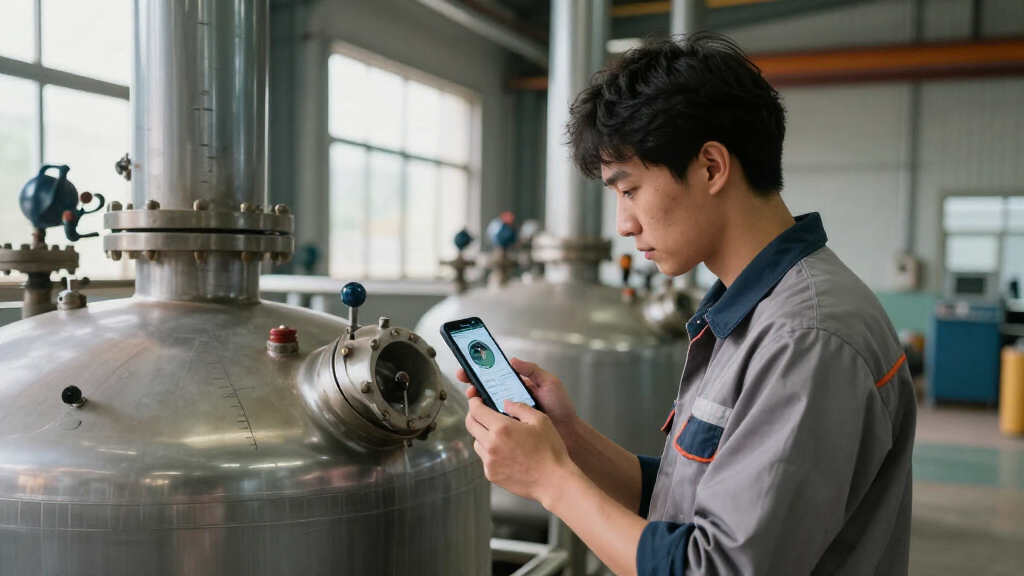
A new workflow allows plant technicians to photograph gauges with smartphones, enabling automated reading, logging, and early anomaly detection. This approach aims to replace traditional clipboard rounds, reducing errors and retrofitting costs.
Industrial plants are testing a new method that uses smartphone photos to read analog gauges, replacing manual clipboard rounds. This approach, validated by initial trials, aims to improve accuracy, reduce errors, and enable real-time trend analysis without costly sensor retrofits. The system is currently being piloted at three facilities, with results expected to influence broader adoption.
The new workflow involves technicians photographing gauges during their routine rounds using a dedicated app. The app employs vision models to accurately interpret the readings from the photos, compares them against expected ranges, and logs the data with timestamps and location details. It flags anomalies immediately, allowing maintenance teams to identify developing failures early. The initial pilot involves parallel rounds with traditional clipboard methods, and early comparisons indicate a significant reduction in transcription errors and missed anomalies.
This system targets legacy equipment where retrofitting IoT sensors is cost-prohibitive. Instead of installing new hardware, it leverages existing gauges and the widespread availability of smartphones, making it an accessible and scalable solution. The service is offered as a tiered subscription model, charging per facility based on the number of gauges monitored.
Experts note that recent advances in sight-based AI models have made this approach feasible, with high accuracy in reading analog dials and sight glasses from ordinary phone images. The pilot program aims to validate the technology’s reliability and cost-effectiveness in real-world settings before wider deployment.
Potential Impact on Industrial Maintenance Processes
This innovation could significantly streamline maintenance workflows, reduce errors associated with manual transcription, and enable continuous monitoring of legacy equipment. By providing real-time data and early warning signals, it can help prevent costly failures and improve operational efficiency. The low-cost, hardware-light nature of the solution makes it especially attractive for facilities with aging infrastructure where retrofitting sensors is impractical or too expensive.
As an affiliate, we earn on qualifying purchases.
Legacy Equipment and the Need for Cost-Effective Monitoring
Many industrial plants operate with aging machinery that lacks integrated sensors for condition monitoring. Traditionally, plants rely on manual rounds where technicians record gauge readings on paper, which are then filed and often not analyzed systematically. This process is prone to transcription errors, delays, and missed early signs of failure, leading to unplanned downtime and costly repairs.
While IoT sensors offer a solution, retrofitting legacy equipment with these sensors can be prohibitively expensive, especially across large facilities. As a result, many plants continue to depend on manual methods, which are labor-intensive and error-prone. Recent developments in AI-based sight recognition, however, have opened new possibilities for leveraging existing gauges as data sources without hardware upgrades.
The pilot program by IdeaNavigator AI is testing whether smartphone photos combined with AI interpretation can serve as a reliable, low-cost alternative to traditional manual readings, with the potential to transform maintenance practices in the industry.
Uncertainties in Reliability and Scalability of the System
While early pilot results are promising, it is not yet clear how the system will perform across diverse gauge types, lighting conditions, and environmental factors. Long-term reliability, integration with existing maintenance workflows, and user acceptance are still being evaluated. Additionally, the accuracy of AI readings compared to manual or sensor-based methods needs further validation over extended periods and larger datasets.
Next Steps for Validation and Broader Deployment
The pilot program will continue for one month, with detailed comparisons between photo-based readings and traditional methods to assess error rates and anomaly detection effectiveness. If successful, the developers plan to expand testing to more facilities and gauge types, refine the app’s AI models, and potentially offer the service as a commercial product. Broader adoption will depend on demonstrated reliability, cost savings, and ease of integration into existing maintenance routines.
Key Questions
How accurate are the phone-photo gauge readings compared to manual readings?
Initial pilot results indicate that AI-based readings from photos are comparable in accuracy to manual transcription, with significant reductions in transcription errors. Further validation is ongoing.
Can this system replace all manual gauge readings in industrial plants?
It is designed as a cost-effective solution primarily for legacy equipment where sensor retrofits are impractical. Full replacement of manual readings depends on further validation and integration success.
What are the costs involved for facilities adopting this system?
The system is offered as a tiered subscription, charging per facility based on the number of gauges monitored. Exact costs depend on the scale but are intended to be lower than retrofitting IoT sensors.
What environmental conditions might affect the system’s performance?
Lighting, glare, dirt, and environmental factors can impact photo clarity and AI accuracy. Ongoing testing aims to determine robustness under various conditions.
When will this technology be available for commercial use?
If pilot results are favorable, a broader rollout could occur within the next year, with commercial availability expected shortly thereafter.
Source: IdeaNavigator AI
Halloween Picks
halloween
As an affiliate, we earn on qualifying purchases.