

TL;DR
The U.S. issued a licensing rule on November 16 for certain advanced AI chips supplied to data centers serving China-headquartered companies. Analysts have warned that China could tighten rare-earth exports if Washington escalates chip restrictions, but Beijing has announced no such response. A broader set of Chinese rare-earth controls remains paused until January 10, 2027.
The U.S. Commerce Department issued a rule on November 16, 2026, requiring licences for some advanced AI chips sent to data centers serving companies headquartered in China. Analysts cited in recent reporting say Beijing could tighten rare-earth export controls if Washington further restricts chips, but China has announced no such response.

Get business pricing on tech for your team
- Business-only prices and quantity discounts
- Tax-exempt purchasing
- Multiple users, one account, clear invoices
The Bureau of Industry and Security (BIS) rule covers advanced AI chips sent to data centers anywhere that provide companies headquartered in China, Macau or other specified locations with more than 12 million aggregate TPP of computing power. The rule is an interim final rule. BIS said it is intended to prevent restrictions on sensitive U.S. technology from being bypassed through remote computing arrangements in third countries.
China already requires licences for exports of seven medium and heavy rare earths and related items, under controls that took effect on April 4, 2025. The listed elements include samarium, gadolinium, terbium, dysprosium, lutetium, scandium and yttrium. The licensing requirement also covers certain magnets containing terbium or dysprosium.
A wider group of six Chinese measures announced in October 2025 has been suspended. The measures include controls covering five additional rare earths, rare-earth technology and equipment, and certain products made abroad that contain at least 0.1% Chinese rare-earth content. China extended the suspension on November 9, 2026, through January 10, 2027. The source material also reports that three U.S. House committee chairs want four chip-related bills included in the annual defense bill; that is a congressional push, not an enacted law.
Rare Earths Meet Chip Controls
The two sets of controls affect different links in technology supply chains. U.S. chip rules govern access to advanced computing hardware, while China’s export controls cover materials and products used in electronics and other industries. The possibility of pressure across both supply chains matters to companies planning data-center capacity, sourcing components and managing export compliance.
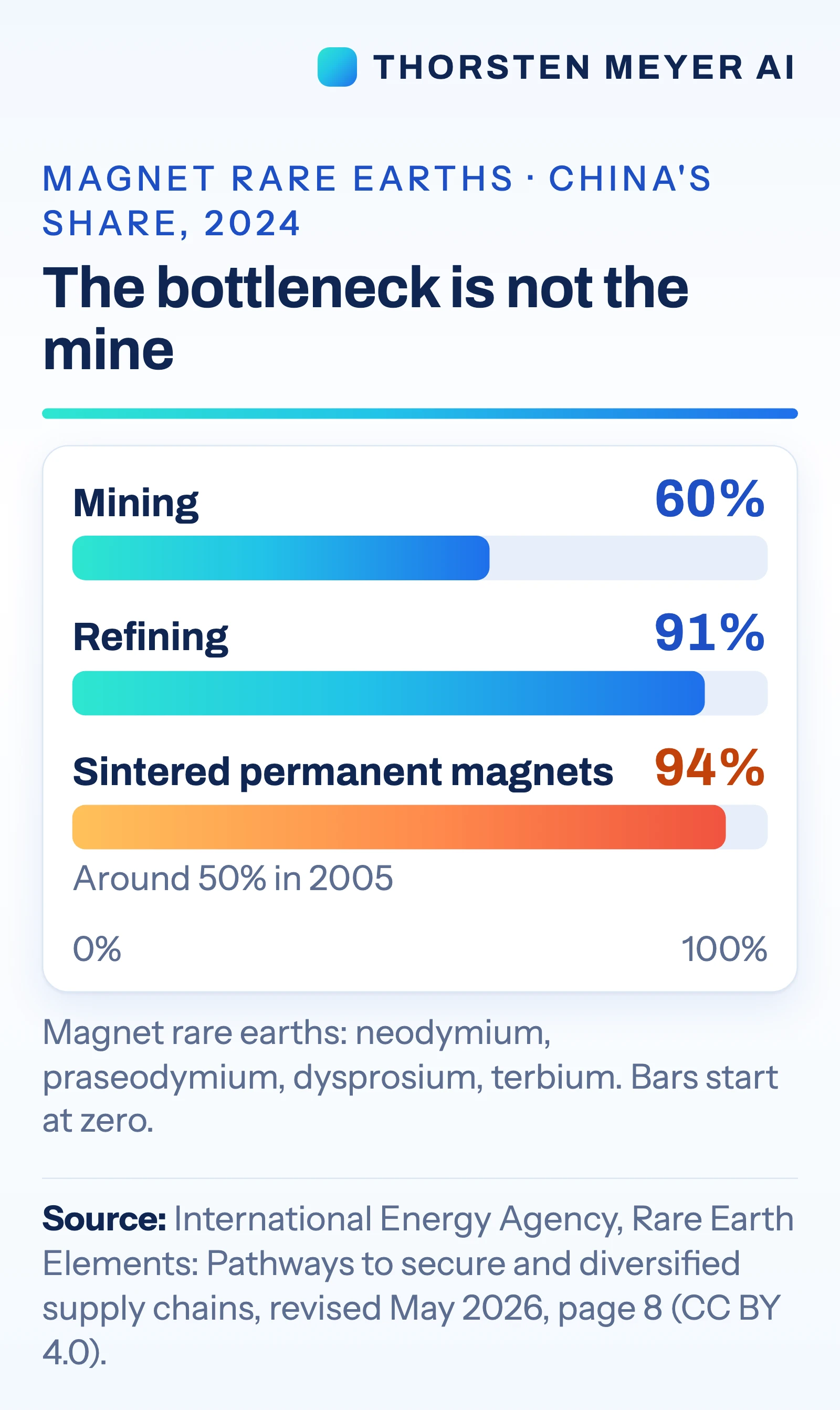
China’s position in rare-earth processing and magnet production gives the issue industrial weight. The International Energy Agency reported that in 2024 China accounted for 60% of mined magnet rare earths, 91% of refining and 94% of sintered permanent magnets. These are shares of the relevant global activity in 2024, not measures of any change over time. The magnets are used in electric vehicles, defense systems and data-center hardware.
Those figures help explain why analysts identify rare earths as a potential source of leverage. They do not show that China has decided to use it in response to the U.S. rule. For businesses, the scheduled end of the wider-controls pause is a concrete planning date; a retaliatory step remains a reported possibility.
Products Worth Considering

Bose Smart Ultra Dolby Atmos Soundbar with Voice Control, HDMI eARC, Black

Logitech MX Master 4 Ergonomic Wireless Mouse with Haptic Feedback, Graphite

Samsung 27-Inch Odyssey G5 QHD Gaming Monitor (G50F)
As an affiliate, we earn on qualifying purchases.
Two Control Timelines
China’s controls have developed in stages. The licensing requirements for seven rare earths and related products began on April 4, 2025. On October 9, 2025, Beijing announced six broader measures. China suspended those measures in November 2025, then extended the suspension on November 9, 2026, to January 10, 2027. The published schedule means the wider package remains paused through that date; the source does not establish whether it will resume afterward or be suspended again.
On the U.S. side, BIS issued its data-center licensing rule on November 16, 2026. The source material places it amid continuing debate in Congress over additional chip restrictions, including the reported effort by three committee chairs to attach four bills to annual defense legislation. It does not describe those bills as passed.
Analysts’ warning about a possible Chinese response was reported by the South China Morning Post and relayed by Seoul Economic Daily. It is commentary about what China might do under a particular condition—further U.S. escalation—not an official Chinese policy announcement. China’s foreign ministry has said it “opposes abuse of export control measures,” according to the supplied source.
Retaliation Remains Unannounced
There is no announced Chinese decision to tighten rare-earth exports in response to the November 16 U.S. rule. The warning comes from analysts quoted in media reporting. The supplied material does not specify what U.S. action would meet the analysts’ condition of further escalation, or whether Beijing would respond at all.
It is also unclear whether China will let the wider controls resume after January 10, 2027, extend the pause again or change the measures. The source describes the rule’s licensing threshold and stated purpose but does not provide details about implementation, affected shipments or how companies will be assessed under it. The status of the four proposed U.S. chip bills is likewise not settled in the supplied material.
January Date Shapes Planning
The next stated milestone for the wider Chinese controls is January 10, 2027, when the current suspension is scheduled to end unless China extends it or makes another announcement. Companies exposed to rare-earth magnets or Chinese-origin rare-earth content can map those materials across their own products and suppliers while the pause remains in place.
In the United States, attention will turn to how BIS implements the new licensing rule and whether Congress advances the four chip bills proposed for inclusion in the annual defense legislation. Any Chinese policy response should be distinguished from analysts’ forecasts until Beijing publishes or announces a measure.
Key Questions
Has China announced a rare-earth response to the U.S. chip rule?
No. The supplied source says the warning that China could tighten exports comes from analysts; China’s government has announced no such step.
What does the November 16 U.S. rule cover?
The BIS rule requires a licence for certain advanced AI chips sent to data centers anywhere that provide more than 12 million aggregate TPP of computing power to companies headquartered in China, Macau or other specified locations.
Which Chinese rare-earth controls are already in force?
Since April 4, 2025, exports of seven listed medium and heavy rare earths and related items, including certain magnets containing terbium or dysprosium, require a licence.
When could the wider Chinese measures resume?
The six measures announced in October 2025 are suspended through January 10, 2027. Whether China will extend the pause or let the measures resume is not yet clear.
Source: Thorsten Meyer AI