

TL;DR
The FCC authorized SpaceX to deploy up to 1 million satellites for proposed orbital data centers, with milestones running from 2033 to 2040. The decision covers radio control links and does not establish that the system will work or be commercially viable; the FCC also deferred a disposal request for satellites above 600 kilometers.
The Federal Communications Commission on November 25 authorized SpaceX to deploy up to 1 million satellites for a proposed orbital data center system called Starmind, opening a regulatory path for the company’s plan to support AI computing from space. The authorization sets deployment deadlines, but no satellites have launched under it, and the FCC did not assess whether the system can work or make money.

Get business pricing on tech for your team
- Business-only prices and quantity discounts
- Tax-exempt purchasing
- Multiple users, one account, clear invoices
The FCC’s Space Bureau granted most of SpaceX’s application and authorized radio links for backup and emergency control. SpaceX says the satellites would carry data mainly through laser links between spacecraft, with radio available as a spare channel. The satellites are planned in orbital shells between 500 and 1,002 kilometers above Earth, according to the order.
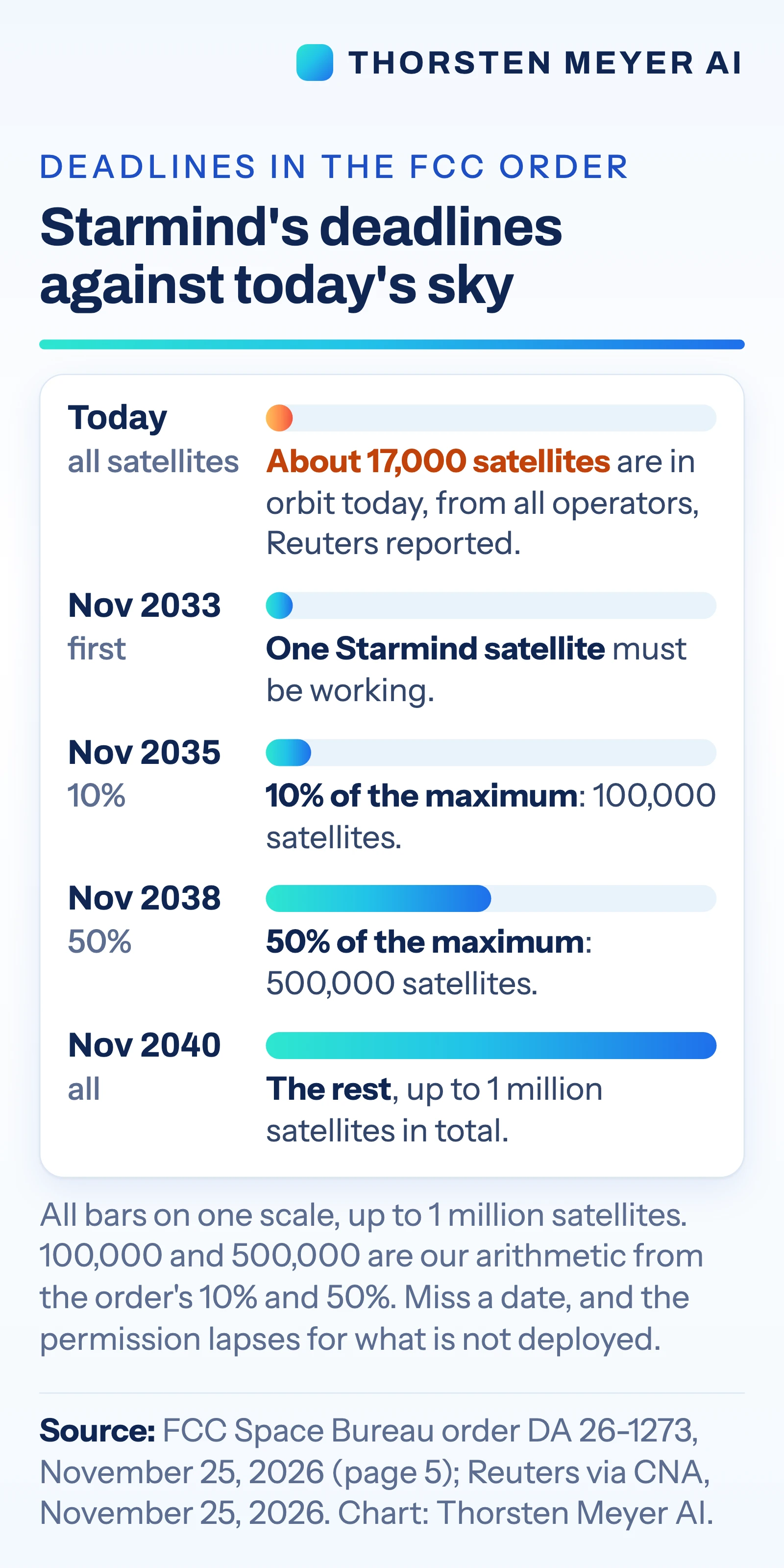
The authorization sets a schedule: SpaceX must have at least one satellite operating by November 25, 2033, half the authorized fleet by 2038, and the full deployment by 2040. Missing the milestones could cause the authorization to lapse. The FCC deferred SpaceX’s request concerning disposal of satellites above 600 kilometers, requiring more detail before that part can proceed.
The agency said questions about whether orbital data centers are technically feasible or economically worthwhile fall outside its role in licensing radio use. It denied petitions seeking to block the application from Amazon’s satellite unit, Viasat and the American Astronomical Society. Their objections included concerns about the proposed system; the FCC’s decision did not add conditions addressing astronomers’ concerns about satellite light and heat, according to the source material.
AI Computing’s Orbital Test
The authorization gives SpaceX a long-term regulatory route to test whether some computing infrastructure can operate in orbit. AI data centers on Earth require substantial electricity and cooling; SpaceX argues that satellites could use solar power in space and connect with Earth through laser links. Those are company claims, not findings established by the FCC.
For AI customers and data center operators, the decision does not create an available service or change computing capacity today. The first required operating satellite is due in 2033, and the complete deployment could extend to 2040. The proposal may matter to future infrastructure planning, but its practical impact depends on engineering, cost, communications and deployment questions that remain unanswered.
The decision also puts a large proposed satellite constellation into the regulatory discussion while concerns raised by astronomy groups remain part of the debate. The authorization allows the project to move forward under its terms; it is not a finding that the constellation’s broader effects have been resolved.
Products Worth Considering

Logitech MX Master 4 for Mac

Amazon Kindle Paperwhite (16 GB, 11th Generation, 2021) – 6.8-inch Display, Adjustable Warm Light, Black

Sony WH-1000XM6 Wireless Noise-Canceling Headphones, Black
As an affiliate, we earn on qualifying purchases.
From Radio License to Orbital Plan
The FCC regulates access to radio frequencies, including satellite communications. That distinction shapes the order: it authorizes specified radio control links rather than certifying the computers, solar systems or laser network SpaceX would need to operate an orbital data center. The source material describes the FCC’s announcement as the first U.S. authorization for a constellation of data centers in space.
SpaceX has argued that orbital systems could draw on near-constant solar power with limited operating or maintenance costs. Those statements were made by the company, as reported by Reuters and The Verge. The proposed system would send results back toward Earth through laser connections linked to Starlink, according to the source material. Whether those connections and the rest of the system can meet operational and commercial needs has not been demonstrated.
The FCC’s order divides the proposed satellites among orbital shells roughly 50 kilometers thick, from 500 to 1,002 kilometers in altitude. The schedule stretches over several years, with the authorization tied to milestones rather than an immediate launch. The disposal request above 600 kilometers remains deferred pending additional information.
““the first authorization in U.S. history for a constellation of data centers in space””
— Federal Communications Commission
Technical and Disposal Questions Remain
No Starmind satellite is in orbit under this authorization, so the system’s performance, costs and ability to support AI workloads remain unproven. The FCC explicitly left technical feasibility and commercial value outside its decision. The source material provides no independent demonstration that the planned solar power, laser links and satellite computing can operate together at the proposed scale.
It is also not clear how SpaceX will address the FCC’s deferred disposal request for satellites above 600 kilometers. The decision did not add conditions addressing concerns about light and heat raised by astronomers, according to the source material. The available material does not establish the scale of any effects or how they would be measured.
The exact pace of construction and deployment is also uncertain. The milestones set dates for operating satellites, but the authorization alone does not show when SpaceX will begin launches, what each satellite will cost, or whether the company will ultimately deploy the full fleet.
Milestones Begin in 2033
The next major deadline in the authorization is November 25, 2033, when SpaceX must have at least one satellite operating. The order then requires half the fleet by 2038 and the full authorized deployment by 2040, or the permission may lapse. Those dates provide the next regulatory checkpoints; they do not confirm a launch schedule.
Before satellites above 600 kilometers can use the requested disposal arrangements, SpaceX must provide further information, according to the source material. Further FCC action on that deferred portion, along with any technical demonstrations or launch announcements from SpaceX, will clarify how much of the proposal advances. Until then, Starmind remains an authorized plan rather than an operating AI computing service.
Key Questions
What did the FCC authorize SpaceX to do?
The FCC authorized SpaceX to deploy up to 1 million proposed data center satellites and approved specified backup and emergency radio control links. The decision does not certify that the satellites or the wider system will work.
Are Starmind satellites already in orbit?
No. The source material says no satellites have launched under this authorization. The first required operating satellite is due by November 25, 2033.
Will the FCC authorization provide AI computing services now?
No. It is permission for a proposed deployment, not an operating service. Technical feasibility, costs and commercial viability remain unestablished.
What part of SpaceX’s request did the FCC defer?
The FCC deferred SpaceX’s request concerning disposal of satellites above 600 kilometers, pending more information.
What are the deployment deadlines?
SpaceX must have at least one satellite operating by November 25, 2033, half the fleet by 2038 and the full deployment by 2040. Missing the milestones could cause the authorization to lapse.
Source: Thorsten Meyer AI