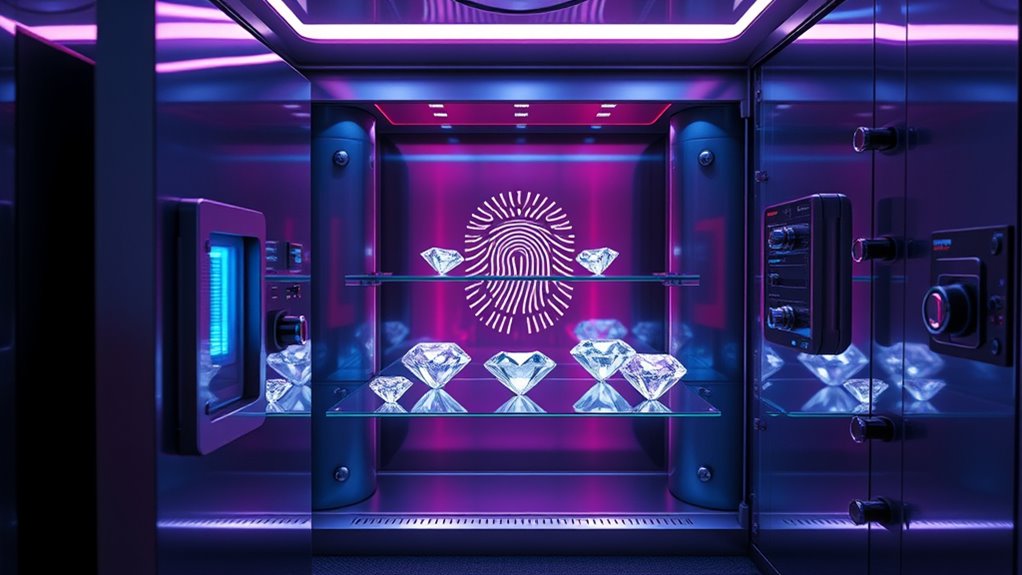

Imagine a secure space where your digital valuables, like cryptocurrency keys and sensitive data, are protected by the latest biometric technology. Biometric vaults offer this level of security, combining facial, fingerprint, or iris recognition with advanced encryption. These next-generation safe rooms promise peace of mind and seamless access, but how they evolve to meet future threats and user needs could redefine digital security entirely. Are you ready to explore what’s coming next?
Key Takeaways
- Biometric vaults securely protect digital assets like cryptocurrency keys and digital diamonds using advanced fingerprint, facial, or iris recognition.
- Next-gen safe rooms integrate biometric authentication for seamless, high-security access to physical valuables and digital treasures.
- Combining biometric data with encryption standards such as AES-256 enhances security and prevents unauthorized entry.
- Multi-modal biometrics and backup authentication ensure reliable access, even if one method fails or biometric data is compromised.
- These vaults offer user-friendly, password-free security solutions suitable for digital assets and high-value physical items.

Biometric vaults are advanced security solutions that combine biometric authentication with secure storage technology to protect your valuable digital and physical assets. These vaults are designed to safeguard items like cryptocurrency keys, personal data, sensitive documents, and even physical valuables. By integrating biometric verification methods, they offer a highly secure way to control access, making it nearly impossible for unauthorized individuals to breach your assets. Unlike traditional safes or password-protected systems, biometric vaults rely on unique biological identifiers such as fingerprints, facial recognition, or iris scans, providing a user-friendly yet robust security layer. This means you don’t have to remember complex passwords or carry physical keys that can be lost or stolen. Biometric vaults are increasingly integrated with digital asset management systems, allowing seamless control and oversight of stored assets. The key to these vaults’ effectiveness lies in their variety of biometric authentication methods. Fingerprint scans are among the most common because they are easy to implement and familiar to users. Facial recognition offers a seamless experience, especially when linked to personal devices like smartphones or computers. Iris or retina scans are reserved for high-security environments where the stakes are higher, providing an extra layer of certainty. Voice recognition is also used in certain applications, such as banking or smart devices, to add an additional verification step. For enhanced security, some vaults require multi-modal biometrics, meaning you need to present multiple biological identifiers simultaneously, making unauthorized access even more difficult. Security features are a core focus of biometric vaults. They typically employ advanced encryption standards like AES-256 to protect stored data. Many incorporate two-factor authentication, combining biometric verification with PINs or passcodes for added assurance. Access is closely monitored through permission controls and account lockout policies that prevent brute-force attacks. Regular security audits and penetration testing further strengthen the vault’s defenses against cyber threats. In case of hardware failure or data corruption, data redundancy and backups ensure your assets remain protected and accessible. These features collectively make biometric vaults a resilient choice for safeguarding your most valuable assets. Compared to traditional vaults or authentication methods, biometric vaults offer significant advantages. Biometrics are non-transferable, meaning your biological features can’t be stolen or shared, reducing risks associated with credential theft. They eliminate the need for managing passwords or physical keys, which can be lost or duplicated. The ease of access is a major benefit—authorized users can open vaults quickly without compromising security. This technology also supports estate planning by enabling secure digital inheritance, where access can be verified through biometrics, ensuring your assets are passed on only to designated individuals. Overall, biometric vaults blend convenience with exceptional security, making them ideal for protecting both digital and physical valuables. However, there are challenges to contemplate. Since biometric data is immutable, if compromised, it cannot be changed like a password, emphasizing the importance of robust data protection measures. Privacy concerns also arise around storing and processing sensitive biometric information, requiring strict compliance with legal and ethical standards. Technical issues such as false positives or negatives can occur, necessitating fallback authentication options. Deploying biometric vaults demands proper infrastructure and user education to ensure effective use and acceptance. Despite these hurdles, the potential for highly secure, user-friendly asset protection makes biometric vaults an increasingly popular choice for safeguarding your most precious possessions.
Amazon Product B08HGH9HK6
As an affiliate, we earn on qualifying purchases.
Conclusion
So, are you ready to open the future of secure storage? With biometric vaults, your digital diamonds are protected like never before—face recognition, fingerprints, iris scans—all working seamlessly behind the scenes. But remember, as these vaults evolve, so do the threats. Will your valuables stay safe in this next-generation safe room? The choice is yours—trust in the technology today, or risk what’s at stake tomorrow.
Amazon Product B0CJG3Q7JW
As an affiliate, we earn on qualifying purchases.
Amazon Product B0F336NLC7
As an affiliate, we earn on qualifying purchases.
Amazon Product B0F43F9W1F
As an affiliate, we earn on qualifying purchases.