TL;DR

Get business pricing on tech for your team
- Business-only prices and quantity discounts
- Tax-exempt purchasing
- Multiple users, one account, clear invoices
A new approach uses phone cameras to objectively measure tooth shade during home whitening. Early tests compare app scores with dentist VITA readings to validate accuracy. The development aims to improve product selection and track progress objectively.
Researchers are testing a phone-camera shade scoring app for home teeth whitening to determine its accuracy in measuring tooth color objectively. This development could offer consumers a reliable way to track whitening progress and select effective products, addressing a common challenge in home dental care.
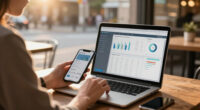
The project involves creating a guided-lighting photo flow that captures images of the user’s teeth and compares the shade against the dental shade scale. The app then plots the shade score over time, identifies which products actually move the tooth shade, and recommends products based on similar starting shades. This approach aims to reduce the guessing game that many consumers face when trying different whitening products.
Initial validation involves benchmarking the app’s shade scores against dentist-verified VITA readings for approximately fifty users. Early results suggest a strong correlation, which could validate the app as a reliable measurement tool. If successful, this could enable a new measurement layer in the home whitening market, which currently relies heavily on subjective visual assessment.
The app’s revenue model includes subscriptions and affiliate commissions on products that demonstrate effectiveness, creating an integrated ecosystem for consumers seeking measurable whitening results.
Potential Impact on Home Whitening Effectiveness
If validated, phone-camera shade scoring could revolutionize home teeth whitening by providing consumers with an objective, easy-to-use measurement tool. This would help users determine which products truly work, reduce unnecessary product cycling, and improve overall satisfaction with whitening routines. It could also shift market dynamics by adding a measurement layer that encourages product innovation and transparency.
Moreover, the technology could serve as a foundation for future advancements in at-home dental care, including tracking other oral health metrics, and could influence how brands develop and market whitening products.
As an affiliate, we earn on qualifying purchases.
Current Challenges in Home Teeth Whitening Measurement
Home whitening consumers often rely on visual assessment in bathroom mirrors, which is subjective and prone to inaccuracies. Many spend hundreds of dollars trying different products with little objective feedback on progress. Dentists use calibrated shade guides like VITA, but such measures are not accessible for at-home users.
The market for consumer oral-care and beauty tech has been exploring digital solutions, but few have successfully validated tools that objectively measure tooth shade at home. Recent advances in smartphone camera technology and guided-lighting techniques now make it feasible to approximate dentist-level shade readings with consumer devices.
This initiative by IdeaNavigator AI aims to fill this gap by testing whether a phone-based system can reliably measure and track whitening progress, potentially changing consumer behavior and product development.
“The key is whether phone-camera shade scores can match the accuracy of professional dentist readings. Early data suggests promising correlation, but further validation is needed.”
— an anonymous researcher
Uncertainties in Validation and Consumer Adoption
It is not yet confirmed how strong the correlation will remain across diverse user groups and real-world conditions. The validation phase is ongoing, and results are preliminary. Questions remain about the app’s consistency, ease of use, and whether it can reliably replace or supplement dentist assessments for consumers.
Additionally, the extent to which consumers will adopt and trust a phone-based measurement system is still uncertain, as well as how the technology will perform across different lighting environments and device models.
Next Steps in Validation and Market Testing
The ongoing validation study involving about fifty users will continue to compare app scores with dentist VITA readings. Researchers aim to refine the algorithm for better accuracy and test usability in diverse lighting conditions. Pending successful validation, the developers plan to launch a pilot program for consumer testing, gather feedback, and explore commercialization pathways.
Further research will also evaluate long-term tracking capabilities, integration with product recommendations, and potential expansion into broader oral health metrics.
Key Questions
How accurate is the phone-camera shade scoring compared to dentist readings?
Initial validation shows a strong correlation, but full results are still pending. The goal is to match or closely approximate dentist-verified VITA readings.
Can this technology help me choose the right whitening product?
Yes, if validated, the app could track your tooth shade over time, identify which products are effective, and recommend options based on your starting shade.
Will I need special lighting or equipment to use the app?
The app includes guided-lighting features designed to standardize photo conditions, but real-world testing will determine how user-friendly and robust the system is across environments.
When will this technology be available for consumers?
The validation phase is ongoing, with no specific commercial release date yet. If successful, a pilot program could launch within the next year.
What are the limitations of phone-based shade scoring?
Current uncertainties include consistency across lighting conditions, device variability, and user adherence. Further testing is needed to confirm reliability before widespread adoption.
Source: IdeaNavigator AI
Halloween Picks
halloween
As an affiliate, we earn on qualifying purchases.