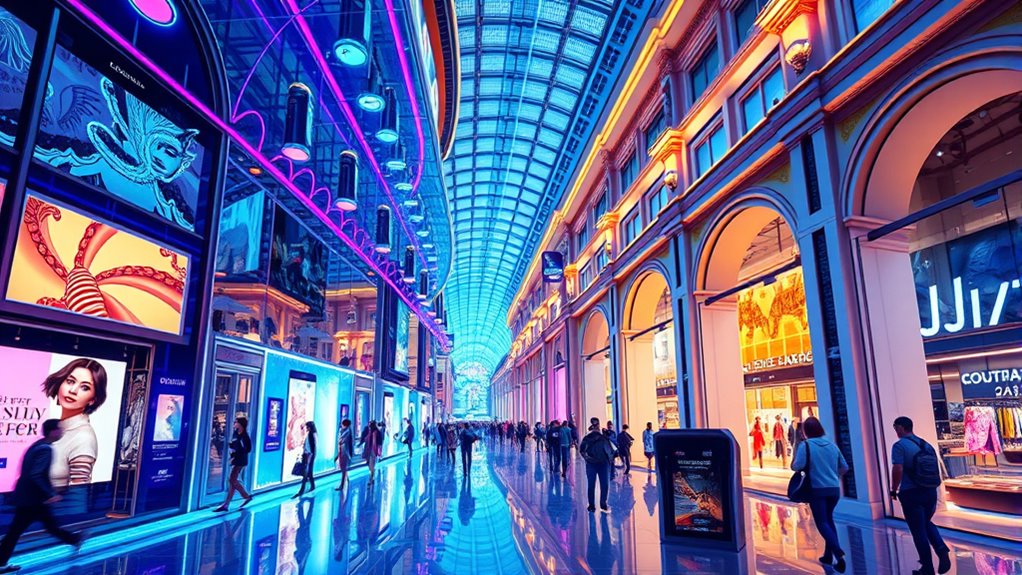

Imagine stepping into a virtual storefront that rivals the grandeur of the Champs‑Élysées, where brands create immersive worlds just for you. These metaverse flagships are redefining retail, blending cutting-edge tech with iconic design to offer experiences unlike any other. As more brands invest in these digital spaces, you might wonder how far this virtual evolution will go—and what it means for the future of shopping and brand loyalty.
Key Takeaways
- Virtual flagship stores in the metaverse are emerging as prestigious, immersive retail hubs akin to the historic Champs-Élysées.
- Major brands like Nike, Gucci, and Balenciaga are investing in expansive digital storefronts on platforms like Roblox and Decentraland.
- These virtual spaces offer personalized, interactive experiences that extend brand engagement beyond physical stores.
- The metaverse retail sector is projected to grow to over $500 billion by the early 2030s, emphasizing their increasing importance.
- Virtual flagships are transforming brand prestige and consumer interaction, positioning them as the new digital luxury avenues.
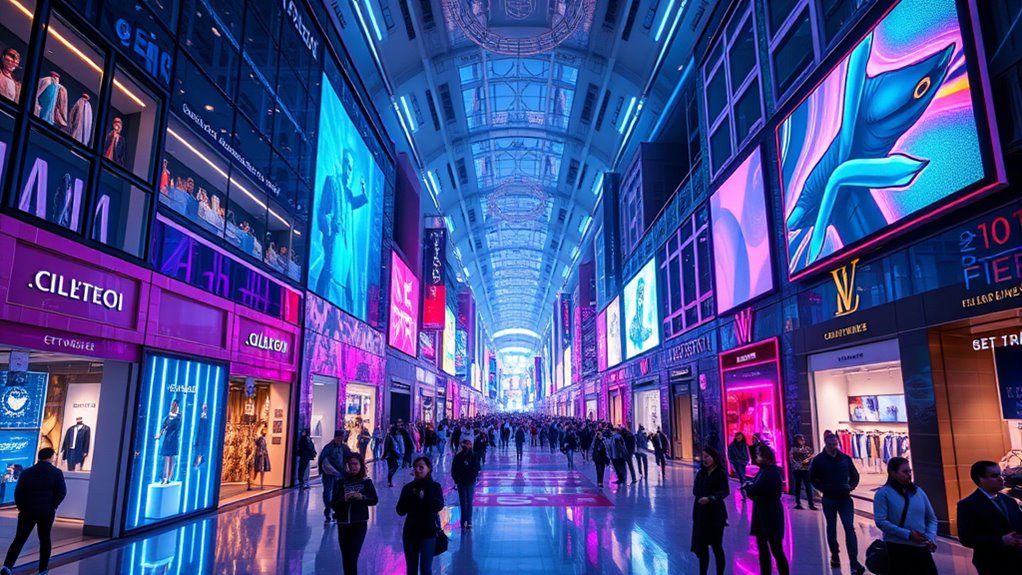
Have you ever wondered how retail is transforming in the digital age? Today, the concept of shopping is rapidly evolving from traditional brick-and-mortar stores to immersive virtual environments. The rise of metaverse flagships is reshaping how brands engage with consumers, creating digital spaces that rival the iconic Champs-Élysées in influence and appeal. These virtual stores are not just gimmicks; they’re strategic hubs where brands showcase their latest offerings, connect with audiences worldwide, and pioneer new retail experiences. The market size reflects this shift, with the global metaverse retail sector valued at around $33.7 to $35 billion in 2024. Experts project it could reach between $500 billion and $1.56 trillion by the early 2030s, signaling explosive growth fueled by technological innovation and brand participation. As the metaverse market expands beyond retail to encompass hardware, software, and services, the retail segment alone is expected to generate $54 billion in revenue by 2025, driven primarily by digital fashion and avatar accessories. This growth outpaces many other sectors, as brands recognize the potential of these immersive spaces to attract high-value consumers and foster loyalty.
Major players such as Nike, Adidas, Walmart, Amazon, and luxury houses like Gucci, Prada, and Balenciaga are establishing flagship virtual stores on platforms like Roblox, Decentraland, and The Sandbox. These companies are investing heavily in creating branded environments that offer more than just shopping—they provide unique experiences that blend entertainment, social interaction, and commerce. Tech giants like Meta and Microsoft are also pouring resources into VR and AR infrastructure, enabling seamless avatar-based shopping and immersive virtual showrooms. These virtual storefronts replicate or reinvent real-world retail, allowing users to explore products in 3D, try on digital clothing, or customize accessories for their avatars. The rapid adoption of VR and AR technologies is essential to creating these engaging virtual spaces. Additionally, the integration of blockchain technology ensures secure transactions and ownership of digital assets, further bolstering consumer confidence. The variety of metaverse retail experiences continues to grow, with full 3D virtual stores, augmented reality overlays, and interactive showrooms becoming commonplace. Avatar-based shopping is particularly popular, offering personalized digital wardrobes that extend the shopping experience beyond physical limitations. Virtual shopping malls, where multiple brands coexist within expansive digital spaces, provide a centralized discovery and purchasing hub. Clothing and digital fashion lead these offerings, with brands releasing exclusive virtual apparel, sneakers, and accessories that appeal to digital collectors and fashion enthusiasts alike. Beauty brands also leverage AR to let users virtually try makeup, while electronics and home decor brands showcase aspirational products in immersive environments.
Driving these innovations are technologies like VR, AR, blockchain, AI, and cloud computing, which underpin the creation of engaging, secure, and scalable virtual retail spaces. As the metaverse continues to grow, these flagships are poised to become the new Champs-Élysées—prestigious, influential, and central to the future of retail in the digital age.

Meta Quest 3S 256GB | VR Headset — Thirty-Three Percent More Memory — 2X Graphical Processing Power — Virtual Reality Without Wires — Get Batman: Arkham Shadow Included Plus Access to 40+ Games
- Wireless Freedom: Untethered gaming and exploration
- Enhanced Graphics: Twice the processing power for smooth visuals
- Immersive VR Experience: Blend virtual objects with real space
As an affiliate, we earn on qualifying purchases.
As an affiliate, we earn on qualifying purchases.
Conclusion
As you explore the rise of metaverse flagships, it’s clear they’re revolutionizing retail—by 2025, over 70% of luxury brands plan to invest heavily in these digital spaces. Virtual stores now serve as the new Champs-Élysées, offering immersive experiences and exclusive products that foster loyalty. Embrace this bold shift, where digital innovation transforms shopping into an engaging, personalized journey, redefining how brands connect with consumers worldwide.