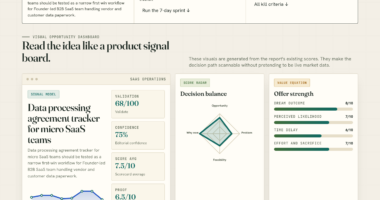

📊 Full opportunity report: Understanding The AI Act's Tighter Deadline And Its Implications on ThorstenMeyerAI.com — validation score, market gap, and execution plan.

Get business pricing on tech for your team
- Business-only prices and quantity discounts
- Tax-exempt purchasing
- Multiple users, one account, clear invoices
TL;DR
The European AI Act’s enforcement for high-risk systems has been postponed until December 2027, but transparency and disclosure obligations start on August 2, 2026. Organizations must still comply with key transparency rules immediately, risking penalties if they do not.
The European Union has officially delayed the enforcement of the high-risk obligations under its AI Act from August 2, 2026, to December 2, 2027, following a late legislative amendment. However, key transparency and disclosure requirements, including AI interaction disclosures and content labelling, remain in effect from August 2, 2026, creating a potential compliance gap for organizations using generative AI and related systems.
The delay was enacted through a legislative package known as the Digital Omnibus on AI, approved by the European Parliament on June 16, 2026, and signed into law on July 8, 2026. This adjustment shifts the compliance deadline for high-risk AI systems — such as employment screening, biometric identification, and essential services — from August 2, 2026, to December 2, 2027. Importantly, these new dates are no longer tied to the development of harmonized standards, which previously caused delays due to regulatory benchmarks not being ready.
Despite this delay, the law’s transparency obligations, including AI-interaction disclosures, synthetic content labelling, and deepfake warnings, remain enforceable starting August 2, 2026. These provisions apply broadly, regardless of risk classification, and are overseen by national authorities rather than a centralized EU body. Enforcement powers for these transparency rules also took effect immediately, with authorities now able to investigate and fine non-compliant providers.
One transitional provision grants a short grace period until December 2, 2026, for the marking of generative AI systems already on the market before August 2, 2026. Systems placed on the market after that date must comply immediately with all transparency obligations. Additionally, a new ban on AI-generated non-consensual intimate imagery was introduced, effective from the original timeline, reinforcing ongoing restrictions on harmful AI practices.
The AI Act’s 2 August deadline didn’t disappear — it split in two. The heavy high-risk regime slid past 2027. The transparency duties that apply to almost anyone touching generative AI landed exactly on schedule, with national enforcement behind them.
▲ Journalism, not legal advice · verify with counselThe Digital Omnibus cleaved one date into two speeds. If your mental model of “the deadline” was the high-risk regime, the pressure genuinely eased — but that was never the obligation most organisations actually had.
Not a high-risk provision, not tied to Annex III. It applies to specific categories of AI regardless of risk — in practice, to every business using generative AI to produce content or run a system that talks to users.
Three true stories collided and the headlines merged them into one false one.
Start with an inventory of every system that talks to a user or generates content on your behalf. Three duties are live today — not December.
you deferred the wrong obligation.
Implications of the AI Act Delay for Organizations
The delay in high-risk AI enforcement gives organizations additional time to prepare compliance measures, but the immediate enforcement of transparency rules means many must act now to avoid penalties. Companies deploying generative AI and interactive systems face a complex landscape where some obligations are postponed, yet others are binding, increasing the risk of non-compliance if they do not adapt quickly. This situation underscores the importance of understanding specific legal deadlines and adjusting compliance strategies accordingly.
AI transparency compliance software
As an affiliate, we earn on qualifying purchases.
As an affiliate, we earn on qualifying purchases.
Legislative Timeline and Previous Expectations
The European AI Act, formally Regulation (EU) 2024/1689, was adopted in 2024 with a staggered enforcement schedule. Originally, August 2, 2026, was set as the date when high-risk obligations, including risk management, technical documentation, and conformity assessments, would become mandatory. However, delays in developing harmonized standards and legislative negotiations led to the recent postponement, with the new deadline now set for December 2, 2027. Meanwhile, transparency and disclosure obligations have remained effective since August 2, 2026, creating a partial compliance landscape that organizations must navigate.
The legislative process involved a late amendment, the Digital Omnibus on AI, which was approved after complex negotiations, reflecting the EU’s effort to balance regulatory ambition with practical implementation timelines. The split in deadlines aims to give regulators and companies more breathing room, but also complicates compliance planning across different AI use cases.
"The delay for high-risk obligations means organizations have more time, but they cannot ignore transparency rules that are already in force. Missing these could lead to significant penalties."
— Thorsten Meyer, AI compliance expert
Unresolved Questions About Future Enforcement and Standards
It remains unclear how quickly regulators will develop and publish harmonized standards for high-risk AI systems, which could influence the actual enforcement timeline. Additionally, the scope of enforcement actions and penalties for non-compliance with transparency obligations are still being clarified by authorities. The impact of the delay on international AI providers and cross-border compliance remains uncertain, as well as how companies are adjusting their compliance strategies in real time.
Next Steps for Compliance and Regulatory Clarification
Regulators are expected to publish detailed guidance on standards and enforcement procedures in the coming months. Companies should review their AI systems to ensure immediate compliance with transparency obligations, such as user disclosures and content labelling, to avoid penalties. Stakeholders are also watching for further legislative updates that could alter deadlines or introduce new restrictions. The European Commission and national authorities will likely increase enforcement activities around transparency starting August 2026, regardless of the delayed high-risk obligations.
Key Questions
What is the new enforcement date for high-risk AI systems under the AI Act?
The new date is December 2, 2027, following legislative amendments approved in mid-2026.
Are organizations still required to comply with transparency obligations now?
Yes, transparency and disclosure obligations, including AI interaction disclosures and content labelling, are effective from August 2, 2026, and organizations must comply to avoid penalties.
What specific transparency rules must organizations follow immediately?
Organizations deploying AI systems must disclose when users are interacting with AI, label AI-generated content, and warn about deepfake or manipulated media, among other requirements.
Will the delay affect international AI providers operating in Europe?
The delay primarily impacts enforcement timelines; international providers must still adhere to transparency rules and prepare for high-risk obligations by December 2027.
What should companies do now to prepare for future compliance?
Companies should review their AI systems for transparency obligations, implement disclosures, and monitor regulatory guidance for updates on standards and enforcement procedures.
Source: ThorstenMeyerAI.com
Evergreen bestsellers Picks
bestsellers
As an affiliate, we earn on qualifying purchases.