📊 Full opportunity report: Chronic Skin Care: Photographing Eczema And Psoriasis Over Time on IdeaNavigator AI — validation score, market gap, and execution plan.

Get business pricing on tech for your team
- Business-only prices and quantity discounts
- Tax-exempt purchasing
- Multiple users, one account, clear invoices
TL;DR
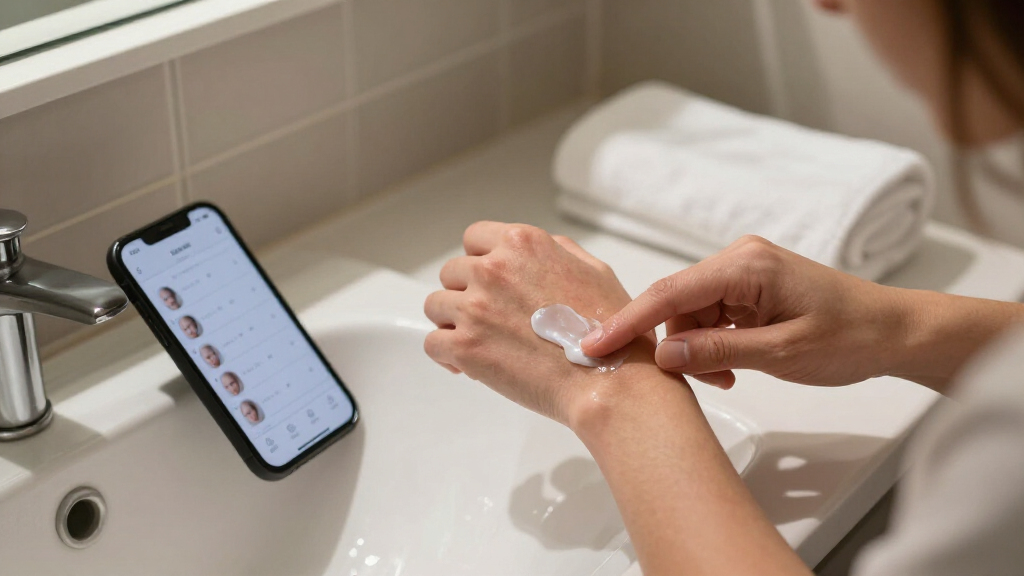
An IdeaNavigator AI proposal recommends testing a weekly photo journal for adults with eczema or psoriasis who want to track flares between dermatology visits. The proposed product is an unvalidated concept, with a 15-patient, one-month pilot suggested to assess whether timelines affect appointments and whether patients would pay.
IdeaNavigator AI has proposed testing a weekly photo journal for adults with eczema or psoriasis, designed to help them track flares between dermatology appointments. The concept would organize dated skin images and brief trigger notes into a timeline, but it is a product proposal, not a tested clinical tool, and no patient or dermatologist results have been reported.
According to the IdeaNavigator AI proposal, the minimum version would prompt users to take a photo each week using consistent framing and lighting guidance. Each image would be dated and paired with a note about a possible trigger, creating a side-by-side record intended to make changes easier to review over time. The proposal does not specify image-analysis features or claim that the app could diagnose a condition.
IdeaNavigator AI suggests recruiting 15 people with eczema and asking them to log photos weekly for one month. The proposal says organizers would then ask each participant’s dermatologist whether the timeline changed the appointment and measure users’ willingness to pay. It does not report that recruitment has begun or that the test has been completed.
As described in the proposal, a possible business model would charge a subscription for unlimited image history, exports and a visit-preparation PDF. Those features and the payment approach are proposals; IdeaNavigator AI provides no price, launch date, product name or commercial partner.
A Dated Record for Clinic Visits
IdeaNavigator AI says the idea targets a practical gap between appointments: patients may have difficulty recalling when a flare began, what may have preceded it, or whether treatment appeared to help. The proposal presents a dated sequence as a way to give patients and clinicians a shared visual record to discuss, rather than relying entirely on recollection. That is the proposal’s intended benefit, not an outcome established by research in the supplied information.
Images may also help describe changes between visits, but photographs alone cannot establish a cause or determine whether a treatment is working. Skin appearance can vary with lighting, camera distance and angle, so the proposal’s emphasis on repeatable capture conditions is relevant to whether the timeline would be useful. The proposed pilot would need to show that the record changes a clinical conversation, not merely that people can upload photos.
For readers considering a tracking tool, the distinction is important: this concept, as presented by IdeaNavigator AI, is not medical advice or a replacement for dermatology care. Its practical value, privacy protections and willingness-to-pay case remain untested.
digital skin photo journal app for eczema
As an affiliate, we earn on qualifying purchases.
As an affiliate, we earn on qualifying purchases.
How the Proposed Journal Would Work
IdeaNavigator AI frames the concept within chronic skin-condition self-management, where symptoms can change between scheduled appointments. Its proposal describes a narrow initial audience—adults with eczema or psoriasis who want to track flares—rather than a broad dermatology platform. It points to phone cameras, cloud storage and teledermatology as reasons a patient-held photo record may be timely, but provides no adoption figures or evidence that clinicians routinely request images.
The proposed workflow is deliberately simple: capture a weekly image, follow framing and lighting prompts, add a brief trigger note, then review a dated sequence or export a visit summary. The one-month test described in the proposal would focus on eczema patients; although psoriasis is included in the wider product concept, the suggested pilot does not say that it would recruit people with psoriasis. That leaves the initial evidence narrower than the proposed use case.
Pilot Evidence Is Still Missing
The IdeaNavigator AI proposal reports no trial findings, clinical endorsements or patient feedback. It is unclear whether a weekly schedule would be manageable over time, whether users could reliably reproduce lighting and framing, or whether dermatologists would find the timeline helpful during visits. The suggested test measures perceived appointment impact and willingness to pay, but the proposal does not describe how those outcomes would be defined or compared.
Other details are also open: the proposal does not explain how photos and health notes would be secured, whether users could delete or export all records, how the service would handle consent, or what subscription price might be tested. It also does not say how the tool would account for different skin tones, body areas or changes in camera devices. No evidence is presented that the app could identify triggers or assess treatment response.
Testing the One-Month Workflow
IdeaNavigator AI’s proposed next step is to recruit 15 adults with eczema for weekly photo logging over one month, then ask their dermatologists whether the timeline affected the visit and assess participants’ willingness to pay. The proposal gives no start date, recruitment channel or completion schedule. Until a test is conducted and its methods and results are reported, the concept’s clinical usefulness and commercial prospects remain uncertain.
If the pilot proceeds, readers would need details on participation, data handling and how feedback is collected to judge the findings. A follow-up would also need to clarify whether people with psoriasis are included in later testing, since the proposed initial validation group is described as eczema patients.
Source: IdeaNavigator AI
Key Questions
Is the eczema and psoriasis photo journal already available?
The IdeaNavigator AI information describes a proposed product and pilot. It does not provide a launch date or confirm that an app is available.
What would users record?
The proposed workflow asks users to take a weekly, dated skin photo using framing and lighting prompts, then add a short note about a possible trigger.
Has the tool been shown to improve dermatology visits?
No results are reported. IdeaNavigator AI suggests testing whether dermatologists say the timeline changed an appointment, but does not describe that test as completed.
Who would take part in the proposed pilot?
The suggested test would recruit 15 eczema patients to log photos weekly for one month. The proposal does not say that people with psoriasis would be included in this initial test.
Would a photo timeline identify flare triggers or treatment effects?
That has not been established. The concept would let users add trigger notes and review images over time, but photographs and notes alone do not prove what caused a flare or whether a treatment worked.
Source: IdeaNavigator AI
Halloween Picks
halloween
As an affiliate, we earn on qualifying purchases.