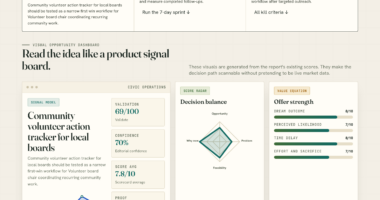
📊 Full opportunity report: Operations For Phone-Free Events: What To Know on IdeaNavigator AI — validation score, market gap, and execution plan.

Get business pricing on tech for your team
- Business-only prices and quantity discounts
- Tax-exempt purchasing
- Multiple users, one account, clear invoices
TL;DR

A proposal outlines a hardware-agnostic operations tool for shows, comedy clubs, schools and courts that use locked phone pouches. Its suggested first step is a pilot at five venues and three schools, measuring exception-handling time and incident-log completeness against current improvised processes.
IdeaNavigator AI has proposed an operations tool for phone-free shows, comedy clubs, schools and courts that use locked pouches, aiming to organize check-in, medical exceptions, pouch inventory and emergency unlocks. The proposal recommends testing the software at five venues and three schools; no pilot launch, participating sites or measured results have been confirmed, according to the proposal.
According to IdeaNavigator AI’s proposal, the concept addresses day-to-day work around pouch systems, rather than making or replacing the locking hardware. The proposed tool would be hardware-agnostic and could work alongside existing pouch products. Suggested features include check-in flows, a registry for approved exceptions such as medical or on-call needs, and pouch inventory tracking.
The proposal also calls for express emergency-unlock stations that record the reason for each unlock, as well as post-event operations reports. These are proposed functions, not evidence of a finished product or deployed service. IdeaNavigator AI does not identify a software developer, specific pouch-system partners or a release date.
IdeaNavigator AI suggests a subscription priced per event or per site. To test whether the tool addresses an actual operational need, its proposal calls for a pilot at five venues and three schools, comparing the time needed to handle exceptions and the completeness of incident logs with each site’s current improvised process.
Reducing Friction at Phone-Free Events
Phone restrictions can create operational tasks that continue after an attendee hands over a device. Staff may need to identify an approved exception, locate a pouch, respond to a request for emergency access and keep records. A shared workflow could make those tasks more consistent, particularly where existing procedures rely on manual coordination.
The proposal’s value depends on whether the software can reduce delays without obstructing legitimate access. Emergency unlocks and medical exceptions require careful handling, while any log of those events could contain sensitive information. IdeaNavigator AI’s proposal mentions recording reasons but does not describe privacy safeguards, access controls or how long records would be kept.
For operators, the practical test is not simply whether staff can use a new dashboard. The proposal’s comparison focuses on exception-handling time and incident-log completeness, measures that could show whether the system improves routine operations. Until a pilot produces results, claims about efficiency or better event experiences remain untested.
As an affiliate, we earn on qualifying purchases.
The Workflow Around Locked Pouches
IdeaNavigator AI’s proposal is aimed at organizations already using pouch systems to restrict phone access during events or in particular settings. It names live shows, comedy clubs, schools and courts as potential users, but provides no counts of current adopters or market-size estimates.
The proposal describes the problem as operators handling lost pouches, exceptions and urgent unlock requests through improvised processes, with re-entry queues potentially disrupting events. These points describe the problem the proposal seeks to address; it provides no independent data on how often incidents occur or how long queues typically last.
The proposal presents the spread of phone-free requirements across settings, including schools, comedy tours and courtrooms, as its timing rationale. It supplies no jurisdiction-by-jurisdiction policy data or adoption figures. The proposed product is framed as an operational layer for existing hardware, not as a new phone restriction or a replacement for venue policy.
Pilot Results and Safeguards Remain Unknown
No pilot results are available in IdeaNavigator AI’s proposal, which does not say whether any venues or schools have agreed to participate. The five-venue, three-school plan is a validation recommendation, not a confirmed trial schedule. The proposal also provides no measurement period, definition of a complete incident log or threshold for success.
The proposal does not identify who would build or operate the software, what it would cost, or whether operators would pay per event, per site or through another arrangement. Its subscription options are suggested pricing approaches, not published rates or signed commercial terms.
Operational and privacy details also remain open. The proposal does not specify who can approve medical or on-call exceptions, how emergency-unlock stations would work in practice, what information would be stored, or who could review incident records. These questions would need answers before operators could judge the system’s suitability.
Testing the Proposed Venue Workflow
IdeaNavigator AI’s proposal recommends a pilot at five venues and three schools. Participating operators would compare exception-handling time and incident-log completeness with their existing processes. The information available from the proposal identifies no dates, locations or organizers for such a pilot.
A useful evaluation would need to define the measurement period and how each metric is counted, while documenting any effects on check-in, urgent access and re-entry. Operators would also need to review privacy practices and exception procedures before deciding whether the workflow is appropriate for their setting.
Until a trial is confirmed and results are reported, the concept remains a proposed operations tool. The next meaningful development would be identification of a product team and pilot participants, followed by evidence on whether the software improves the work without creating new delays or record-handling risks.
Source: IdeaNavigator AI proposal
Key Questions
What would the proposed tool do?
IdeaNavigator AI’s proposal describes a tool to coordinate check-in, approved exceptions, pouch inventory and emergency unlocks, and produce post-event reports. These are proposed features, not confirmed capabilities of a launched product.
Who is the tool intended for?
The proposal identifies operators of phone-free shows, comedy clubs, schools and courts that already use pouch systems.
Has a pilot been scheduled?
No pilot schedule or participating organizations are identified in the proposal. It recommends testing at five venues and three schools.
How would the pilot measure results?
The proposal suggests comparing exception-handling time and incident-log completeness with the sites’ current improvised processes. It does not specify a measurement period or success criteria.
What remains unknown about the proposal?
The proposal does not specify the developer, cost, launch timing, pilot participants or privacy safeguards. Its suggested per-event or per-site subscription model is not a confirmed offer.
Source: IdeaNavigator AI
Fall Picks
fall essentials
As an affiliate, we earn on qualifying purchases.