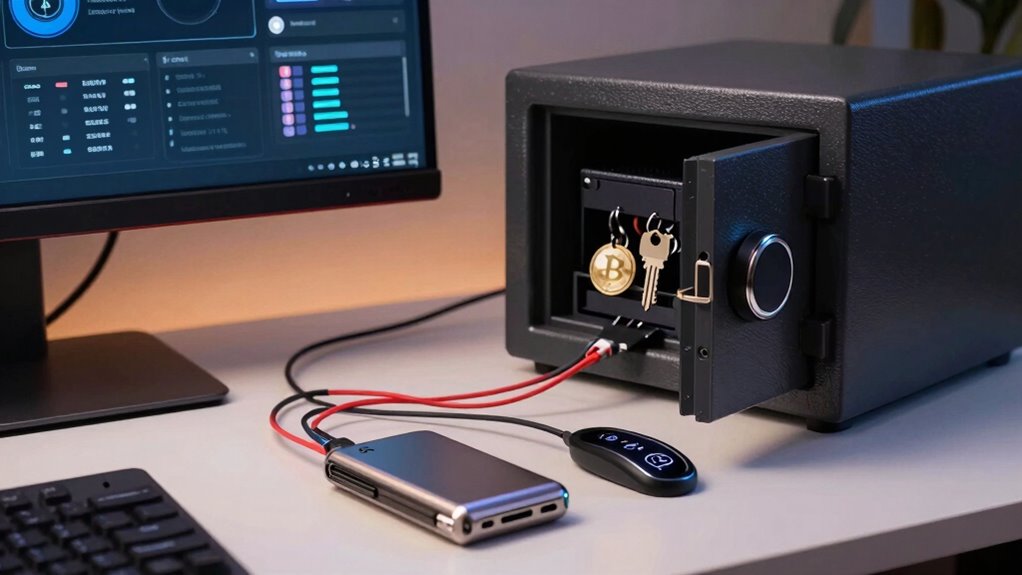

You might be overlooking physical security when protecting your crypto assets, making your private keys vulnerable to theft or tampering. Digital safeguards like passwords and encryption are common, but neglecting physical measures—such as secure storage, biometric access, and environmental safeguards—leaves gaps in your defenses. Combining these physical protections with digital security creates a stronger overall system. Keep going to discover how integrating both approaches can truly safeguard your crypto holdings effectively.

Get business pricing on tech for your team
- Business-only prices and quantity discounts
- Tax-exempt purchasing
- Multiple users, one account, clear invoices
Key Takeaways
- Many crypto setups prioritize digital security but overlook physical asset protection, leaving private keys vulnerable to theft or tampering.
- Lack of physical safeguards like secure storage or access controls increases the risk of theft or environmental damage.
- Users often underestimate the importance of physical security measures such as safes, locks, and biometric access.
- Physical security is complex and less technically driven, leading to its neglect in favor of digital cybersecurity solutions.
- Combining digital and physical protections is essential but still not widely implemented in many crypto security strategies.
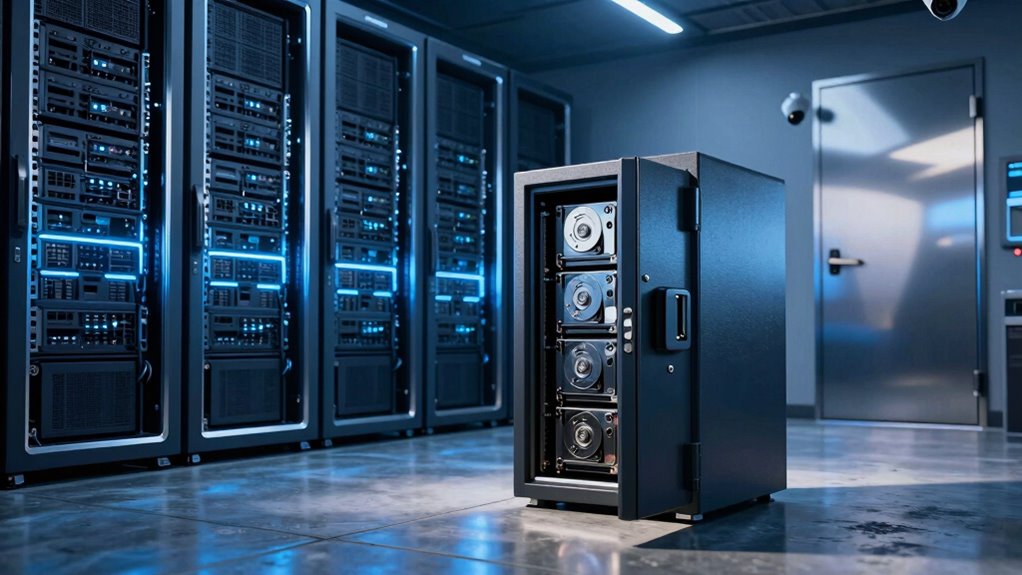
Physical security is a crucial aspect of safeguarding your crypto setups because even the strongest digital defenses can be compromised if your physical assets aren’t protected. While many people focus on securing their private keys through complex passwords or encryption, they often overlook the importance of physical security measures. This is where hardware wallets come into play. These devices are designed to store your private keys offline, making them less vulnerable to hacking attempts. However, simply owning a hardware wallet isn’t enough if someone can physically steal or tamper with it. That’s why physical protection is essential to guarantee your assets remain safe.
One effective way to enhance physical security is to use hardware wallets with biometric access. Biometric authentication adds an extra layer of security, requiring your fingerprint or other biometric data to access the device. This means that even if someone physically gains possession of your hardware wallet, they can’t access your crypto assets without passing the biometric check. It’s a simple yet powerful way to prevent unauthorized access, especially in scenarios where the device might be lost or stolen. Biometric access makes it more difficult for thieves or malicious actors to use your hardware wallet, considerably reducing the risk of theft.
Biometric access on hardware wallets adds vital security, preventing unauthorized use even if the device is stolen.
Beyond biometric security, you should also consider how and where you store your hardware wallet. Keeping it in a secure, hidden location, such as a safe or lockbox, is essential. Physical safes provide protection against theft, fire, or accidental damage. You might also consider dividing your private keys across multiple secure locations, so even if one is compromised, your entire portfolio isn’t at risk. Remember, physical security isn’t just about preventing theft; it’s also about safeguarding against environmental threats like flooding, fire, or physical damage. Incorporating physical security best practices can further enhance your protection by addressing these environmental risks. Understanding the importance of physical security measures can help you develop a comprehensive security plan. Implementing physical access control strategies such as restricted access and surveillance can significantly deter unauthorized handling of your crypto assets. Additionally, understanding the risks of physical vulnerabilities is crucial to ensure you aren’t leaving gaps in your security setup.
Another aspect that often gets overlooked is the importance of physical access control. Limiting who can handle your hardware wallet or access your storage areas makes a noteworthy difference. Use locks, biometric access controls, or security cameras to monitor and restrict access. Only trusted individuals should have physical access to your crypto assets, and regular audits can help ensure no unauthorized handling occurs.
In the end, digital security measures are crucial, but they’re incomplete without robust physical security. Your crypto assets are only as secure as the physical safeguards protecting your hardware wallets and private keys. Incorporating biometric access, secure storage, and strict access controls creates a thorough defense. When you combine digital and physical security strategies, you greatly improve your overall protection, keeping your crypto investments safe from both cyber threats and physical threats.
hardware wallet with biometric access
As an affiliate, we earn on qualifying purchases.
As an affiliate, we earn on qualifying purchases.
Frequently Asked Questions
How Do Physical Breaches Compare to Digital Hacking Risks?
Physical breaches often pose a more immediate threat than digital hacking because they can bypass digital safeguards like biometric authentication and surveillance systems. You might think digital security is enough, but a physical intruder can directly access hardware or wallets, making physical breaches potentially more damaging. Strengthening physical security with robust measures helps protect your crypto assets, complementing digital defenses and reducing overall risk.
What Are the Most Common Physical Security Vulnerabilities in Crypto Setups?
You leave your hardware safeguards unprotected, ignoring the risk of theft or tampering. Environmental controls, like temperature and humidity, often get overlooked, risking hardware damage. Ironically, many crypto setups neglect these vulnerabilities, assuming digital security suffices. In reality, physical breaches happen through simple vulnerabilities—unsecured hardware, poor environmental controls—that can undo all your digital defenses. Protect your assets by securing hardware and maintaining proper environmental conditions.
How Often Should Physical Security Measures Be Reviewed or Updated?
You should review and update your physical security measures at least annually, or whenever significant changes occur. Regular security audits help identify vulnerabilities, guaranteeing your access controls remain effective. Staying proactive by periodically testing your security protocols keeps your crypto setup protected against evolving threats. Consistent reviews ensure that your physical defenses stay aligned with industry best practices, minimizing risks and maintaining the integrity of your assets.
Can Physical Security Prevent Insider Threats Effectively?
Yes, physical security can effectively prevent insider threats when you implement biometric authentication and secure storage. Biometric systems guarantee only authorized individuals access sensitive areas or devices, reducing risks of insider misuse. Coupling this with secure storage solutions safeguards private keys and critical data from internal threats. Regularly updating security protocols and monitoring access logs further enhances your defenses, making it difficult for insiders to compromise your crypto assets.
What Are Cost-Effective Physical Security Options for Individual Investors?
You can protect your crypto assets cost-effectively by using hardware backups and secure storage solutions. Hardware wallets provide a physical barrier, keeping your private keys offline and safe from online threats. Additionally, storing backups in secure locations—like safety deposit boxes or encrypted drives—adds extra layers of protection. These options are affordable and straightforward, giving you peace of mind without breaking the bank while enhancing your overall physical security.
Conclusion
You might think your crypto setup is secure because of strong passwords or multi-signature wallets, but don’t overlook physical security—sometimes, a simple lost key or stolen hardware wallet is all it takes. It’s funny how a tiny, overlooked detail can undo all your digital protections. Remember, in crypto, security isn’t just about digital layers; it’s about safeguarding the physical keys to your financial future too. Sometimes, it’s the smallest security gap that makes all the difference.
Halloween Picks
halloween
As an affiliate, we earn on qualifying purchases.