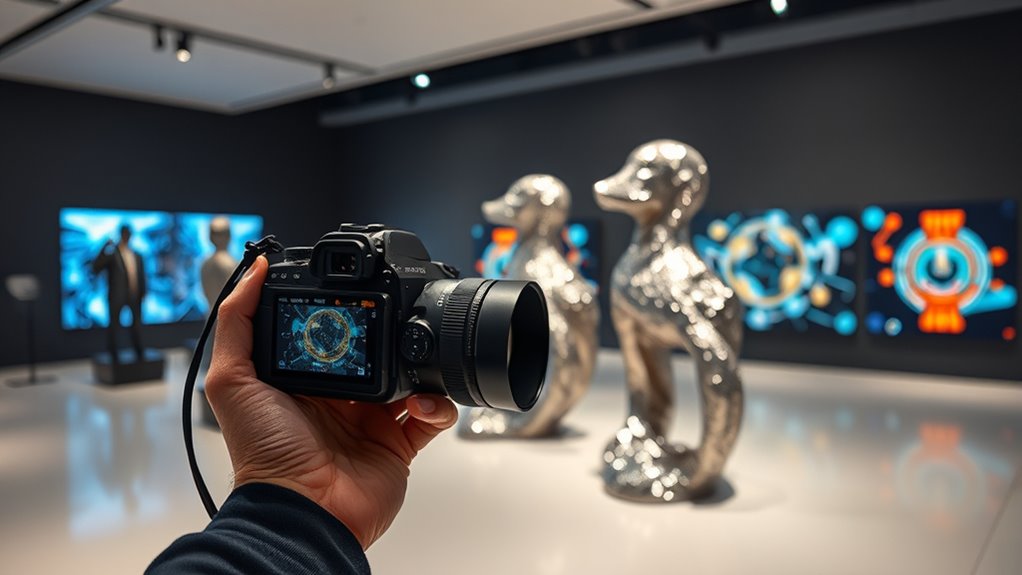

Imagine a sculpture’s story etched not just in marble or bronze but woven into a digital fabric that follows it everywhere. As you navigate the world of art collecting, you’ll find that phygital sculptures create a seamless link between the physical object and its digital twin. This connection transforms how ownership is tracked and verified, offering new levels of transparency and security. But how exactly does this digital bridge reshape the way we buy, sell, and prove ownership?
Key Takeaways
- Blockchain technology securely records ownership and provenance from gallery display to digital wallet transfer.
- NFTs serve as digital certificates linking physical sculptures to their virtual representations and ownership history.
- Digital twinning connects physical sculptures with virtual counterparts, enabling seamless tracking across platforms.
- Smart contracts automate transfer of ownership rights when artworks are sold or transferred.
- Galleries and collectors use secure digital wallets to verify, buy, sell, and transfer phygital sculptures confidently.
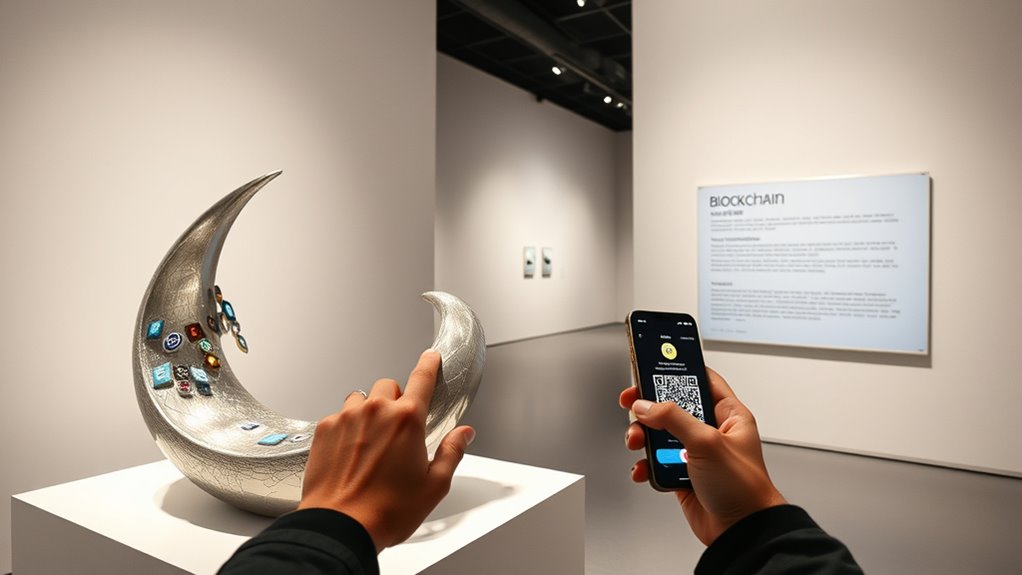
Have you ever wondered how the boundaries between physical and digital art are blending? Today, phygital sculptures exemplify this fusion, combining tangible materials with digital innovations to create interactive, immersive experiences. These artworks are not just static objects; they integrate digital tools like augmented reality (AR), virtual reality (VR), and blockchain technology to enhance engagement and establish secure ownership. As you explore this new frontier, you’ll see how artists are pushing the limits of traditional sculpture by incorporating digital assets such as NFTs, which serve as unique, non-fungible tokens that verify authenticity and ownership.
Phygital sculptures often feature interactive elements that invite viewers to engage actively with the piece. Imagine approaching a physical sculpture, which then comes alive through AR filters or virtual overlays, transforming your experience into something personalized and dynamic. These artworks typically combine mixed media—physical materials like metal or clay with digital components such as digital twins or virtual layers—creating a seamless blend of the virtual and the physical. This fusion not only enhances visual appeal but also allows for a deeper emotional connection, as viewers can explore different facets of the sculpture via digital interfaces. Physical-digital integration is a defining feature of this genre, emphasizing the importance of merging tangible art with digital technology. Additionally, the integration of digital ownership verification ensures that collectors can confidently and securely claim their digital and physical assets.
Technological innovation underpins the entire concept of phygital sculptures. Artists leverage 3D printing to craft precise physical models, while blockchain technology ensures the secure tracking of ownership and provenance. When you purchase or own a phygital sculpture, your ownership is recorded on the blockchain, which provides transparency and tamper-proof verification. Digital twinning further links the physical sculpture to its virtual counterpart, enabling you to possess both the tangible object and its digital representation, often associated with an NFT. This dual ownership model creates a new level of collectibility and value, combining the physical presence with the exclusivity of digital assets.
As the market grows, more artists and collectors are embracing phygital sculptures, recognizing their potential for innovation and investment. Galleries are adapting by hosting immersive exhibitions that integrate virtual displays and interactive installations, allowing you to experience sculptures in ways never before possible. Virtual reality environments transport you into immersive worlds where you can explore these artworks from anywhere, broadening access and engagement. The combination of traditional gallery settings and digital platforms expands the reach of phygital art, making ownership and appreciation more accessible and secure.
Ultimately, the journey from gallery to wallet in phygital sculpture ownership hinges on blockchain technology. It ensures that your ownership is verifiable and protected, whether you’re buying, selling, or transferring the artwork. This secure digital ledger guarantees authenticity and prevents forgery, making these pieces not only innovative but also trustworthy investments. As technology advances, expect even more sophisticated ways to own, display, and interact with phygital sculptures—blurring the lines between the physical and digital worlds in art like never before.
NFT digital art certificate
As an affiliate, we earn on qualifying purchases.
As an affiliate, we earn on qualifying purchases.
Conclusion
Think of phygital sculptures as a bridge connecting two worlds—like a sturdy, transparent tunnel that guides your art from the gallery’s embrace to your digital wallet. With blockchain anchoring each step, your ownership becomes a clear, unbreakable thread woven through both spheres. As you walk this path, you guarantee your art’s story stays authentic and secure, transforming your collection into a timeless voyage across physical and digital landscapes.
phygital sculpture display
As an affiliate, we earn on qualifying purchases.
As an affiliate, we earn on qualifying purchases.
augmented reality art viewer
As an affiliate, we earn on qualifying purchases.
As an affiliate, we earn on qualifying purchases.
digital art wallet
As an affiliate, we earn on qualifying purchases.
As an affiliate, we earn on qualifying purchases.