

When valuing NFTs for 2025 collectibles, focus on key metrics like digital provenance, rarity, and market indicators. Provenance enhances trust and authenticity, while rarity makes items more desirable. Keep an eye on sales volumes and community sentiments to gauge market trends. Pay attention to artistic significance, as it can impact worth too. Understanding these aspects will help you navigate the evolving NFT landscape and make informed decisions. There’s more to explore about these dynamics.
Key Takeaways
- Analyze digital provenance to ensure authenticity and build trust, enhancing NFT value in the collectibles market.
- Assess rarity and uniqueness through supply, features, and cultural significance to determine desirability and worth.
- Monitor sales volumes and transaction prices to identify market trends and asset valuations for effective investment decisions.
- Evaluate community sentiment and engagement to gauge collector interests, which influence market movements and NFT valuations.
- Stay updated on evolving trends and patterns within the NFT space to make informed buying or selling choices in 2025.
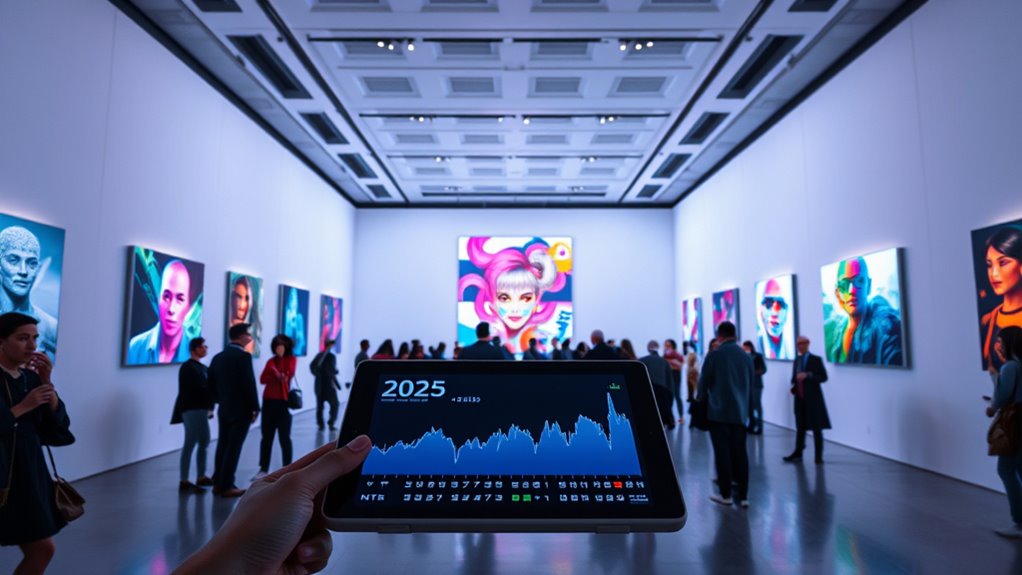
As the world of digital assets evolves, understanding NFT valuation becomes essential for both buyers and sellers. You might already be aware that NFTs, or non-fungible tokens, represent ownership of unique digital items, and their value can shift dramatically based on various factors. Grasping how to assess these values will empower you to make informed decisions in the ever-changing marketplace.
One crucial element of NFT valuation is digital provenance. This refers to the traceable history of an NFT, detailing its creation, ownership transfers, and previous sales. Knowing the digital provenance can enhance an NFT’s value; if an asset has a well-documented history, it builds trust and authenticity. As a buyer, you’ll want to verify this provenance to ensure you’re investing in a legitimate piece. Conversely, sellers can leverage strong provenance to justify higher price tags, showcasing how their NFT stands out in a crowded market.
Digital provenance enhances NFT value by detailing its history, building trust for buyers and justifying higher prices for sellers.
Rarity assessment is another vital metric in understanding NFT worth. The more unique an NFT is, the more desirable it typically becomes. You should evaluate factors like the total supply of a particular NFT series, its distinctive features, and its artistic or cultural significance. For instance, a limited edition artwork from a well-known artist might command a higher price than a more common piece. As a collector, you’ll need to balance rarity with your personal preferences—sometimes, the emotional connection to a piece can outweigh its market value.
Market indicators also play a significant role in NFT valuation. Keeping an eye on trends within the NFT space can provide insights into which assets are gaining traction. Look at sales volumes, average transaction prices, and community sentiment. Platforms that track NFT sales data can help you identify patterns that may signal rising or falling values. Engaging with online communities can also give you a sense of what collectors are excited about, which can inform your buying or selling strategy. Additionally, understanding symbolism in dreams can enhance your intuition when navigating the unpredictable nature of NFT valuations.
Frequently Asked Questions
How Do Gas Fees Affect NFT Prices?
Gas fees can substantially affect NFT prices because they’re a vital part of transaction costs on the blockchain. When gas fees are high, it makes buying and selling NFTs more expensive, potentially driving prices up as buyers factor these costs into their offers. On the other hand, low gas fees can enhance blockchain scalability, making transactions cheaper and more appealing, which might lower overall NFT prices and encourage more trading activity.
What Are the Best Platforms for Buying NFTS?
When it comes to NFT marketplaces, you’ve got options that cater to different tastes. OpenSea offers a vast selection, while Rarible champions community engagement. On the flip side, Foundation focuses on curated art. Regardless of where you shop, you’ll need a digital wallet like MetaMask or Coinbase Wallet to complete your transactions. Balancing your choices between diverse platforms and dependable wallets guarantees you find the perfect NFTs that resonate with you.
Can NFTS Be Insured Against Loss?
Yes, NFTs can be insured against loss, but it’s essential to check the terms with your insurance provider. You’ll want to make certain they cover NFT provenance and digital authenticity, as these factors play a significant role in the asset’s value. Some insurers specialize in digital assets, offering tailored policies. Just remember, as the market evolves, staying updated on coverage options is key to protecting your valuable NFTs effectively.
What Legal Protections Exist for NFT Owners?
As an NFT owner, you’ve got some legal protections under various legal frameworks. Ownership rights typically grant you control over the digital asset, meaning you can sell or trade it. However, copyright issues can complicate things if the original creator retains their rights. Always check local laws, as they can vary markedly. Staying informed about your rights and any applicable regulations helps you navigate the complexities of NFT ownership effectively.
How Do Celebrity Endorsements Impact NFT Values?
Celebrity endorsements can substantially boost NFT values due to their influence. When a popular figure promotes an NFT, it often attracts their fanbase, driving demand and elevating market prices. You might notice that endorsement effects create a buzz around specific collections, making them more desirable. This surge in interest can lead to increased sales and potential resale profits, so keeping an eye on celebrity involvement can be vital for your investment strategy.
Conclusion
As you navigate the world of NFTs, remember that understanding key metrics and market indicators is vital to making informed decisions. By keeping your finger on the pulse of trends and valuations, you’ll be better equipped to spot hidden gems. As the saying goes, “the early bird catches the worm,” so don’t hesitate to plunge into research and analysis. With the right approach, you’ll be well on your way to thriving in the 2025 collectibles market.