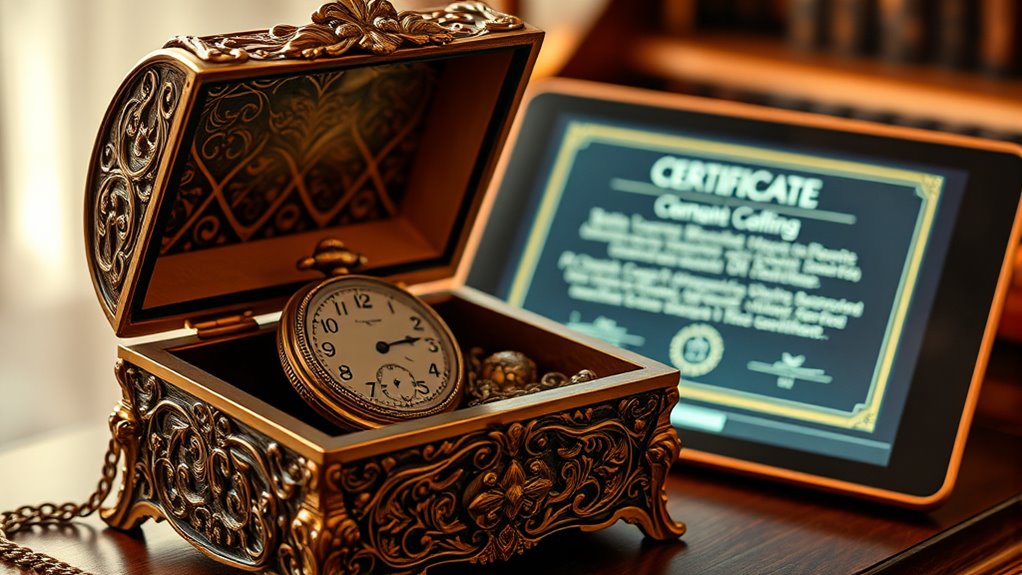

Like a master craftsman preserving tradition, the world of luxury antiques is embracing a new form of authenticity. On‑chain certificates offer a seamless way to verify provenance and ownership, blending age-old craftsmanship with modern blockchain security. As this technology begins to reshape how we trust and trade rare items, you might wonder how far this digital evolution can go—and what it means for the future of collectible luxury.
Key Takeaways
- On-chain certificates provide immutable proof of authenticity, connecting traditional antiques with modern blockchain technology.
- They enable transparent provenance tracking, reducing fraud and enhancing trust in the luxury antiques market.
- Integration with digital tags and mobile verification tools bridges physical antiques with their digital blockchain records.
- Industry partnerships use blockchain certificates to streamline ownership validation and legal compliance.
- These certificates safeguard investments, simplify dispute resolution, and modernize antique trading processes.

As the luxury antiques market grapples with widespread forgery and increasing legal risks, on-chain certificates emerge as a powerful solution. These blockchain-based records provide an immutable digital proof of authenticity and provenance, giving you a reliable way to verify an antique’s history. Each piece receives a secure digital twin—a unique, tamper-proof identity stored on the blockchain—that acts as its digital passport. This digital passport consolidates essential information such as appraisal details, ownership history, and previous transactions into a single unalterable record. Because these certificates are stored on private blockchains used by many galleries and dealers, you benefit from enhanced security and controlled access, reducing the risk of unauthorized alterations.
The transparency of on-chain certificates creates an auditable trail. Every transfer, sale, or change in ownership is recorded, ensuring that the entire history of an antique is visible and verifiable. This transparency helps eliminate doubts about provenance, making it easier for you to authenticate a piece and confirm its legitimacy. In a market plagued by forgery—where estimates suggest that up to $30 billion worth of art and antiques are faked annually—these certificates provide a pivotal line of defense. They help protect buyers from purchasing counterfeit items, reduce the chances of legal disputes, and shield sellers from reputational damage caused by misrepresented pieces. Blockchain’s widespread adoption in the art and antiques industry underscores its importance for security and trust.
Many industry players are already adopting these solutions. For example, partnerships like IOST and Grimm’s Antiques use blockchain records to authenticate items in China, while Verisart supplies blockchain certificates used by galleries and artists worldwide. Major auction houses, such as Christie’s through Artory, have integrated blockchain provenance records into their sales process, ensuring transparency for high-value collections. Physical tags like Jackie O’Neill’s microchips, linked to blockchain records, add an extra layer of security by providing real-time provenance updates and tamper alerts. These innovations make it easier for you to verify authenticity quickly and seamlessly, whether through smartphones, tablets, or integrated dealer systems. Incorporating blockchain in asset verification helps in establishing a trustworthy record that is difficult to alter or forge.
Beyond trust and verification, on-chain certificates serve as definitive proof of ownership, providing legal and insurance advantages. They streamline claims processing, reduce disputes, and help ensure compliance with regulations on proof of origin. When you hold a blockchain certificate, you gain confidence that your investment is protected, and your ownership rights are clear. Overall, these digital records bridge the gap between traditional antiques and modern technology, offering a secure, transparent, and efficient way to buy, sell, and insure luxury antiques in today’s market.
on-chain certificate for luxury antiques
As an affiliate, we earn on qualifying purchases.
As an affiliate, we earn on qualifying purchases.
Conclusion
By adopting on-chain certificates, you’re embracing a future where authenticity and trust are bulletproof. Did you know that the luxury antiques market has seen a 30% reduction in counterfeit sales since blockchain integration? This technology not only safeguards your investments but also streamlines verification processes. As more industry leaders turn to digital certificates, you’re part of a transformative shift that combines timeless craftsmanship with cutting-edge innovation—ensuring your treasures remain genuine and secure for generations to come.
digital provenance verification for antiques
As an affiliate, we earn on qualifying purchases.
As an affiliate, we earn on qualifying purchases.
antique blockchain authentication tools
As an affiliate, we earn on qualifying purchases.
As an affiliate, we earn on qualifying purchases.
tamper-proof digital antique passport
As an affiliate, we earn on qualifying purchases.
As an affiliate, we earn on qualifying purchases.