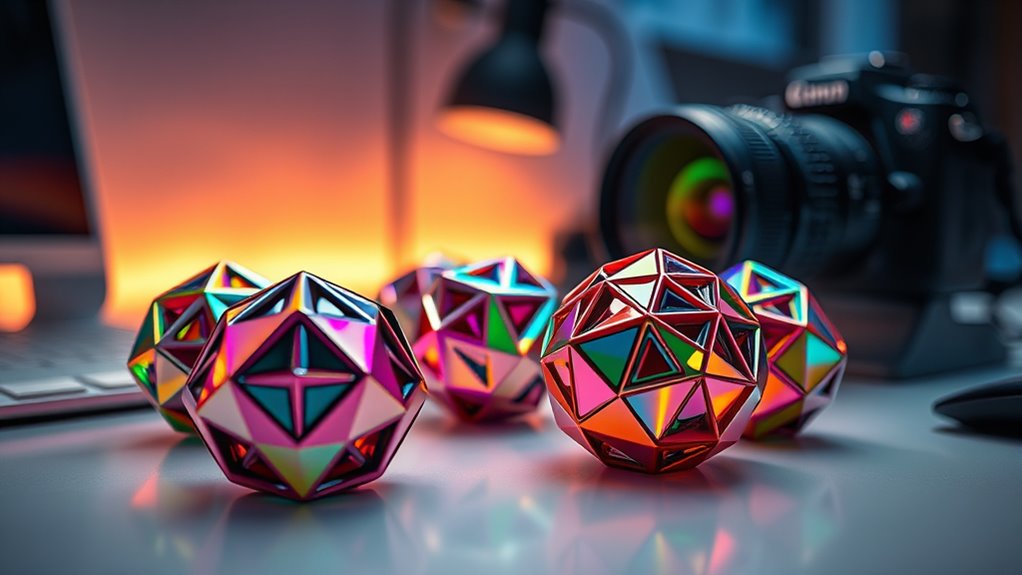

Imagine owning a digital artwork that can be transformed into a tangible object with a simple 3D print. 3D printable NFTs are changing how we experience and trade art by bridging the virtual and physical worlds. With blockchain ensuring authenticity and off-chain storage managing complex files, artists and collectors are exploring new ways to monetize and personalize their creations. Curious about how this blend of technology and creativity will reshape the art landscape?
Key Takeaways
- 3D printable NFTs enable the transformation of digital art into physical collectibles through blockchain-verified ownership.
- Files are stored off-chain via decentralized platforms like IPFS, ensuring accessibility and security.
- Smart contracts guarantee the uniqueness, provenance, and royalty payments for physical and digital assets.
- Integration with marketplaces and 3D printing platforms allows seamless buying, selling, and printing of NFT art.
- This technology broadens artistic possibilities by blending virtual ownership with tangible, customizable objects.

3D Printable NFTs are revolutionizing how digital assets become tangible. Imagine owning a one-of-a-kind digital sculpture that you can not only display online but also hold in your hands. That’s the power of 3D Printable NFTs. They combine blockchain technology’s secure digital ownership with the physical realization enabled by 3D printing. Normally, NFTs are 2D images or videos, but with 3D Printable NFTs, you get the chance to turn digital files into real, physical objects. This fusion considerably broadens artistic possibilities, merging virtual art with physical collectibles. When you purchase or create a 3D Printable NFT, blockchain tracks your ownership, ensuring provenance and authenticity. This means your digital file is certified as original, and you can confidently resell or transfer it, knowing the history is transparent and secure. The exciting part is that it bridges the virtual and physical worlds, allowing artists and collectors to explore new dimensions of creation and ownership.
However, working with 3D Printable NFTs isn’t without challenges. The files used for 3D printing, often in STL format, are complex meshes made of tiny triangles, which makes them large—sometimes tens of megabytes. Blockchains aren’t built to store such hefty data directly, so most platforms store the files off-chain. They use decentralized storage solutions like IPFS or marketplaces such as OpenSea to host the files, while the blockchain holds only essential metadata and ownership details. This hybrid approach ensures that the digital design remains accessible and verifiable without overloading the blockchain. Minting these NFTs involves smart contracts, usually based on standards like ERC721 on Ethereum, which guarantee each 3D file’s uniqueness. Connecting your wallet through tools like WalletConnect or Web3Modal lets you mint, buy, or sell 3D NFTs seamlessly. Marketplaces such as OpenSea facilitate the discovery and transaction process, while integrations with platforms like Shopify enable buyers to order physical prints directly. This combination of digital and physical tracking enhances the security and authenticity of the entire process. Additionally, understanding the importance of color accuracy can help artists ensure their digital designs are represented faithfully in physical form.
The applications are rapidly expanding. Artists and designers monetize their 3D models by offering them as NFTs with rights to print or access the original files. Buyers not only own the digital design but can also produce physical versions via 3D printing, making these NFTs highly versatile. This is especially valuable in sectors like fashion, collectibles, art, and industrial design, where physical objects add real-world value. The tangible aspect of 3D Printable NFTs helps counteract cryptocurrency volatility, giving collectors a physical asset to hold. This dual approach creates new markets, blending digital provenance with physical uniqueness. As a creator or collector, you benefit from the ability to generate recurring income through royalties embedded in smart contracts, protect your intellectual property, and enjoy the satisfaction of owning both a verified digital asset and a customizable, tangible object. 3D Printable NFTs are pushing the boundaries of art and innovation, transforming how we conceive ownership and creativity in a digital age.

FLASHFORGE Adventurer 5M 3D Printer with Fully Auto Leveling, Max 600mm/s High Speed Printing, 280°C Direct Extruder with 3S Detachable Nozzle, CoreXY All Metal Structure, Print Size 220x220x220mm
- Automatic Bed Leveling: One-click hassle-free printing
- High-Speed Printing: 600mm/s travel speed for rapid output
- Powerful Extruder: 280°C direct extruder with detachable nozzle
As an affiliate, we earn on qualifying purchases.
As an affiliate, we earn on qualifying purchases.
Conclusion
As you explore the world of 3D printable NFTs, you’re on the brink of a revolution that blurs the line between digital and physical art. Imagine owning a unique piece that’s both a secure blockchain asset and a tangible masterpiece you can hold or customize. But what’s next? The possibilities are endless, and the journey has only just begun. Are you ready to see how far this fusion of worlds can take you?