Shanghai’s cityscape shows how prosperity is more than just wealth—it’s a reflection of cultural resilience and continuity. As you observe its skyline, you see historic buildings blending with modern skyscrapers, symbolizing progress rooted in tradition. Landmarks like The Bund and Shanghai Tower embody economic strength and cultural identity, highlighting the city’s layered history. If you explore further, you’ll discover how Shanghai’s architecture weaves heritage and innovation into a vibrant story of cultural pride.

Get business pricing on tech for your team
- Business-only prices and quantity discounts
- Tax-exempt purchasing
- Multiple users, one account, clear invoices
Key Takeaways
- Shanghai’s skyline combines historic European-style buildings with modern skyscrapers, symbolizing cultural continuity and economic prosperity.
- Adaptive reuse of historic structures like Rockbund integrates cultural memory into a thriving urban landscape.
- Architectural designs incorporate traditional Chinese symbols and feng shui, blending cultural identity with modern development.
- Public spaces and cultural hubs foster community interactions, emphasizing cultural vibrancy alongside economic growth.
- International collaborations tailor innovative architecture that reflects Shanghai’s unique cultural narrative and global aspirations.
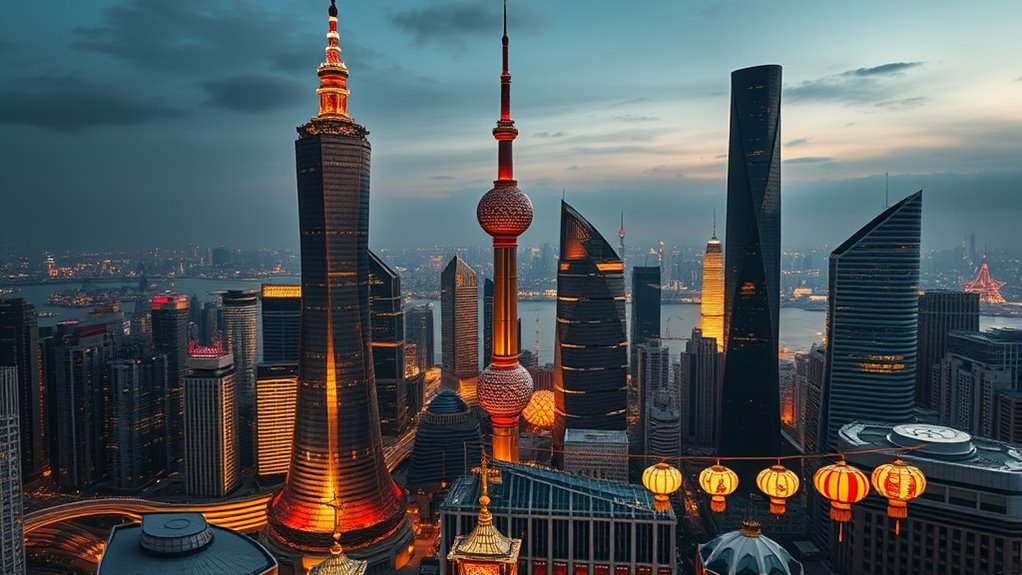
Shanghai’s cityscape transforms the idea of prosperity into a reflection of its rich cultural identity. As you walk through its streets, you see a dynamic blend of architectural styles that embody the city’s layered history and evolving spirit. From the traditional “Haipai” style—an indigenous Shanghai fusion—to sleek modern skyscrapers, the architecture narrates a story of hybridity and resilience. The city’s spatial hierarchy, ranging from cozy neighborhoods to sprawling urban plans, reveals a layered socio-cultural fabric that balances intimacy with grandeur. You can observe buildings from different eras—Beaux-Arts, Art Deco, and post-war modernism—each representing foreign influences and local innovation, creating a visual dialogue across time. Over 1,000 historic buildings have been officially protected, preserving the cultural memory embedded in Shanghai’s urban fabric. These protected structures serve as tangible links to the past, reminding you that progress coexists with heritage. The skyline itself is a tribute to this continuity, where historic landmarks sit alongside futuristic towers, symbolizing a city that honors its roots while reaching for the future.
Shanghai’s skyline blends historic charm with modern innovation, reflecting resilience and cultural richness across its layered architecture.
When you gaze upward, the Shanghai Tower stands out at 632 meters, symbolizing economic strength and China’s ascent on the global stage. This towering feat, along with other structures like the Himalayas Center, marks Shanghai’s transformation from a modest port city into a global financial hub. The iconic Bund offers a striking contrast—its historic European-style buildings evoke old-world charm while the nearby glass skyscrapers shout modern ambition. Together, they narrate Shanghai’s urban evolution, blending cultural stories with aspirations of progress. Many new developments incorporate traditional Chinese symbols and feng shui principles, reflecting a cultural continuity woven into contemporary architecture.
You also notice how Shanghai preserves its heritage through adaptive reuse projects. Renovations of buildings like the Rockbund and Columbia Circle bridge the past and present, transforming old structures into vibrant spaces for today’s community. Since 2007, hundreds of roads and alleys have been protected, maintaining the city’s unique “nong-tangs” or alleyways, which continue to serve as living neighborhoods. These spaces highlight a culture rooted in human-scale interactions, emphasizing community and tradition over sheer grandeur. Old theaters, churches, and apartments remain active, symbolizing the ongoing vibrancy of Shanghai’s cultural life.
Public spaces and cultural hubs further reinforce this connection. The West Bund area combines art, commerce, and social gathering spots, fostering cultural exchange. Pocket plazas and community spaces like Yongjia Road encourage social interactions, rooted in local practices. Museums and exhibition centers, including the Shanghai LuJiaZui, serve as cultural anchors linking history to modern identity. Green spaces and urban forests balance environmental needs and cultural ideals, inspired by traditional concepts of harmony. Color accuracy in the city’s architectural design not only enhances visual appeal but also reflects the rich cultural narratives embedded in the skyline.
International collaborations also shape Shanghai’s architecture. Renowned firms like Foster + Partners and Gensler bring global expertise, yet they adapt designs to reflect the city’s unique cultural identity. Through these efforts, Shanghai’s skyline becomes more than a symbol of wealth; it transforms into a vibrant canvas where prosperity and culture intertwine, making the city’s future a reflection of its rich, layered past.
As an affiliate, we earn on qualifying purchases.
Frequently Asked Questions
How Does Architecture Reflect Shanghai’s Cultural Identity?
You see how Shanghai’s architecture reflects its cultural identity through a vibrant mix of styles. Colonial-era buildings showcase its historical ties, while modern skyscrapers highlight innovation and progress. The blend of East and West influences tells stories of cultural exchange. Preservation efforts keep these stories alive, allowing you to experience Shanghai’s rich heritage firsthand. This dynamic architectural landscape celebrates diversity, history, and forward-thinking, making the city a living reflection of its unique cultural identity.
What Role Do Historical Sites Play in Modern City Planning?
Historical sites play a essential role in your city planning by preserving cultural heritage and fostering community pride. They serve as anchors for vibrant neighborhoods, attract tourism, and guarantee that development respects the city’s unique identity. You integrate these sites into modern urban layouts through regulations and revitalization projects, balancing new growth with the preservation of historic character. This approach creates authentic, walkable, and culturally rich environments for residents and visitors alike.
How Is Local Culture Integrated Into Urban Development?
You see local culture integrated into urban development through the preservation of historical sites and the incorporation of traditional festivals and crafts. These elements are blended into modern cityscapes, creating a unique identity that attracts tourists and enriches residents’ lives. You notice cultural points of interest strategically placed throughout the city, providing recreational opportunities and fostering community engagement, which enhances overall livability and sustains cultural diversity within urban growth.
What Are Shanghai’s Future Plans for Preserving Cultural Heritage?
You’ll see Shanghai’s future heritage preservation plans as a vibrant tapestry weaving ancient traditions with cutting-edge urban growth. The city aims to expand international collaborations, strengthen legal protections, and boost community engagement through global programs and education initiatives. Major projects like revitalizing historic districts and developing eco-tourism spots will preserve its unique cultural soul while embracing modern innovation, ensuring Shanghai remains a living museum where history and progress dance in harmony.
How Does Cityscape Influence Residents’ Cultural Experiences?
Your cityscape shapes your cultural experiences by providing diverse, accessible spaces that blend historic districts with modern architecture. You can explore museums, galleries, and cultural hubs like M50 and Tianzifang, which serve as creative incubators. Public transportation makes it easy to reach events and venues, while preserved historic areas offer a layered cultural backdrop. Digital platforms also enhance your engagement, allowing you to share and participate in cultural life beyond physical spaces.
Conclusion
As you explore Shanghai’s vibrant cityscape, you realize that prosperity isn’t just about towering skylines but about embracing its rich culture. The city proves that “beauty is in the eye of the beholder,” transforming modernity into a reflection of deep-rooted traditions. By valuing its history alongside progress, Shanghai shows you that true success lies in harmony—where culture and prosperity walk hand in hand, shaping a future that honors its past.
Fall Picks
fall essentials
As an affiliate, we earn on qualifying purchases.