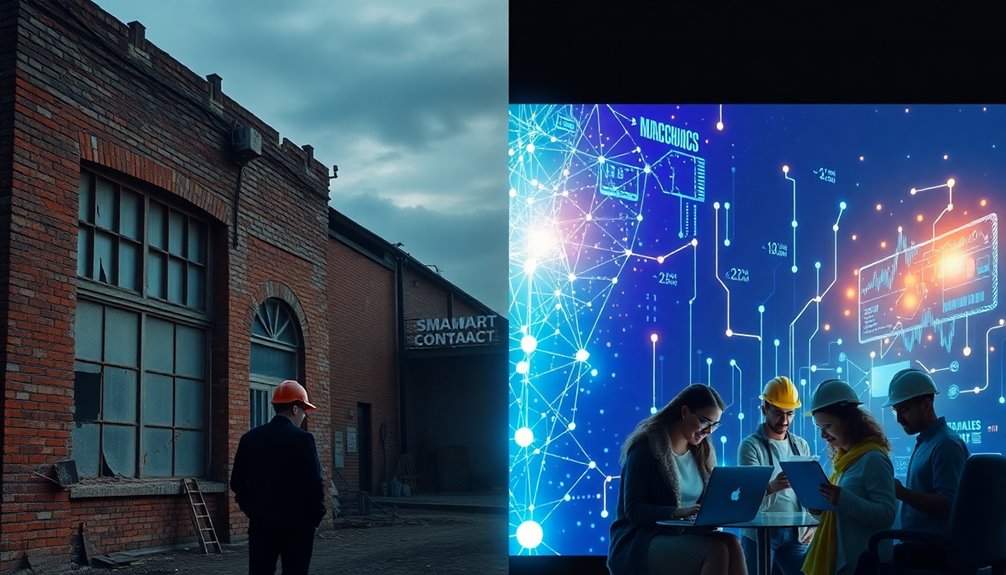

Smart contracts are revolutionizing industries by automating processes, enhancing transparency, and drastically cutting costs. In financial services, they streamline transactions and eliminate intermediaries. In supply chains, they ensure accountability and reduce manual work. Real estate sees faster and more secure property transactions, while insurance claim settlements are expedited and made simpler. This shift is fundamentally disrupting traditional business models, and there's so much more exciting change to explore.
Key Takeaways
- Smart contracts automate processes, eliminating the need for intermediaries and drastically reducing costs in various industries.
- Enhanced transparency in supply chains fosters accountability and minimizes disputes, disrupting traditional vendor-retailer relationships.
- In real estate, smart contracts expedite transactions and reduce fraud, transforming how property buying, selling, and renting occurs.
- The insurance industry benefits from faster claims processing, enhancing efficiency and customer satisfaction while rendering outdated practices obsolete.
- Decentralized finance (DeFi) empowers peer-to-peer transactions, undermining traditional banking models and reshaping financial services.

As industries continue to evolve with technology, smart contracts are emerging as a transformative force that's reshaping traditional business models. These self-executing contracts rely on blockchain technology, and they're making waves across various sectors, from financial services to supply chain management, real estate, and insurance. You're likely seeing how they simplify processes, enhance security, and reduce costs.
In financial services, smart contracts are revolutionizing the way banking operates. Automated banking apps are becoming the norm, eliminating the need for branch offices and enabling contactless payments. With decentralized finance (DeFi), you can enjoy speedy peer-to-peer transactions without the overhead costs associated with traditional banking. Smart contracts enhance security by providing tamper-proof execution of financial transactions, ensuring that your money is safe. By automating financial processes, they also cut out intermediaries, boosting efficiency and saving you time and money. Plus, they help maintain regulatory compliance by tracking and automating financial transactions. This enhanced security ensures that all parties can trust the outcomes of their transactions.
Moving on to supply chain management, smart contracts are bringing unprecedented transparency. They track goods from their origin to the consumer, automatically triggering payments and shipping processes along the way. This automation reduces the likelihood of disputes between vendors and retailers, as contracts can quickly escalate issues if something goes awry. You'll find that these contracts improve visibility across the supply chain network, holding all participants accountable while minimizing operational costs by eliminating manual processes.
In the real estate sector, smart contracts are changing the game. Imagine automating property transactions, ensuring secure buying, selling, and renting. This technology expedites ownership transfers, securely recording payment information on the blockchain. By digitizing property records, you benefit from a more transparent and secure environment, significantly reducing the risk of fraud. It's hard to ignore how these contracts eliminate the need for physical keys, making property theft less of a concern.
Lastly, in the insurance industry, smart contracts can dramatically speed up claims settlements. When certain events occur, like a car accident, these contracts automatically trigger the claims process, providing you with faster resolutions and less hassle.
You're witnessing the end of old industries as smart contracts streamline operations, cut costs, and enhance security across the board. It's clear that this technology isn't just a trend; it's a fundamental shift in how businesses operate. As you embrace these changes, you'll find that smart contracts are paving the way for a more efficient and transparent future.

The Legal Wellness Kit: 7 Essential Tools to Sue-Proof Your Business
As an affiliate, we earn on qualifying purchases.
As an affiliate, we earn on qualifying purchases.
Frequently Asked Questions
What Are the Main Challenges of Implementing Smart Contracts?
Implementing smart contracts comes with several challenges.
You'll face interoperability issues due to varying protocols across blockchains, making seamless integration tough.
The technical complexity demands specialized skills, which can lead to high development costs and outsourcing hurdles.
Additionally, the immutability of code means you can't easily fix errors once deployed, complicating dispute resolutions.
Lastly, ensuring data privacy and regulatory compliance adds another layer of difficulty in the implementation process.
How Secure Are Smart Contracts Against Hacking?
Smart contracts aren't as secure as you might think. They face numerous vulnerabilities, like reentrancy attacks and logic errors, which can lead to significant financial losses.
In fact, over $12.3 billion has been lost due to these flaws. You need to be aware that even established platforms, like Ethereum, have thousands of vulnerable contracts.
To protect yourself, consider using AI monitoring and robust auditing tools before engaging with any smart contract.
Can Smart Contracts Be Modified After Deployment?
Smart contracts can't be easily modified after deployment due to their immutability. Once you deploy a contract, its code remains unchanged.
However, you can use upgrade strategies like proxy contracts or deploy new contracts to facilitate updates.
While these methods allow for modifications, they come with costs, like gas fees and user migration challenges.
It's crucial to plan carefully to ensure seamless transitions and maintain user engagement.
What Industries Are Most Affected by Smart Contracts?
Smart contracts significantly impact various industries, especially banking and finance, logistics, healthcare, and energy management.
In banking, they streamline transactions and reduce costs.
Logistics benefits from transparent tracking and automated payments, while healthcare sees improved data security and patient care.
Energy management embraces peer-to-peer trading and decentralized grids.
Each sector experiences enhanced efficiency and trust, transforming how you conduct business and interact with services.
How Do Smart Contracts Impact Job Markets?
Smart contracts significantly impact job markets by automating processes, which can create new job opportunities while also displacing some roles.
You'll find that as automation increases productivity, demand for skilled workers rises, especially in tech-oriented fields.
However, if you're in a role that can easily be automated, you might face job loss or wage decline.
To thrive, it's essential to adapt by gaining new skills and embracing lifelong learning.
Conclusion
In conclusion, smart contracts are revolutionizing industries by streamlining processes, reducing costs, and enhancing transparency. As you embrace this technology, you'll find countless opportunities for innovation and efficiency in your own work. Don't underestimate the power of these self-executing agreements; they're not just a trend but a transformative force reshaping how businesses operate. If you adapt and harness their potential, you'll stay ahead and thrive in this rapidly evolving landscape. Embrace the change!