
You've likely noticed Bitcoin's recent plunge to $100K, and it's hard not to connect it to the Trump and DeepSeek controversies swirling around. With the U.S. dollar strengthening and Treasury yields rising, riskier investments like cryptocurrencies are losing their luster. Add in regulatory uncertainties, and it's a recipe for market volatility. But what does this mean for Bitcoin's future? The answer might surprise you.

Get business pricing on tech for your team
- Business-only prices and quantity discounts
- Tax-exempt purchasing
- Multiple users, one account, clear invoices
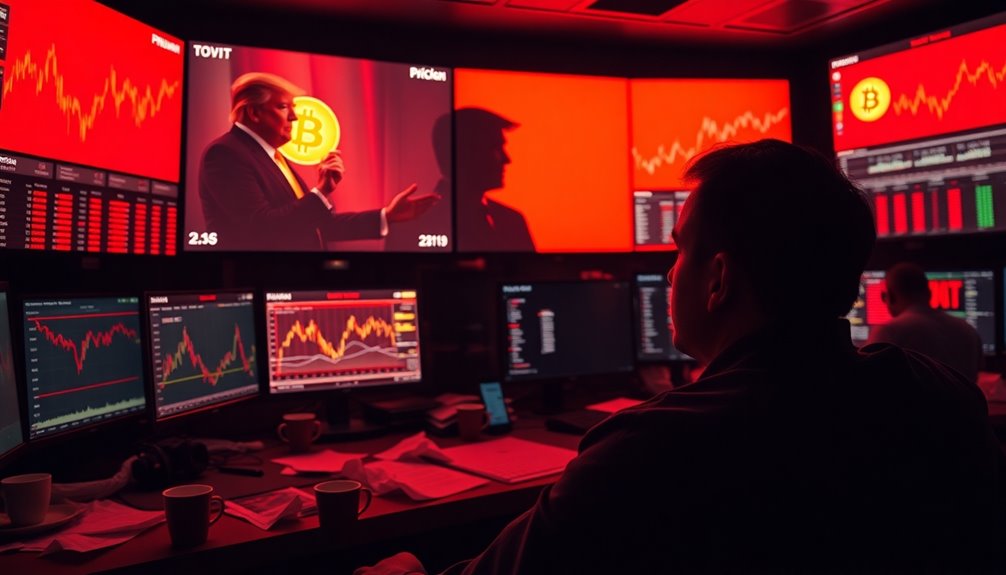
Bitcoin's recent drop has sparked intense debate among investors and analysts alike. You might be wondering what factors contributed to this significant downturn, especially with the price hovering around the psychologically important $100,000 mark. A strong U.S. dollar and rising Treasury yields are two key economic factors at play. When yields rise, it makes riskier assets like cryptocurrencies less appealing, leading investors to seek safer havens.
Additionally, the Federal Reserve's decision to cut back on interest rate reductions in 2025 has only exacerbated the situation, causing more volatility in the crypto market. Global economic uncertainty adds another layer of complexity. For instance, ongoing issues in China's property sector have raised concerns, leading to heightened volatility. The strength of the USD has also played a significant role in Bitcoin's recent decline.
With institutional investments playing a crucial role, the presence of large investors could potentially limit Bitcoin's price drop. Still, the overall market sentiment hasn't been favorable. Many investors held overly bullish views, which often precedes market corrections. You may have noticed that this pattern aligns with historical behaviors, where significant rallies are usually followed by downturns.
As you consider these factors, it's also essential to acknowledge the evolving regulatory environment. Regulations surrounding anti-money laundering (AML) and know-your-customer (KYC) laws can create challenges for Bitcoin and other cryptocurrencies. While there's a push for regulatory clarity—especially with the Trump administration previously working to define rules for the crypto industry—uncertainty remains.
This could impact your confidence as an investor. It's worth noting that clearer regulations might attract more institutional investors, possibly providing some support for Bitcoin's price. Moreover, the approval of Bitcoin exchange-traded funds (ETFs) has historically buoyed the market. If you're following these developments, you'll realize that institutional engagement is gradually increasing, which might stabilize the market over time.
However, you should remain cautious about Bitcoin's energy consumption concerns. These criticisms pose a potential threat to its market value, especially as more people become aware of the environmental impact. Technologically, Bitcoin's halving event has historically led to price increases due to reduced supply, but its effects can vary based on market conditions.
You may also want to keep an eye on seasonal trends; historically, February has been a strong month for Bitcoin, making January a good time to "buy the dip."
As an affiliate, we earn on qualifying purchases.
Fall Picks
fall essentials
As an affiliate, we earn on qualifying purchases.