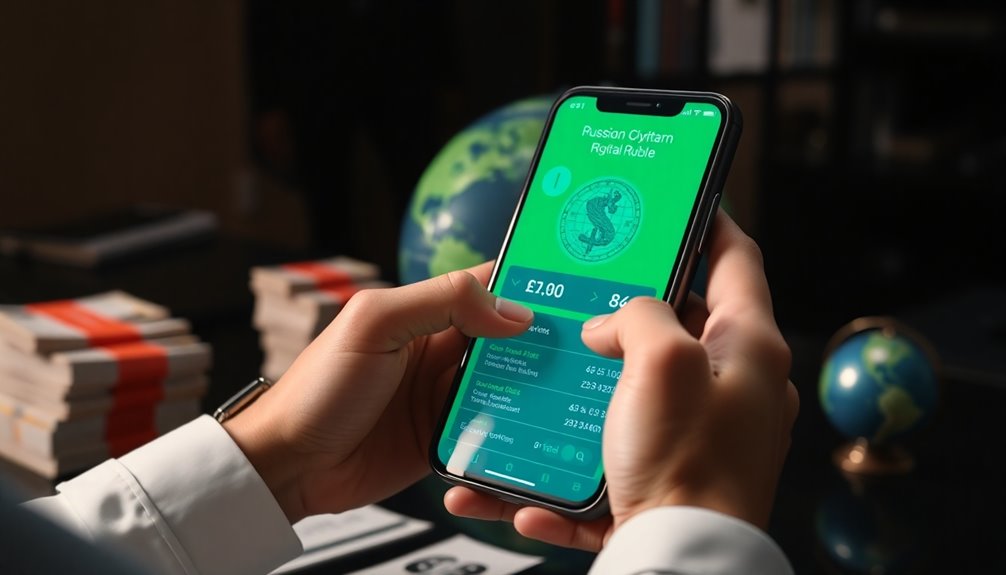

The introduction of the Russian Digital Ruble raises important questions about its potential role in sanction evasion. As a state-backed currency, it could facilitate cross-border transactions, allowing businesses to bypass traditional banking restrictions. This creates both opportunities and challenges for the global financial system. Could the Digital Ruble really change the game for Russia's economic strategy? Understanding its implications is crucial for grasping the future of international trade and sanctions.

Get business pricing on tech for your team
- Business-only prices and quantity discounts
- Tax-exempt purchasing
- Multiple users, one account, clear invoices

The digital ruble, a groundbreaking innovation from the Central Bank of Russia, represents a new era for the nation's currency. This new form of the Russian national currency exists solely in electronic form and functions as a means of payment, a measure of value, and a means of saving. Issued directly by the Central Bank, the digital ruble stands apart from non-cash money, which commercial banks manage. Each digital ruble is equivalent to one cash or non-cash ruble, ensuring a familiar value for users. You'll need to access a special platform for transactions, which can facilitate payments both online and offline.
One of the most compelling advantages of the digital ruble is its ability to enable offline transactions. This feature allows you to make payments without relying on internet access, which can be crucial in areas with unstable connectivity. Additionally, the digital ruble supports instant money transfers, meaning you won't have to wait long for your transactions to process. You'll also appreciate that transactions between individuals are free of charge, making it an economical choice for everyday purchases. The inclusion of smart contracts further enhances its functionality, automating various financial processes and minimizing the need for intermediaries. Digital ruble usage also promotes financial stability, as it is state-backed and ensures legality compared to cryptocurrencies.
As the world increasingly focuses on sanctions and financial restrictions, the digital ruble may serve as a valuable tool for businesses in Russia. With its potential to streamline cross-border transactions, it could help companies bypass sanctions that limit their ability to conduct business internationally. By facilitating international settlements without relying on traditional correspondent bank accounts, the digital ruble presents a strategic advantage in a challenging economic landscape.
The Russian government has shown strong support for this initiative, seeing it as a means to enhance financial discipline and transparency while also safeguarding the national economy. Currently, the digital ruble is in its pilot phase, which began in August 2023, with expectations of widespread availability by mid-2025.
Two primary models are under consideration for its introduction: one that operates within a two-tier banking system and another where the Bank of Russia plays a central role. As these models develop, businesses and consumers alike should prepare for the shifts in how money functions in Russia.
The digital ruble is a fiat currency, meaning it's backed by the state, which ensures its stability. Transactions will adhere to anti-money laundering regulations, offering a level of consumer protection that cryptocurrencies lack. With the potential to account for a significant portion of the money supply—up to 40%—the digital ruble is poised to play a critical role in the Russian economy. Additionally, it could facilitate settlements with other nations, including major trading partners like India and China.
Fall Picks
fall essentials
As an affiliate, we earn on qualifying purchases.