

As El Salvador navigated the complexities of cryptocurrency, it made headlines in September 2021 by becoming the first country to adopt Bitcoin as legal tender. This groundbreaking move followed the approval of the Bitcoin Law by the National Assembly on June 8, 2021. Under this law, businesses were required to accept Bitcoin for goods and services, marking a significant shift in the nation's economic landscape. The government even introduced the Chivo Wallet to streamline Bitcoin transactions, aiming to make this digital currency accessible to all.
However, the landscape began to shift with recent amendments to the Bitcoin Law. These changes removed Bitcoin's designation as mandatory legal currency, allowing it to exist as voluntary legal tender instead. You might notice that businesses are no longer obligated to accept it, which alters the initial framework that sought to integrate Bitcoin into everyday transactions.
Additionally, the law now prohibits the use of Bitcoin for tax payments and government fees, a move that signals a cautious regulatory approach. These amendments were part of a broader $1.4 billion loan agreement with the International Monetary Fund (IMF), which had expressed concerns about the financial stability risks associated with Bitcoin. The IMF's apprehensions centered around Bitcoin's notorious price volatility and its potential impact on El Salvador's currency reserves and credit in capital markets.
As you consider these implications, it becomes clear that the nation's initial bold step into cryptocurrency has led to a more restrained approach. Despite the government's efforts to develop the necessary infrastructure, including the Chivo Wallet, challenges remain. Many citizens still face technological barriers that complicate the adoption of Bitcoin. The complexities of the technology can deter individuals from fully engaging with it, which explains the mixed public perceptions surrounding Bitcoin's use.
On a global scale, El Salvador's experiment has the potential to influence how other countries view cryptocurrency regulation. Financial authorities worldwide are closely monitoring the situation, which could lead to a reevaluation of Bitcoin's legal status in other jurisdictions.
As you reflect on these changes, consider how they signal a shift not just in El Salvador but also in the broader conversation about cryptocurrency's role in modern economies. The evolution of Bitcoin's legal standing could reshape our understanding of digital currency altogether.

TERUNSOUl 4K Dash Cam Front and Rear, Full HD 3 Channel Dashcam, Free 128GB MicroSD Card, Built-in 5.8GHz WiFi Built-in GPS, Collision Sensor, Night Vision, HDR, 3.16" IPS, 24H Parking Mode(Black)
UHD 4K Front + 1080 Rear + 1080P Cabin Recording: Supports simultaneous triple-channel recording, delivering crystal-clear details for...
As an affiliate, we earn on qualifying purchases.

FREEXAR 4K 360° Dash Cam, 4-Channel Dash Camera for Cars, Full Coverage Front Rear Left Right Inside with GPS, 5.8GHz Wi-Fi & App, Night Vision, Voice Control, 24H Parking Mode, 128GB Card Included
TRUELY NO BLIND SPOTS - The FREEXAR D4 redefines dash cam safety with 4 adjustable lenses that deliver...
As an affiliate, we earn on qualifying purchases.
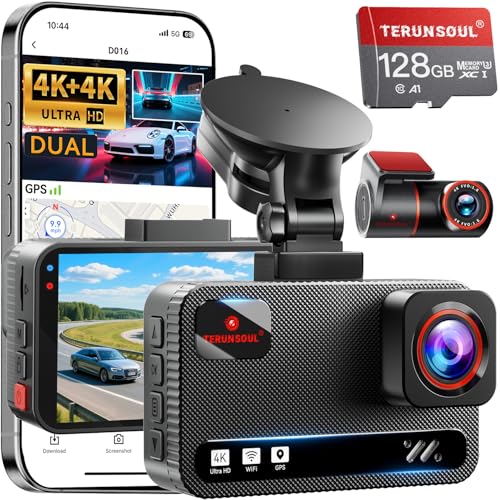
TERUNSOUl 4K+4K Dash Cam Front and Rear, Free 128GB Card Included, 5.8GHz WiFi Dash Camera for Cars, Built-in GPS, G-Sensor, 170°Wide Angle, 3" IPS Screen, 24H Parking Mode, Support 512GB Max
Ultra HD 4K Front + 4K Rear Recording: The Terunsoul dash cam supports dual-channel simultaneous recording, capturing both...
As an affiliate, we earn on qualifying purchases.

ROVE R2-4K DUAL Dash Cam Front and Rear, STARVIS 2 Sensor, FREE 128GB Card Included, 5G WiFi - up to 20MB/s Fastest Download Speed with App, 4K 2160P/FHD Dash Camera for Cars, 3" IPS, 24H Parking Mode
4K FRONT + 1080P REAR RECORDING – ROVE R2-4K DUAL dash cam offers dual-channel recording capabilities, capturing footage...
As an affiliate, we earn on qualifying purchases.