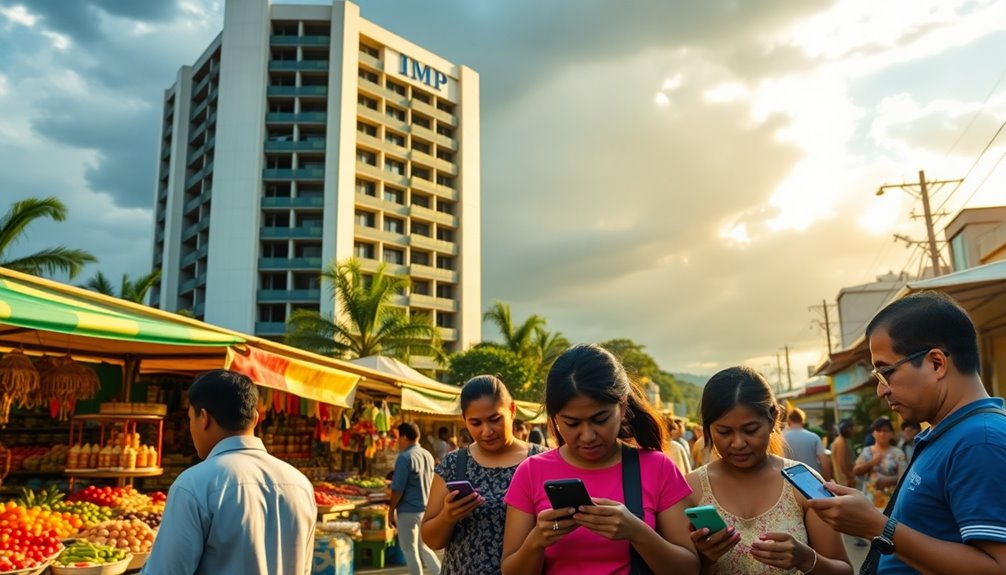


El Salvador's Bitcoin Bet

Get tech for your team delivered free — and shop member deals
- Fast, free delivery on millions of items
- Access to Prime Big Deal Days deals on October 6–7
- Prime Video, Amazon Music and more included
When El Salvador made Bitcoin legal tender in September 2021, it took a bold step that no other country had dared to try. You might recall the excitement surrounding this unprecedented move, as the government aimed to boost financial inclusion and attract foreign investment. With the introduction of the Chivo Wallet, a government-backed digital wallet, the idea was to simplify Bitcoin transactions for everyday Salvadorans.
However, the public reaction was mixed, with many citizens expressing skepticism and concern over Bitcoin's notorious volatility. Initially, the law mandated that businesses accept Bitcoin alongside the US dollar, but this requirement was later softened to a voluntary basis. You can imagine the hesitance among merchants, as they grappled with the unpredictable price swings of Bitcoin.
Public skepticism over Bitcoin's volatility led to a shift from mandatory acceptance to a voluntary basis for businesses.
Even though more Salvadorans now hold Bitcoin wallets than bank accounts, the lack of understanding about cryptocurrency remained a significant barrier. This confusion led to widespread criticism from financial experts and protests from the public. A survey indicated that 34.8% of the population had no confidence in Bitcoin, while only 14.1% had a lot of confidence.
The International Monetary Fund (IMF) has kept a watchful eye on El Salvador's Bitcoin policy, consistently warning about the financial risks involved. You've likely seen how the IMF pressured the government to revise its Bitcoin law and limit public exposure to this new digital currency. As part of a $1.4 billion loan agreement, El Salvador had to scale back its commitment to Bitcoin, demonstrating the delicate balance between innovation and financial stability.
Despite the challenges, El Salvador continues to hold a significant reserve of Bitcoin, valued at over $500 million. This investment has led to profits for the government, showcasing the potential upside of their risky bet.
However, the government's recent amendments to the Bitcoin law, which removed its status as a currency, indicate a cautious approach moving forward. The Chivo Wallet's role is also being re-evaluated as the government gradually steps back from its involvement.
Public trust in Bitcoin remains low, with only a small percentage of the population feeling confident about adopting this digital currency. Despite government campaigns to increase awareness, the struggle to build trust highlights the complexities of integrating cryptocurrency into everyday life.
As El Salvador navigates this uncertain terrain under the IMF's watchful eye, it's clear that the road ahead will be anything but straightforward.
Bitcoin digital wallet for beginners
As an affiliate, we earn on qualifying purchases.
As an affiliate, we earn on qualifying purchases.
Fall Picks
fall essentials
As an affiliate, we earn on qualifying purchases.