Taproot is a significant upgrade to Bitcoin that promises to improve both privacy and efficiency. By enabling complex transactions to appear as simple ones on the blockchain, it makes analysis more difficult and reduces blockchain bloat. But how exactly does this work, and what does it mean for the future of Bitcoin? There’s a lot to unpack, and understanding the details could change how you see the network’s potential.
Key Takeaways
- Taproot merges complex contract logic into simple transactions, making privacy indistinguishable on-chain.
- Uses Schnorr signatures for signature aggregation, reducing transaction size and enhancing efficiency.
- Implements Merklized Abstract Syntax Trees (MAST) to hide transaction details, improving privacy and reducing blockchain bloat.
- Enables batching of multiple transactions, lowering fees and increasing throughput.
- Supports smarter, more private contracts without compromising security or decentralization.

Ever wondered how Bitcoin’s latest upgrade enhances privacy, efficiency, and smart contract capabilities? That upgrade is Taproot, the most significant change since SegWit in 2017. It activated as a soft fork at block 709,632 on November 14, 2021, after achieving over 90% miner consensus signaling. Taproot aims to improve the network’s privacy, scalability, and flexibility, laying a foundation for expanding Bitcoin’s smart contract and decentralized finance (DeFi) potential. This upgrade fundamentally changes how transactions are constructed and validated, making the network more robust and user-friendly.
At its core, Taproot introduces three Bitcoin Improvement Proposals: BIP 340, BIP 341, and BIP 342. These bring in Schnorr signatures, Taproot itself, and Tapscript, respectively. Schnorr signatures replace the older ECDSA scheme, offering linearity that enables multiple signatures to be combined into a single, compact signature. This aggregation reduces transaction size, cuts down on blockchain data, and speeds up processing, which translates into lower fees and quicker confirmations. Because multiple signatures can be bundled, multi-party transactions become more private — observers can’t easily tell how many participants are involved or who they are, adding a layer of privacy that was harder to achieve before.
One of the key privacy improvements comes from how Taproot masks complex smart contracts. It makes them indistinguishable from simple transactions on-chain, concealing their intricate conditions unless specific scenarios are triggered. Additionally, by batching signatures and transactions, Taproot hides details about individual participants, further protecting user privacy. The use of Merklized Abstract Syntax Trees (MAST) limits what data is exposed, reducing blockchain bloat and making it harder for outside parties to analyze or link transactions. This new structure also enhances the network’s scalability by allowing more complex scripts to be executed efficiently. Moreover, the design of Taproot aligns with the broader goals of blockchain scalability, ensuring the network can grow sustainably as transaction volumes increase.
Efficiency and scalability see noticeable gains through these innovations. Smaller transaction sizes mean less block space consumption, allowing more transactions to fit into each block. This results in faster validation and lower fees for users. Taproot also supports batching multiple transactions, easing network congestion and enhancing overall performance without requiring major protocol overhauls. The introduction of Tapscript improves scripting capabilities, enabling more complex smart contracts while maintaining the blockchain’s simplicity and privacy. This opens new avenues for decentralized applications built on Bitcoin, making the network more versatile without sacrificing security or decentralization.

Trezor Model One – The Original Cryptocurrency Hardware Wallet, Bitcoin Security, Store & Manage 1000's of Coins&Tokens, Easy-to-Use Interface, Quick & Simple Setup (Black)
All-in-one hardware wallet for easy crypto security, storage & use
As an affiliate, we earn on qualifying purchases.
As an affiliate, we earn on qualifying purchases.
Conclusion
Now that you see how Taproot transforms Bitcoin’s privacy and efficiency, the real question is what’s next. As these improvements quietly reshape the network, you’ll want to stay tuned for what’s coming — better security, lower fees, and smarter transactions. Taproot’s true potential is just beginning to unfold, and the future of blockchain is more exciting than ever. Are you ready to see where this upgrade takes us next?
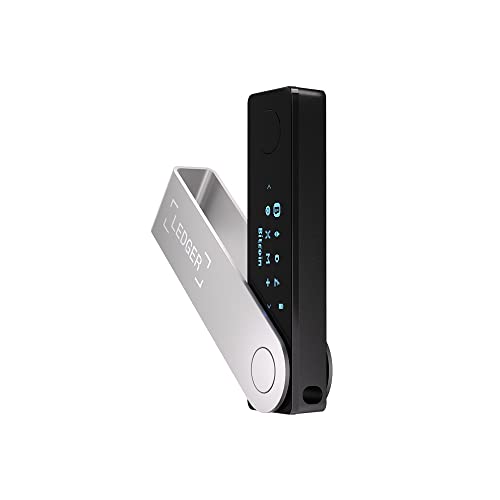
Ledger Nano X Crypto Wallet Signer – Securely Manage All Your Crypto Assets with This Bluetooth Enabled Classic – Onyx Black
Effortlessly build your crypto portfolio via the all in one Ledger Wallet app: buy, sell, send, receive, swap,…
As an affiliate, we earn on qualifying purchases.
As an affiliate, we earn on qualifying purchases.
Bitcoin transaction signing device
As an affiliate, we earn on qualifying purchases.
As an affiliate, we earn on qualifying purchases.
blockchain privacy tools
As an affiliate, we earn on qualifying purchases.
As an affiliate, we earn on qualifying purchases.