
The crypto world is a vast ocean, with Bitcoin often seen as the mighty ship leading the way. Yet, smaller tokens—altcoins—are like nimble vessels, finding new routes and catching winds others miss. Their ability to innovate in speed, functionality, and energy use is reshaping the landscape in unexpected ways. Curious how these underdogs are making big waves? Keep exploring to discover the surprising strategies that let altcoins win big against the giant.
Key Takeaways
- Altcoins often feature faster transaction speeds, making them more practical for everyday or high-frequency use cases.
- Many altcoins utilize innovative consensus mechanisms like proof-of-stake, enhancing scalability and reducing energy consumption.
- Altcoins can target niche markets or specific functionalities, giving them unique value propositions beyond Bitcoin’s scope.
- Some altcoins offer advanced features, such as smart contracts and decentralized applications, expanding blockchain capabilities.
- The lower entry barriers and diverse projects create investment opportunities with higher potential returns despite increased volatility.
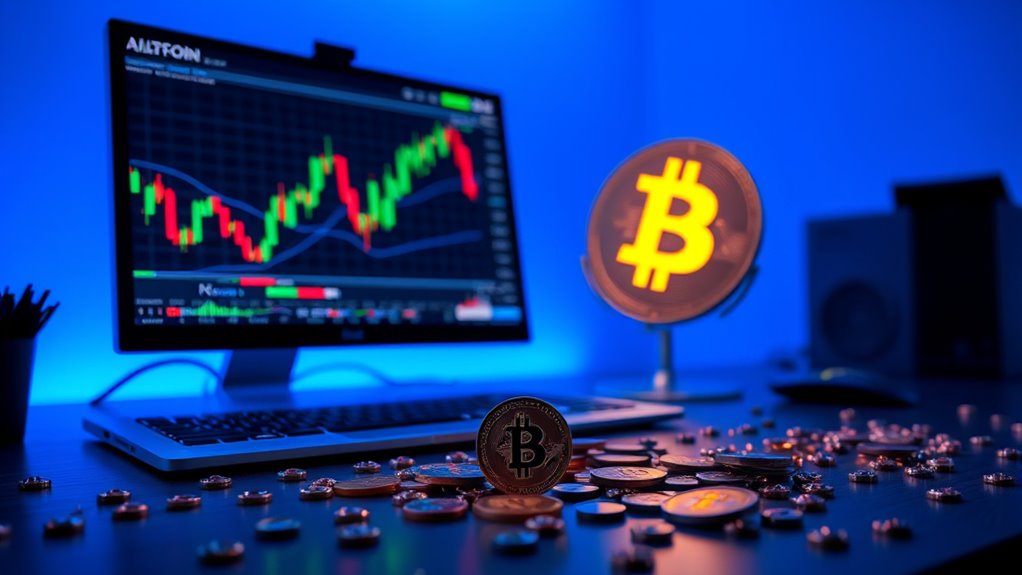
Have you ever wondered how altcoins compare to Bitcoin in the rapidly evolving crypto landscape? While Bitcoin remains the dominant force, holding about 62% of the total market value in early 2025 and exceeding a trillion dollars in market cap, altcoins are far from insignificant. They make up around 38% of the market and are continuously growing in number and diversity. Despite Bitcoin’s massive valuation and widespread acceptance, altcoins are carving out their own niches, offering features and functionalities that Bitcoin doesn’t provide. This means that, although Bitcoin is often seen as the safe, “blue-chip” investment, altcoins can deliver exciting opportunities that tap into a broader range of use cases.
Altcoins hold 38% of the crypto market, offering diverse features and opportunities beyond Bitcoin’s dominance.
Altcoins differ considerably in purpose and functionality. Bitcoin was primarily created as a peer-to-peer digital cash system and a store of value, emphasizing security and decentralization. Many altcoins, however, extend this foundation by adding features like smart contracts and decentralized applications (dApps). Ethereum, for example, specializes in enabling these smart contracts, making it a platform for a vast ecosystem of dApps and DeFi projects. Other altcoins like Solana focus on high performance, offering ultra-fast and low-cost transactions. These innovations allow altcoins to explore niche markets and experimental blockchain solutions that Bitcoin simply doesn’t target. They aim to push the boundaries of blockchain technology, experimenting with different consensus mechanisms and scalability solutions to improve speed, efficiency, and user experience.
Technologically, Bitcoin relies on proof-of-work (PoW), which emphasizes security and decentralization, with block times of around ten minutes. Many altcoins, on the other hand, adopt alternative consensus mechanisms like proof-of-stake (PoS) or variations designed for higher throughput and faster transactions. Ethereum’s transition to PoS in 2022 exemplifies this shift, and others like Solana optimize for speed with shorter block times. This technological diversity brings innovation, but it also introduces varying degrees of risk and centralization. Altcoins often have shorter transaction times, making them more practical for certain use cases, even if they lack Bitcoin’s broad market dominance. Moreover, some altcoins implement layer-2 solutions and sharding to further enhance scalability and reduce fees, addressing the limitations faced by Bitcoin’s network.
While Bitcoin is seen as more stable and appealing to conservative investors, altcoins tend to be more volatile, offering the potential for higher returns—notably with increased risk. Many investors diversify their portfolios with altcoins to capitalize on specialized use cases, especially those with strong fundamentals or unique features. Institutional interest is growing, with Bitcoin increasingly integrated into legacy finance, but regulatory developments and new market structures could create opportunities for altcoin innovation. Despite Bitcoin’s dominance, altcoins are winning in their own right, pushing the boundaries of what blockchain can do and providing a broader landscape of investment and technological possibilities.
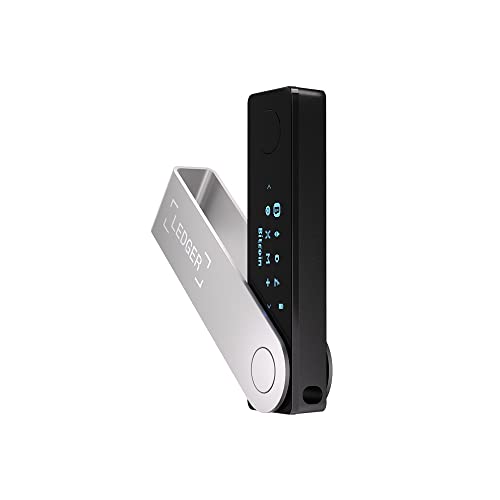
Ledger Nano X Crypto Wallet Signer – Securely Manage All Your Crypto Assets with This Bluetooth Enabled Classic – Onyx Black
Effortlessly build your crypto portfolio via the all in one Ledger Wallet app: buy, sell, send, receive, swap,…
As an affiliate, we earn on qualifying purchases.
As an affiliate, we earn on qualifying purchases.
Conclusion
Just like a shining star that outshines the moon, altcoins prove that innovation and agility can lead to victory beyond Bitcoin’s glow. They carve out their own space, lighting the path for new possibilities in the crypto universe. Remember, in this vast digital sky, it’s often the smaller, brighter sparks that spark the brightest change. Keep watching, because these tokens aren’t just following the light—they’re shaping the future.

The Legal Wellness Kit: 7 Essential Tools to Sue-Proof Your Business
As an affiliate, we earn on qualifying purchases.
As an affiliate, we earn on qualifying purchases.
fast transaction crypto wallet
As an affiliate, we earn on qualifying purchases.
As an affiliate, we earn on qualifying purchases.
decentralized application development tools
As an affiliate, we earn on qualifying purchases.
As an affiliate, we earn on qualifying purchases.