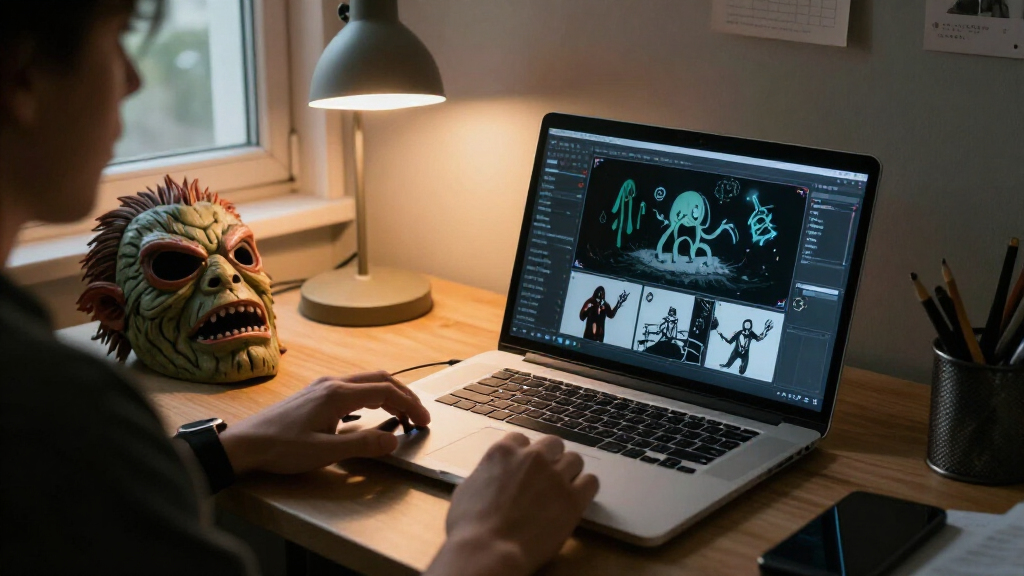

🔍 Read the full analysis: Why We Had To Rethink Our AI Horror-Comedy’s First Version on ThorstenMeyerAI.com

Get business pricing on tech for your team
- Business-only prices and quantity discounts
- Tax-exempt purchasing
- Multiple users, one account, clear invoices
TL;DR
Hollow House, a 97-second AI-generated horror-comedy, was completed after its creator discarded two earlier versions made during an overnight production. The account says the decisive change was moving from 20 longer shots to three connected segments generated with the full cast as references; the creator identifies pacing, not image quality, as the main problem.
Filmmaker Thorsten Meyer says he rebuilt his AI-generated horror-comedy Hollow House twice after the first version looked polished but felt boring, ultimately finishing a 97-second cut after three attempts made overnight. In a behind-the-scenes account published October 28, Meyer attributes the change chiefly to pacing and production choices, rather than to a lack of convincing images.
According to Meyer’s account on ThorstenMeyerAI.com, all the film’s characters, voices and sets were AI-generated. The premise puts a real ghost on the staff of an extreme haunted attraction, where workers treat the supernatural newcomer as an ordinary workplace issue. When a guest says the attraction’s safe word, the scare does not stop; the shift lead’s response is to ask whether the ghost signed a waiver.
The first cut used 20 single shots and ran 2 minutes 15 seconds. Meyer says it looked good, but its cuts averaged 5.6 seconds, compared with about 1.8 seconds in the short that inspired the project, according to his count. He then made a second, faster version with 66 cuts, running 2 minutes 21 seconds. The account says neither approach worked; the final version used three roughly 30-second segments generated with one model that had references for the whole cast, and ran 1:37.
The production began with reference images for eight characters, created with Google’s Nano Banana 2 image model through the Higgsfield platform, Meyer writes. He used those images to maintain appearances across generated shots, then used Google’s Veo 3.1 for video. Meyer reports spending 2,220 Higgsfield credits across the three versions, which he estimates at about $95 at his plan price, plus roughly 2,100 ElevenLabs characters for music and sound effects. These are the creator’s figures, not independently verified production costs.
Behind the cut · October 28, 2026
Why We Had To Rethink Our AI Horror-Comedy’s First Version
Hollow House took three overnight versions to reach a 97-second cut. Creator Thorsten Meyer says the images looked convincing early on. The missing ingredient was comic rhythm.
“The pictures were never the problem. The rhythm was.”
Thorsten Meyer · Creator of Hollow House
Three versions, one pacing problem
The first cut looked polished but felt slow. A faster second attempt also missed the mark. The final approach changed how the footage was generated and assembled.
Long single shots
Twenty planned shots. Cuts averaged 5.6 seconds, versus about 1.8 seconds in the short that inspired the project, by Meyer’s count.
More cuts, still long
Sixty-six cuts made the edit faster, but the overall version ran longer. Meyer says neither approach delivered the comedy’s intended rhythm.
Connected segments
Three roughly 30-second segments generated with one model using references for the whole cast, then shaped into the finished short.
Creator’s takeaway: Meyer identifies pacing as the central creative problem. Visual consistency alone could not make the long shots, static framing and sparse sound feel funny.
From character sheets to final cut
The overnight process still depended on human choices: planning the cast, checking generated dialogue, rejecting weak edits and grading the final image.
Build the cast
Eight character reference images made with Google’s Nano Banana 2 through Higgsfield.
Generate scenes
Google Veo 3.1 created video from reference frames; models sometimes changed details or misread actions.
Check the audio
Whisper transcripts were compared with the script. Misheard shouts and garbled syllables prompted retakes.
Revise and finish
Meyer reshaped the production into three segments, selected the final material and applied the color grade.
AI made the pieces; direction made the cut
In Meyer’s account, the tools supported generation and consistency. People made the key calls about what worked and what needed another attempt.
Eight character sheets
Reference images served as a visual guide for appearances across shots, without eliminating every inconsistency.
Veo 3.1
Used to animate planned scenes. Some requested movements were interpreted differently and needed rewording or retakes.
Generated audio, human checks
Speech and sound were generated alongside imagery; transcription checks helped flag dialogue that did not match the script.
Meyer estimates those credits at about $95 at his plan price, plus roughly 2,100 ElevenLabs characters for music and sound effects. These are creator-reported figures, not independently verified costs; the account does not establish whether labor or other expenses are included.
Comedy lives between the frames
Hollow House puts a real ghost on the staff of an extreme haunted attraction. When a guest uses the safe word, the scare does not stop; the shift lead asks whether the ghost signed a waiver.
“The first version looked great, and when I watched it I called it what it was: terribly boring and amateurish.”
Thorsten Meyer · Creator
“Comedy lives on timing, and we had none.”
Thorsten Meyer · Creator
Polished images did not guarantee an effective story.
The account’s central distinction
A creator’s account, with limits
The production notes offer a useful process record, but some claims and comparisons cannot be assessed from the supplied account alone.
Costs and comparisons
The estimated $95 depends on Meyer’s plan price. The earlier short that inspired the structure is not identified, so the relationship between the works cannot be assessed here.
Audience and outcomes
The account gives no audience figures or reviews. It also does not detail every change between versions two and three or show how broadly the approach applies to other projects.
What to know about Hollow House
The short was completed overnight between October 27 and about 1:30 a.m. the next day, according to Meyer’s October 28 account.
What is Hollow House?
A 97-second AI-generated horror-comedy about a real ghost joining the scare crew at a haunted attraction. Meyer says its characters, voices and sets were AI-generated.
Why redo the first version?
Meyer says it looked good but felt boring. Its 20 shots averaged 5.6 seconds each, which he judged too slow for the comedy.
How many versions were made?
Three: a 20-shot cut at 2:15, a 66-cut version at 2:21, and the final 1:37 cut made from three roughly 30-second segments.
What did the AI production cost?
Meyer reports 2,220 Higgsfield credits, estimated at about $95 at his plan price, plus about 2,100 ElevenLabs characters for music and effects. These figures are not independently verified.
Why the First Cut Fell Flat
The account offers a practical example of a distinction that can be obscured by AI video demonstrations: visual consistency is not the same as effective storytelling. Meyer says the first version’s faces, costumes and haunted-house lighting held together, but the long shots, one-line structure, mostly static camera and lack of music left the comedy without the rhythm he wanted. His stated conclusion is that timing, not image generation, was the central creative problem.
The production also shows how much human judgment remained in this particular workflow. Meyer says people made the key calls: rejecting a visually attractive cut as boring, changing how the material was generated, and applying the final colour grade. The software created the components, but the account presents selection, direction and revision as essential to shaping the result.
For audiences, the short is a small case study in how AI-assisted filmmaking can involve repeated attempts rather than a single prompt producing a finished work. It also makes the trade-offs legible: a production can be quick and relatively low-cost by the creator’s estimate, while still requiring planning, quality checks and edits when the models misread dialogue or fail to produce a requested action.
Products Worth Considering

Bose S1 Pro+ Portable PA Speaker

DJI Osmo Pocket 4 Gimbal Camera Pro Kit, 18-Piece Bundle

Jackery HomePower 1000 Plus v2 Portable Power Station
As an affiliate, we earn on qualifying purchases.
From Character Sheets to Three Cuts
Meyer says the project was completed between the evening of October 27 and about 1:30 a.m. the next day. Before generating video, he made one reference image for each of the film’s eight characters. In his account, these served as a consistent visual guide because AI video models can alter details such as hair and clothing between shots. They functioned as a kind of digital casting and costume reference, though Meyer does not claim that they eliminated all inconsistencies.
In the first workflow, Meyer planned 20 shots, made a starting image for each, and animated them with Veo 3.1’s fast mode. He says the tool generated speech and sound alongside the picture. He also describes checking the resulting dialogue with Whisper speech recognition and comparing transcripts against the script; this caught a shout rendered as the spoken letters “H-E-Y” and garbled syllables that prompted a retake.
Other attempts ran into limits or unpredictable interpretations. Meyer says a requested full head turn instead moved the character’s body, a scene of a guest being lifted was initially blocked and had to be reworded as floating, and a backward bend became a forward crawl. He says the later version combined material into three segments, but the account does not provide a full technical breakdown of how each final scene was generated.
“The first version looked great, and when I watched it I called it what it was: terribly boring and amateurish.”
— Thorsten Meyer, creator of Hollow House
What the Account Leaves Open
The production details come from Meyer’s own behind-the-scenes account; there is no independent assessment of the workflow, costs, or comparisons in the supplied material. The $95 estimate depends on his Higgsfield plan price, and the article does not state when the credits were purchased or whether other expenses, such as labor, were included.
Meyer says the short that inspired the structure was shared on X, while also saying the script, characters and jokes are his own. The source does not identify that earlier short or provide enough information to assess the relationship between the works. It also does not include audience figures, reviews, or evidence about how viewers respond to the final edit.
The supplied account describes three versions and explains several problems encountered in the first workflow, but it does not lay out every change made between the second and third cuts. The precise share of the final result attributable to revised prompting, model selection, editing or other techniques remains unclear.
The Final Short and Its Workflow
The finished Hollow House is available as a 1:37 short, linked in Meyer’s October 28 account. The article presents the character sheets, starting frames, failed attempts and a contact sheet of the final cut as records of the process. No further release, follow-up film, or additional production date is announced in the supplied material.
The immediate next step for readers is to compare the final short with the production account: Meyer’s central claim can be evaluated by watching how the cut’s timing, performances and sound work together. Whether the three-segment approach will be used on future projects, or whether it generalizes to other AI video workflows, is not stated.
Key Questions
What is Hollow House?
Hollow House is a 97-second AI-generated horror-comedy about a real ghost joining the scare crew at a haunted attraction. Its creator says the characters, voices and sets were generated with AI.
Why did Meyer redo the first version?
Meyer says the first cut looked good but felt boring. It had 20 shots averaging 5.6 seconds per cut, and he judged its pacing too slow for the comedy.
How many versions were made?
Meyer describes three versions: a 20-shot cut running 2:15, a 66-cut cut running 2:21, and a final 1:37 version assembled from three roughly 30-second segments.
How much did the AI production cost?
Meyer reports using 2,220 Higgsfield credits, which he estimates at about $95 at his plan price, plus roughly 2,100 ElevenLabs characters for music and sound effects. The estimate is his own and is not an independently audited total.
What remains unknown about the project?
The account does not provide independent verification of the costs or workflow, audience response, or a full explanation of every change between versions two and three. It also does not identify the short Meyer says inspired the project’s structure.
Source: ThorstenMeyerAI.com