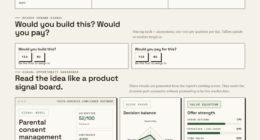
📊 Full opportunity report: Why Claude's Watermarking For AI Content Could Change Digital Trust on ThorstenMeyerAI.com — validation score, market gap, and execution plan.

Get business pricing on tech for your team
- Business-only prices and quantity discounts
- Tax-exempt purchasing
- Multiple users, one account, clear invoices
TL;DR
Anthropic is preparing to implement watermarking for AI-generated content produced by Claude. The move aims to improve content traceability, but technical details and scope are still unclear. This could impact how digital media authenticity is verified.
Anthropic has confirmed that its AI system, Claude, will begin watermarking AI-generated content, a move designed to enhance the ability to trace and verify digital media created with the AI. The announcement highlights a step toward addressing growing concerns over the opaque nature of AI-generated media and its impact on digital trust, as detailed in the original analysis.
The company has stated that Claude will incorporate watermarks into some of its outputs, although it has not specified whether these will be visible, embedded as metadata, or detectable only through specialized tools. Anthropic has not disclosed the exact timeline for the rollout or the specific content types that will be affected, leaving many details to be clarified.
Current information indicates that this watermarking is a planned feature change, not an indication that all existing Claude outputs are already marked. The scope, technical design, and detection methods remain undisclosed, and the company has not committed to a particular standard for durability or resistance against editing or copying. For more context, see the original analysis.
Potential Impact on Digital Content Verification
The introduction of watermarking by Claude could significantly influence digital trust and content attribution. As AI-generated content proliferates, being able to reliably identify such material becomes crucial for platforms, publishers, and consumers. If effective, watermarking could help distinguish AI-created media from human work, aiding in combating misinformation and ensuring accountability.
However, the effectiveness depends on the watermark’s design and resilience. A marker that survives copying, editing, or format changes could serve as a valuable tool for provenance, but if it is easily removed or fails under routine modifications, its utility diminishes. The absence of detailed technical specifications means the real-world impact remains uncertain.
AI content watermark detection tools
As an affiliate, we earn on qualifying purchases.
As an affiliate, we earn on qualifying purchases.
Growing Use of AI and the Need for Content Attribution
Over recent years, AI systems like Claude have become capable of generating large volumes of text, images, and multimedia content. As these tools become more accessible and widespread, concerns about the authenticity and provenance of digital media have intensified. Existing efforts to label or watermark synthetic media include visible tags, metadata, and machine-readable signals, but none are universally reliable or standardized.
Anthropic’s move to watermark Claude’s outputs aligns with broader industry efforts to improve transparency and maintain trust in digital content. Similar initiatives are underway across AI developers, platforms, and policymakers, seeking to balance innovation with responsible use.
“We are exploring watermarking as part of our ongoing efforts to promote transparency and responsible AI use.”
— Anthropic spokesperson
Technical and Implementation Uncertainties
Many details about the watermarking system remain undisclosed. It is unclear how durable or resistant the markers will be against editing, copying, or format conversions. The detection process, whether it will be accessible to third parties, and how it will function across different media types are all still unknown. Additionally, the timeline for deployment and scope of coverage have not been announced, leaving questions about how widely and effectively this feature will be implemented.
Upcoming Details and Independent Testing Expectations
Anthropic is expected to publish technical documentation and a rollout schedule in the coming months. Independent researchers and platforms will then evaluate whether the watermark remains detectable after common modifications and whether it provides reliable identification. The success of this initiative will depend on transparency, technical robustness, and user adoption.
Key Questions
What exactly will the Claude watermark look like?
Details about the appearance or technical form of the watermark have not been disclosed. It may be visible, embedded as metadata, or detectable only through specialized tools.
Will all Claude outputs be watermarked?
This has not been confirmed. It remains unclear whether watermarking will apply to all outputs or only specific formats and use cases.
Can the watermark be removed or bypassed?
It is not yet known how resistant the watermark will be to editing, copying, or format changes. The technical robustness will become clearer once more details are released and tested.
When will this watermarking feature be available?
There is no confirmed rollout date. The company plans to publish further details soon, but the timing remains uncertain.
Will third-party tools be able to verify the watermark?
This is currently unknown. The availability of independent verification tools will depend on the technical design and whether Anthropic releases detection standards.
Source: ThorstenMeyerAI.com
Fall Picks
fall essentials
As an affiliate, we earn on qualifying purchases.


![Claude Code Reads AGENTS.md Only When Telemetry Is On [Fixed]](https://avaoroi.com/wp-content/uploads/2026/09/claude-code-reads-agents-md-only-when-telemetry-is-on-fixed-featured-380x200.jpg)