🔍 Read the full analysis: What Anthropic’s Memory Work Taught Us About Running AI Agents on ThorstenMeyerAI.com

Get business pricing on tech for your team
- Business-only prices and quantity discounts
- Tax-exempt purchasing
- Multiple users, one account, clear invoices
TL;DR
Anthropic published a research post on November 6, 2026, describing how Claude agents can save information between sessions, organize it and revise it against earlier records. Its examples suggest that concise, structured notes and checks against source material can help on selected tasks, but the results are company-reported and include single-run comparisons. The post does not establish how well these methods generalize across agents or real-world deployments.
Anthropic published a research post on November 6 explaining how its Claude models can save information between sessions, organize it for later use and revise it by checking earlier records. The post matters as AI agents increasingly carry notes from one task to another, but its examples are Anthropic’s own evaluations, not independent confirmation that the approach works broadly.
Anthropic defines agent memory as knowledge gained from interactions and tasks that an agent retains between sessions in a form it can read later, a topic also discussed in Claude’s memory-sharing plans. The post distinguishes that store from a model’s context window, which holds information available during a current session. It also excludes changes to model weights, within-session learning and summaries that replace earlier conversation turns to make room for more work.
The post describes several components: memory notes, a process for deciding what is worth saving, and a between-session review Anthropic calls “dreaming.” Anthropic’s approach to custom memory for AI agents also focuses on how agents retain information between tasks. During that review, an agent can compare its notes with transcripts, correct mistakes and create or reorganize records. Anthropic also describes linked pages such as a wiki, alongside a memory hierarchy in which a small index is loaded automatically and other material is retrieved when needed.
In a Pokémon Red test, Anthropic compared one run each of Claude Sonnet 3.7 and Claude Fable 5 at about 10,000 game steps. Sonnet 3.7 created 413 files across 225 folders and had earned one badge; Fable 5 created nine files in two folders plus a top-level dashboard and had earned four. The comparison is limited: it is a pair of runs, and game progress does not by itself show that fewer files caused the difference.
Infographic 01 · Remember less, remember the right things
What the screen shows does not belong in memory
Money and position can be read off the screen every turn. Plans, strategy and tested rules exist only if the agent writes them down.
Claude Fable 5 wrote nine files in two folders, plus one top-level dashboard file (global.md) with its goal, plan and rules for using memory.
Memory files at about 10,000 steps
One run each, Pokémon Red, a memory folder the model could read and write
Over 17 steps, Sonnet 3.7 created six files, deleted nine others and took no actions in the game.
Source: Anthropic, The components of agent memory (research post, 6 Nov 2026). One run per model, Anthropic’s own evaluation.
Powered by Thorsten Meyer AI
Why Agent Memory Design Matters
Memory affects whether an agent can use information from one session in the next, including a user’s preferences, project facts or a strategy learned through trial and error. A note that is missing, hard to find or outdated can lead an agent to repeat work or act on a mistaken assumption. The practical issue is not simply how much an agent can store, but whether it can retrieve the right information and recognize when that information needs correction.
Anthropic’s examples point to a trade-off between keeping a record of everything and maintaining a smaller set of useful, navigable notes. Its Pokémon comparison suggests that a compact overview can be more useful than many narrowly divided files in that test. That is an interpretation of the reported example, not a general benchmark result. For developers and users, the post offers a design framework, while leaving open how reliably these methods work across different tasks, models and memory stores.
Products Worth Considering

Apple MacBook Air 13.6-inch Laptop with M5 Chip, 16GB Memory, 512GB SSD, Sky Blue
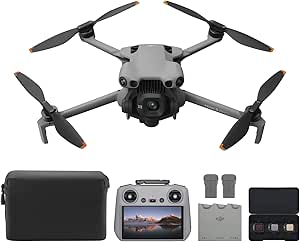
DJI Mini 5 Pro Fly More Combo with DJI RC 2

Sony WH-1000XM4 Wireless Noise-Canceling Headphones, Silver
As an affiliate, we earn on qualifying purchases.
From Session Context to Saved Notes
In a conventional chat session, the model can use messages and documents present in its current context window. Once that session ends, information is not automatically available in a later conversation unless it is saved and supplied again. Agent memory adds a separate store that can persist between sessions and be read into later work.
Anthropic’s post draws an analogy with human memory, describing offline review as a way to sort and consolidate experience. It also connects its “dreaming” concept to sleep-time compute, an idea previously proposed by researchers at Letta and the University of California, Berkeley, according to the supplied source material. The analogy describes a proposed engineering approach; it does not establish that machine memory works like biological memory.
The article source also reports a separate company-document test: a self-built wiki increased the score on 25 questions from 13% to 48% of graded criteria over 128 sessions. That result is attributed to Anthropic’s evaluation, and the source does not provide enough detail here to independently assess the scoring or reproduce the test.
““dreaming””
— Anthropic, describing its memory-review process
Limits of Anthropic’s Evaluations
The findings described are from Anthropic’s own research post, not a peer-reviewed paper. The Pokémon results compare one run per model, so they cannot establish how consistent the difference is. The supplied material also gives limited information about evaluation procedures, variability and performance across a wider range of tasks.
It is also unclear how the methods perform when agents encounter conflicting instructions, large or changing stores of information, or sensitive personal data. The source describes the idea of checking notes against transcripts, but does not establish that every error will be caught or that an agent will always retrieve the correct record. The supplied account ends partway through its discussion of the database test, so further details and results are not available here.
Testing Memory Beyond Examples
The next useful evidence would be broader, repeatable evaluations comparing memory strategies across multiple runs and tasks, with clear reporting on accuracy, retrieval failures and the cost of maintaining notes. Independent testing would help establish whether the reported gains extend beyond Anthropic’s examples.
For now, the post offers a description of how Anthropic approaches persistent agent memory, rather than a guarantee of performance. Developers assessing such systems will need to test whether saved information remains accurate, whether retrieval works when needed and whether agents can identify notes that have become stale.
Key Questions
What did Anthropic publish?
Anthropic published a research post on November 6, 2026, describing components of memory for Claude agents, including saved notes, memory organization and review between sessions.
How is agent memory different from a context window?
A context window contains information available to a model during its current session. Agent memory is information saved between sessions and made available to the agent later.
What does Anthropic mean by “dreaming”?
It is Anthropic’s term for a process in which an agent reviews records between sessions, compares notes with earlier transcripts and may correct or reorganize what it has saved.
Do the examples prove that fewer memory files are better?
No. The Pokémon example compares one run of each of two models. It illustrates a possible advantage of concise, organized memory, but does not prove that fewer files improve results across tasks.
Have Anthropic’s reported results been independently verified?
The supplied source identifies the results as Anthropic’s own evaluations in a research post, not a peer-reviewed paper. It does not describe independent verification.
Source: ThorstenMeyerAI.com