
📊 Full opportunity report: Solo-Performer Business Hacks: One-Page Show-Day Sheets on IdeaNavigator AI — validation score, market gap, and execution plan.

Get business pricing on tech for your team
- Business-only prices and quantity discounts
- Tax-exempt purchasing
- Multiple users, one account, clear invoices
TL;DR
Solo performers like speakers and magicians can now use a new automated system to generate single-page show-day sheets from email threads and contracts. This innovation aims to improve efficiency and reduce last-minute errors, with initial testing planned among twenty acts.
A new workflow tool for solo performers is in development, promising to simplify the creation of comprehensive show-day sheets by automatically consolidating gig details from email threads and contracts. This innovation targets professional speakers, magicians, and specialty acts who often face disorganized information leading up to performances. The tool aims to reduce last-minute errors and streamline preparations, offering a potential breakthrough for independent performers managing multiple gigs.
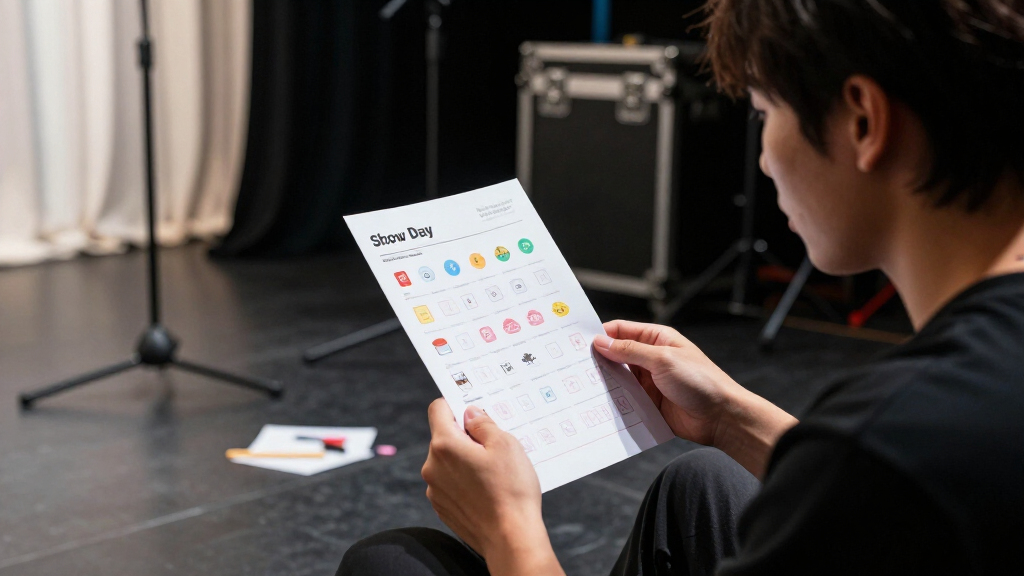
The proposed system involves performers forwarding all relevant gig emails—such as venue confirmations, rider requests, contracts, and updates—to a dedicated email address. An AI-powered application then extracts key details—venue, contacts, schedule, rider specifications, payment status, travel notes, and assistant tasks—and assembles them into a single, editable show-day page. This page highlights conflicts between different versions, flags discrepancies, and syncs changes in real-time.
According to IdeaNavigator AI, this approach is designed as a minimum viable product (MVP) with initial testing planned among twenty professional acts. These performers will use the tool for their next ten gigs, with success measured by the number of discrepancies caught and the rate of subscription conversions at the pilot’s conclusion. The system also offers a subscription model, with tiered options for individual performers and teams or assistants managing multiple acts.
Market analysts see this as a niche but potentially impactful solution within the solo-performer business tools space, addressing a common pain point of disorganized and fragmented gig information. The developers aim to validate the concept through early adoption and iterative improvements based on user feedback.
Implications for Solo Performers’ Efficiency
This development could significantly improve the operational efficiency of solo performers by reducing preparation time and minimizing errors on show day. Automating the assembly of detailed run sheets means performers spend less time manually compiling information, decreasing the risk of overlooked details or last-minute surprises. If successful, this tool could become a standard part of independent performers’ workflows, enabling them to deliver more professional shows with less stress and fewer mistakes. It also opens opportunities for further automation and integration within broader gig management platforms, potentially transforming how solo acts prepare for performances.show day planning sheet for performers
As an affiliate, we earn on qualifying purchases.
As an affiliate, we earn on qualifying purchases.
Pre-Existing Challenges in Solo-Performer Show Prep
Solo performers such as speakers, magicians, and specialty acts often juggle multiple sources of information—emails, contracts, rider requests, and logistical updates—that are scattered across various platforms. Traditionally, they manually compile show-day details into run sheets, a process prone to errors and inconsistencies, especially when updates occur late or multiple versions exist. This fragmentation can lead to overlooked details, conflicts between schedules, or last-minute surprises that compromise the quality of the performance. The advent of AI and automation tools has begun to address some administrative tasks, but a consolidated, dynamic show-day sheet remains a gap in the workflow. The proposed system aims to fill this gap by providing a single, reliable source of truth for each gig, reducing manual effort and improving accuracy.“Automating the creation of show-day sheets from email threads could be a game-changer for solo performers, reducing last-minute errors and freeing up time for rehearsals and client engagement.”
— an anonymous researcher
Unresolved Questions About System Functionality
It is not yet clear how accurately the AI system will extract and synthesize complex or poorly formatted information, or how it will handle conflicting data from multiple sources. The success of the tool depends on its ability to reliably flag discrepancies and update the show-day sheet in real-time, which remains to be validated through pilot testing. Additionally, user adoption and integration into existing workflows are still uncertain, as performers may have varying levels of comfort with automation and data management.Next Steps in Pilot Testing and Development
The development team plans to onboard twenty professional acts for pilot testing, during which they will use the system for their upcoming ten gigs. The focus will be on measuring the number of discrepancies identified, user satisfaction, and subscription rates. Feedback from these early adopters will guide further refinements, including improving AI accuracy, user interface, and integration capabilities. The goal is to establish a reliable, scalable solution that can be marketed broadly within the solo-performer community and potentially expanded to larger event teams.
Key Questions
How does the system extract information from emails and contracts?
The system uses AI algorithms trained to parse email threads and PDF contracts, identifying key details like venue, contacts, schedule, rider requests, and payment info. It flags conflicts and updates the show-day sheet accordingly.
Will performers need technical expertise to use the tool?
The goal is to create an intuitive interface where performers simply forward emails; the system handles extraction and assembly automatically. Some basic familiarity with email forwarding is expected.
Is this system compatible with existing scheduling or CRM tools?
Integration plans are under development, with initial focus on standalone functionality. Future versions may include API support for popular gig management platforms.
When will the tool be publicly available?
Following successful pilot testing and iterative improvements, a broader launch is expected within the next 12 to 18 months.
What are the costs involved for performers?
The system will operate on a monthly subscription model, with tiered pricing for individual performers and team accounts. Exact pricing details are still being finalized.
Source: IdeaNavigator AI
Fall Picks
fall essentials
As an affiliate, we earn on qualifying purchases.