TL;DR
Pollen Robotics has launched Microduck, a compact AI-enabled robot, on Hugging Face. This move aims to democratize robotics development and foster innovation in AI-powered automation.
Pollen Robotics, a company specializing in robotics technology, has officially launched Microduck, a compact AI-powered robot, on the Hugging Face platform. This release, announced in March 2024, aims to make advanced robotics tools more accessible to developers, researchers, and hobbyists worldwide. The move underscores Pollen Robotics’ commitment to democratizing robotics development and fostering innovation in artificial intelligence applications.
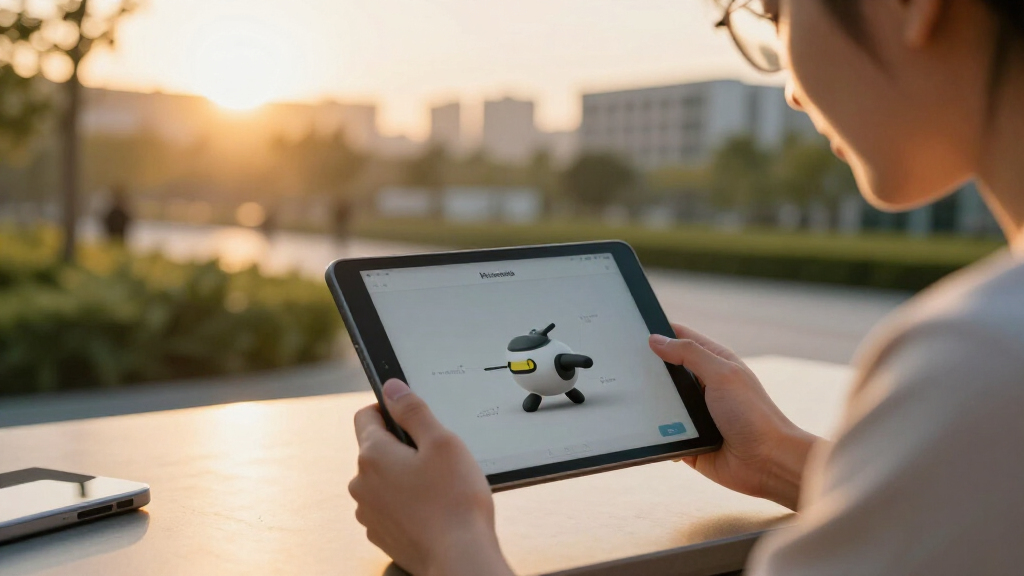
The Microduck is a small, versatile robot equipped with AI capabilities, designed for both educational and development purposes. According to Pollen Robotics, the robot features a modular design, allowing users to customize sensors, actuators, and AI models. The platform hosting Microduck, Hugging Face, is a popular hub for machine learning models, and this integration aims to facilitate easier deployment and experimentation with robotics AI.
Confirmed by Pollen Robotics, the Microduck is available for download and customization through Hugging Face’s model hub. The company emphasized that the robot is intended for a broad audience, including academic researchers, startups, and individual developers. The platform provides open-source code, documentation, and pre-trained models to accelerate project development and testing.
While the core hardware specifications are publicly available, detailed information about the robot’s onboard sensors and processing capabilities remains limited. Pollen Robotics has stated that Microduck will be compatible with popular robotics frameworks like ROS (Robot Operating System), enhancing its integration potential.
Impact of Microduck on Robotics Accessibility
The release of Microduck on Hugging Face represents a significant step toward making advanced robotics technology more accessible to a wider audience. By providing open-source hardware and AI models, Pollen Robotics lowers the barriers to entry for robotics development. This could accelerate innovation in fields such as education, research, and commercial automation, especially among smaller organizations and individual developers who previously faced high costs and technical complexity. Additionally, the integration with Hugging Face’s AI ecosystem promotes collaboration and knowledge sharing across the AI and robotics communities, potentially leading to new applications and breakthroughs.As an affiliate, we earn on qualifying purchases.
Background of Pollen Robotics and Microduck Development
Pollen Robotics, founded in France, has been a notable player in the robotics industry, focusing on developing adaptable and intelligent robots for various applications. The company has previously released several robotic platforms aimed at industrial and service sectors, emphasizing AI integration and user-friendly interfaces.
Microduck is a recent addition to their product line, first teased in late 2023, with the goal of creating an accessible, small-scale robot that can serve as a testbed for AI algorithms and automation projects. The platform’s development aligns with a broader industry trend toward democratizing robotics, leveraging open-source tools and cloud-based AI models. The partnership with Hugging Face, a leading AI community platform, marks a strategic move to expand Microduck’s reach and foster collaborative innovation.
Prior to this release, Pollen Robotics had collaborated with academic institutions and industry partners to develop AI-driven robotic solutions, but Microduck is their first effort to provide a ready-to-use, customizable robot openly available online for a broad user base.
“Microduck embodies our vision of making robotics development accessible and collaborative, leveraging the power of open-source platforms like Hugging Face.”
— Jean Dupont, CTO of Pollen Robotics
Details Still Unclear About Microduck’s Hardware Specs
While Pollen Robotics has provided an overview of Microduck’s design, specific details about its onboard sensors, processing power, and battery life remain limited. It is not yet clear how the robot performs in complex environments or how scalable its hardware is for different applications. Additionally, the extent of AI model customization and real-time processing capabilities are still being evaluated by early users.
Upcoming Support and Community Engagement Initiatives
Pollen Robotics plans to release detailed technical documentation and tutorials in the coming weeks to support developers and educators. The company also intends to host webinars and community forums to gather feedback, foster collaboration, and showcase projects built with Microduck. Further hardware updates and expanded AI model integrations are expected throughout 2024, aiming to enhance Microduck’s versatility and performance.
Key Questions
What is Microduck designed for?
Microduck is designed as an accessible, AI-enabled robotic platform for education, research, and development projects. Its modular design allows customization for various applications.
How can I access Microduck?
It is available for download and customization on the Hugging Face platform, with open-source code, models, and documentation provided by Pollen Robotics.
What are the hardware specifications of Microduck?
Specific hardware details are limited at this stage, but the robot features modular sensors and is compatible with popular frameworks like ROS. Further technical info is expected to be released soon.
Will there be ongoing support for Microduck?
Yes, Pollen Robotics plans to provide tutorials, community forums, and hardware updates to support ongoing development and user engagement throughout 2024.
How does Microduck compare to other educational robots?
Microduck offers a combination of AI capabilities, modular hardware, and open-source access, setting it apart from many traditional educational robots that lack integrated AI or customization options.
Source: hn