🔍 Read the full analysis: NVIDIA Nemotron 3.5 Transcribe And Granary V2 Bring Promptable Multilingual AI on ThorstenMeyerAI.com

Get business pricing on tech for your team
- Business-only prices and quantity discounts
- Tax-exempt purchasing
- Multiple users, one account, clear invoices
TL;DR
NVIDIA has released Nemotron 3.5 Transcribe, an open-weight model for transcription, speaker attribution, translation and audio question answering, alongside Granary v2 speech data and fine-tuning tools. NVIDIA and benchmark providers report strong leaderboard results, but those measurements do not guarantee performance on every language, domain or recording.
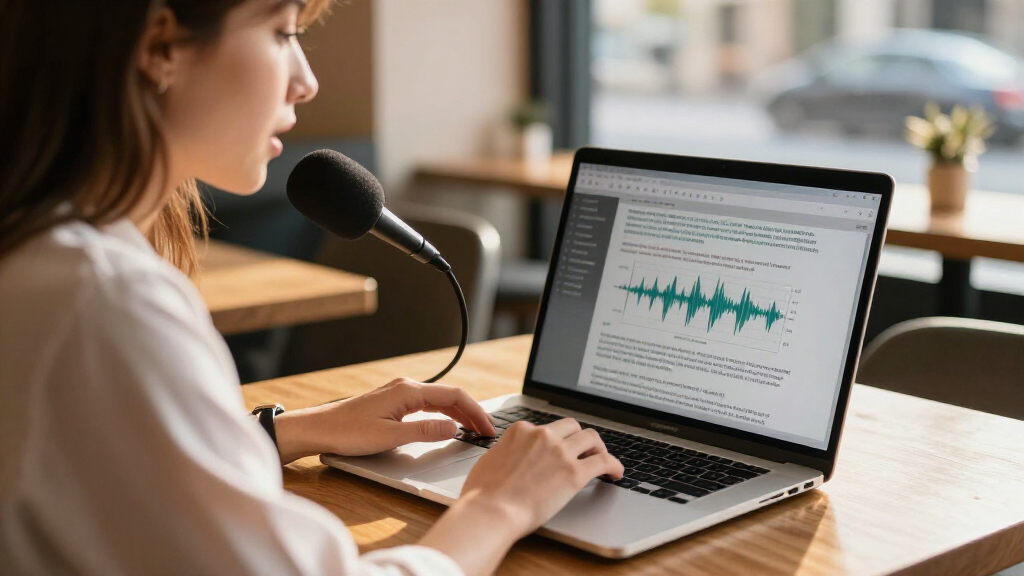
NVIDIA has released Nemotron 3.5 Transcribe, an open-weight speech model that handles multilingual transcription, speaker attribution, translation and audio question answering. The release also includes Granary v2 speech data and tools for fine-tuning, giving developers a route to adapt the model to their own vocabulary and use cases.
NVIDIA says the model transcribes 40 languages, translates 31 languages to or from English, and attributes speakers in 13 languages. It supports recordings up to one hour, can label as many as eight speakers and produces word-level timestamps. The company describes it as promptable: users can request a particular output, such as a speaker-labeled transcript, an English translation or answers to questions about a recording.
The model is available on Hugging Face and ModelScope. NVIDIA says developers can use natural-language prompts to guide terminology and formatting, then adapt the system with Granary v2 and its NeMo Speech fine-tuning tools. The company recommends supplying domain terms with context and directing the model to use them only when supported by the audio. NVIDIA says audio question answering is trained in English, and language coverage varies by task.
NVIDIA reports a 5.33% average English word error rate and a 4.62% mean across seven languages on the Hugging Face Open ASR Leaderboard, describing these as the best results among open-weight models in the comparison it cites. For long-form audio, the company reports a 10.98% mean word error rate. Artificial Analysis reports a tie for first among open-weight models at 2.8% AA-WER, with about four billion active parameters. These are benchmark results, not evidence of equal accuracy across all real-world recordings.
One Model, Several Speech Tasks
Combining transcription, speaker labels and translation in one checkpoint could reduce the need to route recordings through separate systems for each output. That may help developers building meeting notes, classroom recordings, multilingual call tools or specialized dictation, where a plain transcript may not identify speakers or present speech in the desired language and format.
The release also pairs the model with data and adaptation tools, rather than presenting a checkpoint alone. Developers can test prompting first and use fine-tuning when they need to address domain vocabulary or other recurring differences in their audio. The practical value will depend on accuracy, language coverage, operating costs and the work required to validate results for a specific application.
NVIDIA reports a medical case study in which training reduced word error rate on held-out speakers by 45.8% relative to the best prompt. That result suggests adaptation can help in that test setting, but it does not establish the same improvement for other medical specialties, languages or datasets.
Products Worth Considering

Bose QuietComfort Wireless Bluetooth Headphones with Active Noise Cancellation, Mic, USB‑C Charging, Deep Bass, 24‑Hour Battery – White Smok

Bose QuietComfort True Wireless Earbuds with Active Noise Cancellation, Black

Apple AirPods Pro 3 Wireless Earbuds with Active Noise Cancellation
As an affiliate, we earn on qualifying purchases.
From Prompting to Fine-Tuning
The release presents prompting and fine-tuning as complementary approaches. A developer can first ask the model to use a particular transcription style or recognize terminology, then use Granary v2 and NeMo Speech to train on speech and vocabulary relevant to an application. NVIDIA’s guidance emphasizes giving terms enough context and checking that they are actually supported by the recording.
The company’s examples include a rapid, overlapping-dialogue scene from the 1940 film His Girl Friday and a classroom replay built by Agora using word-level timestamps. These demonstrations show types of tasks the system is intended to handle; they are examples, not independent accuracy evaluations. NVIDIA also advises users to verify names, speaker changes and generated answers against the audio.
The reported leaderboards cover different measures and comparisons. Word error rate evaluates transcription against reference text, while diarization comparisons assess speaker attribution alongside transcription. NVIDIA cites top placements on David AI’s combined transcription-and-diarization track and on David AI and VoiceArena comparisons. The model uses Sortformer speaker cues during generation, according to the company.
“One open model for multilingual transcription, speaker attribution, translation, and audio Q&A.”
— NVIDIA, in its Hugging Face release
Performance Across Languages and Recordings
The supplied release material does not provide enough detail to independently assess every benchmark test set, recording condition or comparison. Performance may vary with accents, background noise, overlapping speech and specialized vocabulary, and leaderboard scores do not predict accuracy for each application.
The language counts refer to different tasks: transcription, translation and speaker attribution do not share identical language coverage. NVIDIA says audio question answering is trained in English, but the available information does not establish how well it works across all supported transcription languages or on mixed-language recordings. The medical fine-tuning result is specific to the reported case study; its transfer to other settings is not yet established.
It is also unclear from the supplied material how the model compares under consistent, independently run tests across all claimed languages and use cases. Users will need to evaluate it on representative audio and check outputs before relying on transcripts, speaker labels or answers.
Testing and Adapting the Model
Developers can access Nemotron 3.5 Transcribe and Granary v2 on Hugging Face and ModelScope, consult the model card for prompt guidance and task-by-language details, and use NeMo Speech tools to fine-tune. A practical next step is to test the model on recordings that reflect the intended application, including relevant accents, background conditions, vocabulary and speaker patterns.
Further independent evaluations across languages, domains and recording conditions would help show whether the published benchmark results transfer to routine use. Until those results are available, the release establishes what NVIDIA says the model can do and the tools it provides—not how reliably it will perform in every deployment.
Key Questions
What is Nemotron 3.5 Transcribe?
It is NVIDIA’s open-weight speech model for transcription, speaker attribution, translation and audio question answering. NVIDIA says it supports recordings up to one hour and can label up to eight speakers.
Which languages does it support?
NVIDIA says the model transcribes 40 languages, translates 31 to or from English and attributes speakers in 13. These counts apply to separate tasks, and language coverage varies by task.
Where can developers get the model and data?
NVIDIA has made the model and Granary v2 speech data available through Hugging Face and ModelScope. The company also points developers to NeMo Speech tools for fine-tuning.
Do the benchmark results guarantee transcription accuracy?
No. The reported leaderboard scores describe results on particular evaluations. Real-world accuracy can vary with audio quality, accents, overlapping speech, language and domain vocabulary.
What does the medical case study show?
NVIDIA reports that training lowered word error rate on held-out speakers by 45.8% relative to the best prompt in that case study. The source does not show that the same improvement applies to other settings.
Primary source: Hugging Face · via ThorstenMeyerAI.com