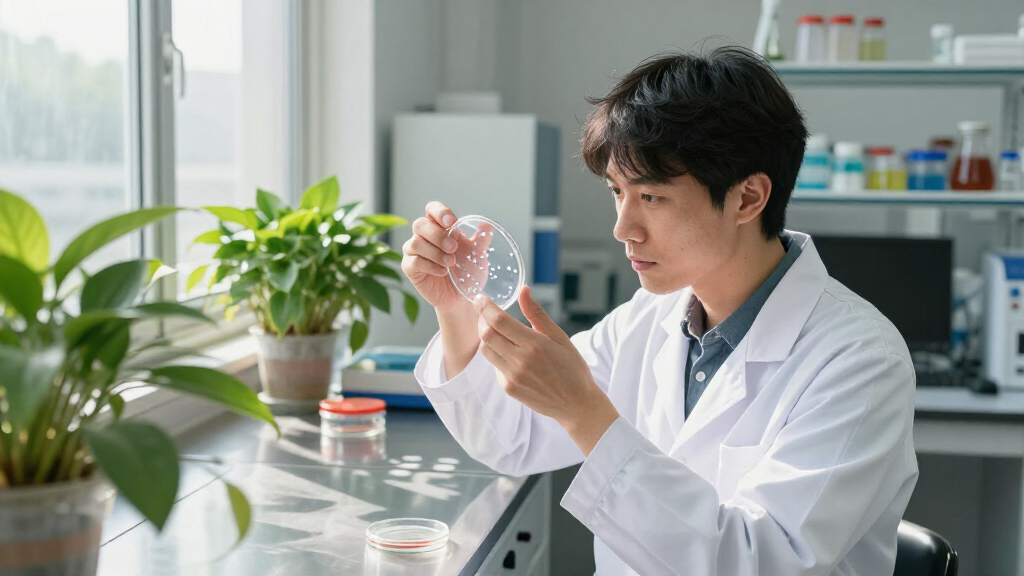
🔍 Read the full analysis: How AI Technologies Are Transforming The Search For Antimicrobial Molecules on ThorstenMeyerAI.com
Listen free for 30 days with Audible
Thousands of audiobooks and originals — cancel anytime.
Start your free trialAs an affiliate, we earn on qualifying purchases.
TL;DR
Researchers at the University of Pennsylvania are employing AI technologies, including ChatGPT and custom deep-learning models, to rapidly identify potential antimicrobial molecules from genomic data. This approach significantly shortens the initial discovery phase, though candidates still face extensive validation before reaching clinical use.
The University of Pennsylvania’s bioengineering laboratory has successfully used AI tools, including ChatGPT, Codex, and custom deep-learning models, to accelerate the discovery of antimicrobial molecules from genomic data, reducing the initial search process from years to hours. For more details on how AI is transforming antimicrobial discovery, see the original analysis. This development represents a significant step forward in addressing the global threat of antibiotic resistance, although candidates still require extensive validation before clinical application. Advances in AI-driven drug discovery are discussed in detail in this analysis.
Led by bioengineer César de la Fuente, the lab employs AI to analyze vast genomic datasets, recognizing patterns in DNA and protein sequences to identify peptides with antimicrobial potential. The approach leverages ChatGPT and Codex for tasks such as hypothesis generation, coding, and data analysis, enabling interdisciplinary collaboration across biology, chemistry, and computer science.
According to an OpenAI report, this AI-driven pipeline drastically shortens the early discovery phase, which traditionally takes years, to just hours of computational analysis. Learn more about AI applications in biomedical research in the original analysis. The core premise is treating biological sequences as information systems, allowing models to predict promising candidates rapidly. The lab emphasizes that this is only the initial step; candidates must undergo rigorous lab testing, safety assessments, and clinical trials before becoming usable drugs.
De la Fuente highlighted the urgency, noting that about five million deaths in 2021 were linked to bacterial antimicrobial resistance, with no new antibiotic class introduced in roughly 50 years. The current pipeline largely modifies existing antibiotics, which has diminishing returns, underscoring the need for innovative discovery methods like AI.
How AI Could Transform Antimicrobial Drug Discovery
This development matters because antimicrobial resistance is a mounting global health crisis, with the potential to render existing antibiotics ineffective. Traditional discovery methods are slow, expensive, and limited in scope. AI offers a way to rapidly screen enormous genomic datasets, pinpointing the most promising molecules for laboratory testing. If scalable, this could accelerate the pipeline for new antibiotics, saving lives and reducing the burden of resistant infections.
Furthermore, the use of general-purpose AI tools like ChatGPT and Codex fosters cross-disciplinary collaboration, lowering barriers between biology, chemistry, and computer science. This could lead to more innovative approaches and a broader pool of researchers contributing to antimicrobial discovery.
antimicrobial molecule discovery kits
As an affiliate, we earn on qualifying purchases.
As an affiliate, we earn on qualifying purchases.
Evolution of Antimicrobial Discovery Methods and AI’s Role
Historically, antimicrobial discovery involved labor-intensive sampling from soil, water, and biological sources, followed by iterative testing of isolated molecules. This process could take years and was limited by the scope of physical sampling and testing capabilities.
With the advent of digital genomic databases, researchers can now explore the genetic makeup of countless organisms, including extinct species, to identify potential antimicrobial peptides. The bottleneck has shifted from sample collection to signal detection—finding meaningful functional sequences within vast, complex genomes. AI models trained to recognize patterns in DNA and protein sequences are now enabling researchers to identify promising candidates more efficiently.
De la Fuente’s lab emphasizes that promising antimicrobial peptides often reside at the intersections of disciplines—areas where few researchers work—highlighting the importance of AI in bridging these gaps. Despite these advances, the process from candidate discovery to approved drug remains lengthy and complex, involving validation, safety testing, and regulatory approval.
“Antimicrobial resistance is one of the greatest existential threats to humanity. Yet, we haven’t had a new class of antibiotics for 50 years.”
— César de la Fuente
Limitations and Unverified Aspects of AI-Driven Discovery
While the report claims that AI can reduce the candidate search process from years to hours, this refers solely to the computational screening stage. It is not yet clear how many of these candidates will successfully progress through laboratory validation, toxicity testing, and clinical trials.
The report does not specify how many AI-identified candidates have entered clinical development or received regulatory approval. Additionally, since the source is OpenAI, which develops the AI tools used, there may be potential biases or promotional framing involved. Peer-reviewed validation of the workflow and its outcomes remains limited.
Further, AI predictions carry risks of hidden toxicity or resistance development, which can only be uncovered through extensive testing. The actual impact on the timeline and success rate of new antibiotics is still uncertain.
Next Steps for AI-Enabled Antimicrobial Development
The immediate next step is to validate AI-predicted candidates through laboratory experiments, assessing their antimicrobial efficacy and safety. Successful molecules will undergo optimization and preclinical testing before entering clinical trials.
Researchers will also need to establish standardized protocols for integrating AI into the full drug development pipeline, including regulatory pathways. Continued collaboration between AI developers, microbiologists, chemists, and clinicians will be crucial to translate computational discoveries into approved antibiotics.
Further peer-reviewed studies are expected to evaluate the real-world effectiveness of AI-driven discovery methods and to address challenges related to toxicity, resistance, and manufacturing scalability.
Key Questions
Can AI replace traditional antibiotic discovery methods?
AI can significantly accelerate the early discovery phase by rapidly screening genomic data, but it cannot replace the need for laboratory testing, safety assessments, and clinical trials necessary for drug approval.
How reliable are AI-predicted antimicrobial candidates?
While AI models can identify promising candidates quickly, these molecules still require extensive validation to confirm efficacy, safety, and resistance profiles before they can be developed into drugs.
What are the main challenges in using AI for drug discovery?
Challenges include ensuring the accuracy of predictions, managing toxicity and resistance risks, integrating AI workflows into existing pipelines, and navigating regulatory approval processes.
How soon could AI-discovered antibiotics reach patients?
Even with rapid candidate identification, the full development process—including lab validation, clinical trials, and regulatory approval—typically takes several years, meaning widespread availability remains years away.
Primary source: OpenAI · via ThorstenMeyerAI.com
Flea & tick season Picks
flea and tick prevention
As an affiliate, we earn on qualifying purchases.